

Driving Course Decision Calculator
Find Your Best Learning Path
Answer a few questions to get a personalized recommendation.
Cost Estimation Settings
Estimated Cost Comparison
You’ve got your provisional licence, you’ve passed your theory test, and now you’re staring at a fork in the road. Do you book an intensive driving course, also known as a crash course, where you spend weeks grinding through hours of driving? Or do you opt for traditional weekly lessons, spreading the learning out over months?
This isn’t just a preference; it’s a strategic decision that affects your wallet, your schedule, and your stress levels. The wrong choice can lead to wasted money on repeated tests or endless frustration with scheduling conflicts. Let’s break down exactly how these two paths differ, who they suit best, and how to make sure you end up with that full licence without losing your mind.
The Reality of Intensive Driving Courses
An intensive driving course is exactly what it sounds like: intense. Instead of one hour a week, you might be doing four to six hours a day, five days a week. This usually lasts anywhere from one to three weeks, depending on whether you are starting from zero or already have some experience.
The main advantage here is immersion. When you drive every single day, muscle memory kicks in faster. You aren’t forgetting what you learned last Tuesday by the time you get back behind the wheel next Tuesday. It’s similar to learning a new language by living in a country where everyone speaks it versus taking a class once a month. The context stays fresh.
However, this speed comes with a cost. Not just financially-though crash courses are often more expensive upfront-but mentally. Sitting in a car for six hours straight while being critiqued on your mirror checks and junction control can be exhausting. If you are prone to anxiety, the pressure of passing quickly can sometimes backfire, leading to nervous breakdowns during the actual test.
The Traditional Route: Weekly Lessons
Regular driving lessons offer a slower, more gradual approach. You typically book one or two hours per week. This stretches the learning process over several months, giving you plenty of time between sessions to reflect on feedback and practice independently if you have access to a car.
This method works well for people who have busy schedules. Students, parents, and those working full-time jobs often find it easier to fit a single lesson into their calendar than to block out entire weeks. It also allows for better consolidation of skills. You learn something on Monday, think about it over the weekend, and apply it again on Tuesday.
The downside? Momentum loss. It is easy to forget specific techniques if too much time passes between lessons. Many learners find themselves re-learning basics they thought they had mastered simply because it has been three weeks since they last practiced clutch control. Additionally, finding a consistent instructor slot can be a nightmare, especially during peak seasons like summer holidays.
Cost Comparison: What Are You Actually Paying?
Let’s talk numbers, because this is usually the deciding factor for most people. At first glance, a crash course looks pricey. A standard package might cost between £1,200 and £1,800, depending on your location and starting ability. In contrast, individual lessons might cost £30 to £50 per hour. If you need 40 hours, that’s roughly £1,200 to £2,000.
So, are they the same price? Often, yes. But there are hidden costs to consider with regular lessons:
- Fuel consumption: More trips to and from the driving school mean higher fuel bills.
- Instructor travel fees: Some instructors charge extra if you live far from their base, which adds up over months.
- Test retakes: If you fail your test after months of sporadic practice, you pay for the test again (£62-£75) plus more lessons. Crash courses often include a free retest if you fail within a certain window, mitigating this risk.
Crash courses bundle everything together. You know the exact price upfront. With weekly lessons, the final bill depends on how quickly you progress, which is hard to predict.
| Feature | Intensive Crash Course | Weekly Lessons |
|---|---|---|
| Duration | 1-3 weeks | 3-6+ months |
| Time Commitment | High (full-time) | Low (flexible) |
| Learning Retention | High (immersive) | Moderate (risk of forgetting) |
| Stress Level | High intensity | Lower, spread out |
| Upfront Cost | Fixed package price | Variable based on hours needed |
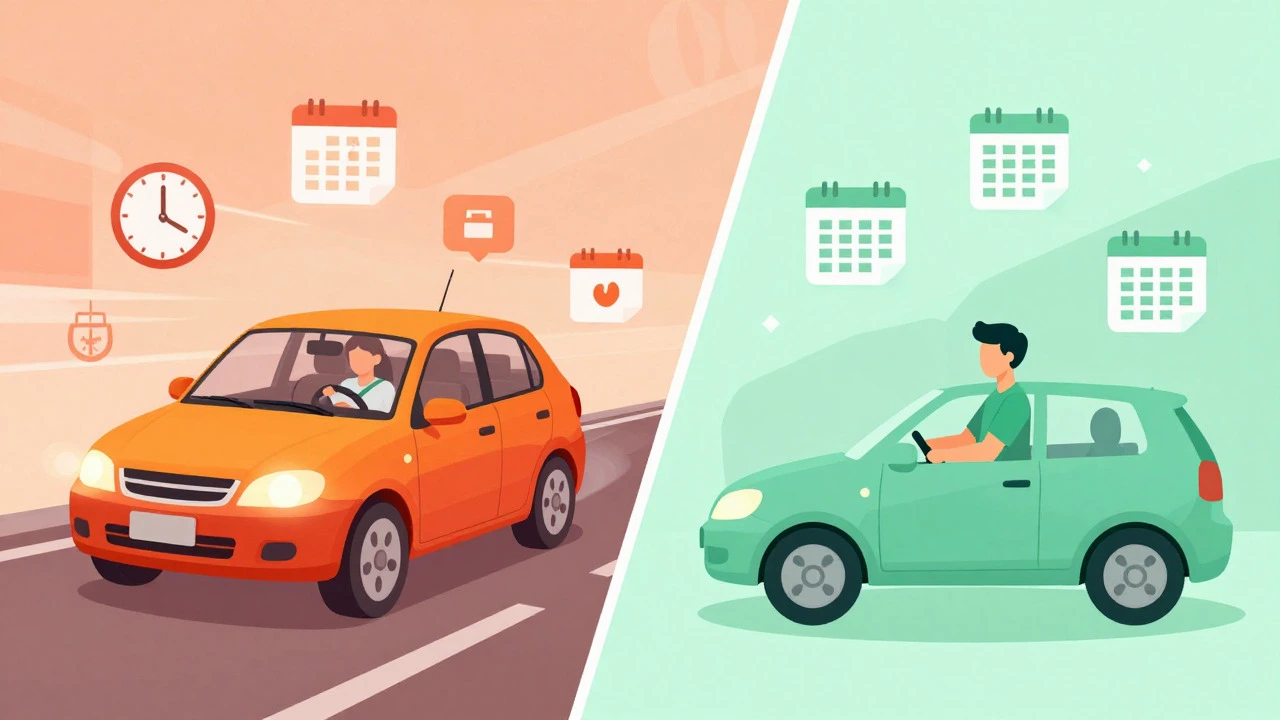
Who Should Choose a Crash Course?
Not everyone is cut out for the grind. A crash course is ideal if you meet most of these criteria:
- You have flexible time: You can take leave from work or are currently unemployed/student during a break.
- You want it done quickly: Maybe you need a licence for a new job starting soon, or you’re moving abroad.
- You learn best by doing: You retain information better through repetition rather than spaced-out study.
- You have high motivation: You are ready to focus entirely on driving for a short period.
If you are someone who gets easily overwhelmed by pressure, or if you have a condition that requires frequent breaks (like severe back pain or migraines triggered by stress), a crash course might not be the best fit. Talk to your instructor honestly before booking.
Who Should Stick to Weekly Lessons?
Weekly lessons are the safer bet for many people. Consider this route if:
- Your schedule is tight: You work long hours or have family commitments that make full-time driving impossible.
- You prefer a relaxed pace: You don’t want driving to dominate your thoughts for weeks on end.
- You need time to absorb complex maneuvers: Some learners struggle with parallel parking or hill starts and benefit from practicing them repeatedly over different days.
- Budget flexibility matters: You prefer paying as you go rather than a large lump sum upfront.
This path requires discipline. You must show up to every lesson prepared and try to practice in between if possible. Otherwise, you risk dragging the process out indefinitely.

Hybrid Approach: The Best of Both Worlds?
There is a third option that many successful drivers use: the hybrid model. Start with a few weekly lessons to get comfortable with the basics-clutch control, steering, mirrors. Once you have the fundamentals down, switch to a mini-intensive phase. Book two or three consecutive days of double lessons to build confidence before your test.
This approach combines the low-pressure start of weekly lessons with the momentum boost of intensive training right before the exam. It helps cement skills when they matter most. Just ensure your instructor supports this transition and doesn’t penalize you for changing frequency.
How to Ensure You Pass First Time
Regardless of which path you choose, passing your test depends on preparation. Here are practical tips to maximize your chances:
- Know your route: Familiarize yourself with common test routes in your area. Practice them until you can navigate without thinking.
- Simulate test conditions: Ask your instructor to run mock tests. Sit in silence, follow directions, and handle mistakes calmly. This reduces shock on the real day.
- Focus on observation: Most failures happen due to poor mirror checks or failing to observe hazards. Make observation automatic, not an afterthought.
- Stay calm: Nervousness causes errors. Breathe deeply before starting. Remember, the examiner wants you to pass-they just need to see safe driving.
Final Thoughts on Choosing Your Path
There is no universally "better" option. It boils down to your lifestyle, learning style, and budget. If you can spare the time and want a quick result, go for the crash course. If you need flexibility and prefer a steady pace, stick with weekly lessons. Either way, consistency and quality instruction matter more than the format itself.
Don’t rush into a decision without assessing your own readiness. Speak to potential instructors, ask about their pass rates, and gauge their teaching style. The right instructor will guide you toward the method that suits you best, ensuring you become a confident, safe driver regardless of how fast you get there.
Is a crash course harder than regular lessons?
Yes, in terms of daily time commitment and mental fatigue. You are driving for longer hours each day, which can be tiring. However, many students find it less stressful overall because the learning is continuous, reducing the fear of forgetting skills between sessions.
Can I switch from weekly lessons to a crash course later?
Absolutely. Many learners start with weekly lessons to grasp basics and then switch to an intensive block closer to their test date. This hybrid approach can help reinforce skills right before the exam.
Do crash courses guarantee a pass?
No course can guarantee a pass, as the test depends on your performance on the day. However, reputable providers often offer free retests if you fail within a set period, making it a lower-risk financial investment.
How many hours of driving do I actually need?
The DVSA recommends around 45 hours of professional instruction plus 22 hours of private practice. However, this varies greatly by individual. Some pass with fewer hours, while others need more. An experienced instructor can assess your progress and advise accordingly.
Are automatic cars easier to learn in for crash courses?
Yes, automatic cars remove the complexity of clutch control and gear shifting, allowing you to focus entirely on observation and maneuvering. This can speed up learning significantly, making crash courses even more efficient for automatic learners.