
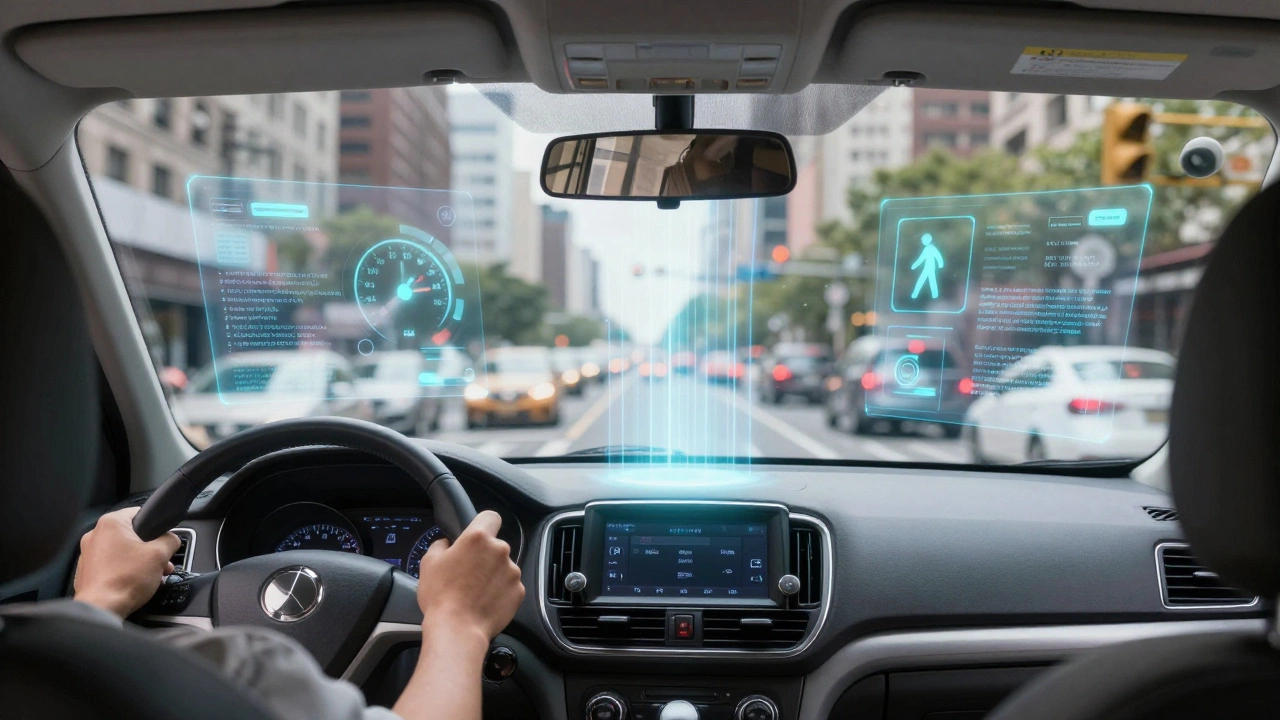
Driving Cognitive Load Simulator
Experience the "Cognitive Bottleneck." As a beginner, every task requires conscious effort. Add tasks to see how your brain's processing power fills up. When the bar hits 100%, you experience Cognitive Overload and start forgetting basic actions.
Active Tasks
Brain Processing Capacity
Your brain has run out of processing power. You just forgot to signal while focusing on the gear shift!
The Cognitive Overload Problem
When you first start learning to drive, your brain is dealing with something called cognitive load. Essentially, your working memory can only hold a few pieces of information at once. For an experienced driver, shifting gears or checking a mirror is an automated process. For you, it's a conscious, step-by-step manual. Think about a typical intersection. You have to monitor your speed, check for crossing traffic, look for pedestrians, signal your intent, and maintain your lane position. That's five separate streams of data hitting your brain simultaneously. Because these aren't habits yet, your brain hits a bottleneck. This is why you might accidentally forget to signal when you're focusing really hard on a difficult parallel park. Your brain simply ran out of "processing power" for that second.The Struggle with Muscle Memory
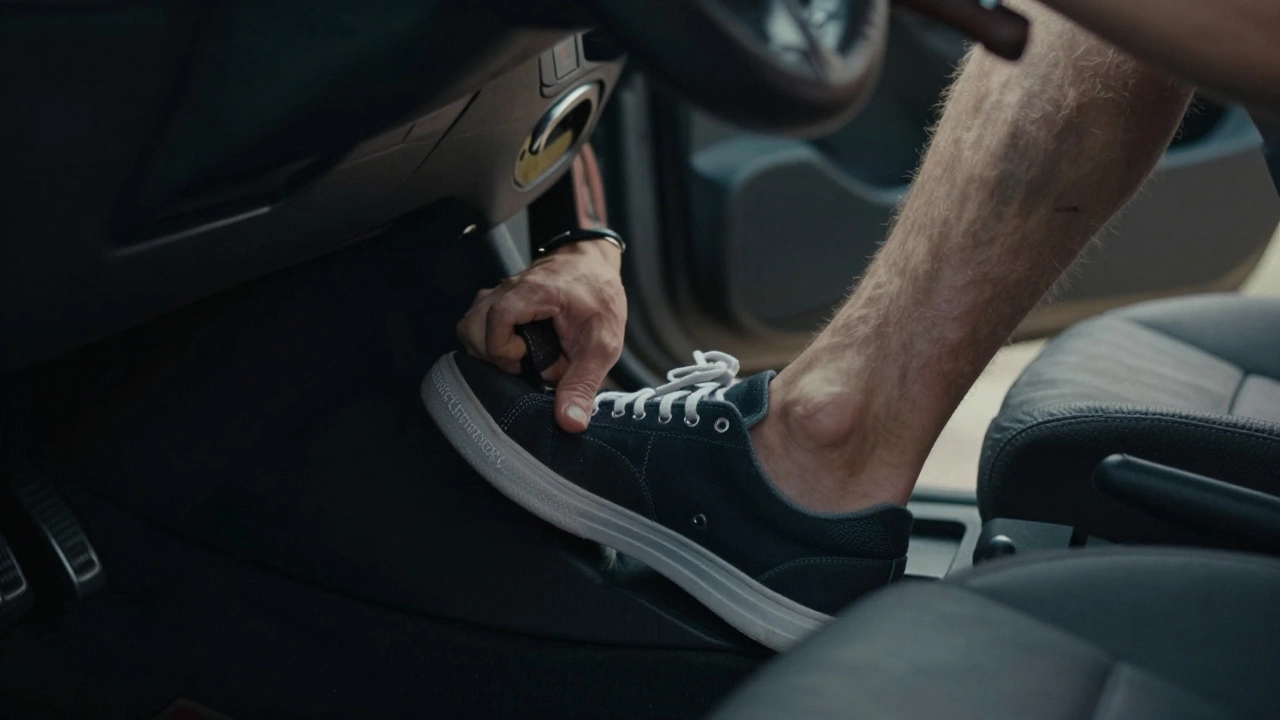
Driving is essentially a physical language. To speak it, you need Muscle Memory, which is the process by which the brain trains muscles to perform a specific action automatically through repetition. When you're in a Manual Transmission car, the dance between the clutch and the accelerator is a delicate balance of friction and torque. If you've ever stalled a car at a green light, it's because your foot hasn't yet developed the "feel" for the biting point. You are relying on conscious thought ("lift the foot slowly") rather than subconscious feel. This gap between thinking and doing creates a lag, and in a two-ton machine moving at 40 km/h, a half-second lag feels like an eternity. It takes hundreds of repetitions for the basal ganglia in your brain to take over these movements, moving them from the prefrontal cortex (the thinking part) to the deeper, automatic parts of the brain.Spatial Awareness and the "Fishbowl" Effect
Most people struggle with Spatial Awareness, which is the ability to be aware of one's position and movement in space and the relative position of objects. When you're inside a car, your perspective changes. You aren't just moving your body; you're moving a large metal box. Judging where the curb is or how much room you have to merge into a lane requires a mental calibration. Beginners often struggle with "blind spots" because they haven't yet developed a mental map of the vehicle's dimensions. You might feel like the car is wider than it is or cut the corner too sharply. This is a sensory integration issue; your eyes see the road, but your brain hasn't yet learned to translate that visual data into the actual physical footprint of the car.| Skill Element | The Beginner (Conscious) | The Pro (Unconscious) |
|---|---|---|
| Gear Shifting | Thinks: "Clutch down, move lever to 2nd, release slowly" | Happens automatically while talking |
| Mirror Checks | Stops focusing on the road to look at the mirror | Peripheral glance while maintaining steering |
| Braking | Jerky stop due to over-thinking pressure | Smooth, progressive deceleration |
The Role of Anxiety and the "Fear Loop"
Let's be honest: driving is scary. You're operating a heavy machine in an environment where other people are often unpredictable. For many, Driving Anxiety acts as a psychological brake. When you feel anxious, your body releases cortisol and adrenaline, which can actually impair your fine motor skills-the exact skills you need to steer and brake smoothly. This creates a vicious cycle. You make a mistake (like clipping a curb), you feel a surge of panic, and that panic makes you more likely to make another mistake. This "fear loop" can make a student feel like they aren't "natural" drivers. In reality, they aren't struggling with the skill of driving; they're struggling with the emotional regulation of the stress response. This is why some students progress rapidly with a calm instructor but freeze up when a parent-who might be more critical or nervous-gets in the passenger seat.Environmental Complexity and Hazard Perception
Learning to drive in a quiet suburb is one thing; doing it in a city center is another. Hazard Perception is the ability to identify potentially dangerous situations on the road before they become critical. Beginners often suffer from "tunnel vision." They focus so intently on the car directly in front of them that they miss the pedestrian stepping off the curb two cars ahead or the cyclist approaching from the side. This isn't a lack of intelligence; it's a lack of visual scanning habits. Experienced drivers use a technique called "scanning," where they constantly move their eyes in a specific pattern. Training this habit takes time and conscious effort, and until it's automatic, the road feels like a chaotic mess of unpredictable variables.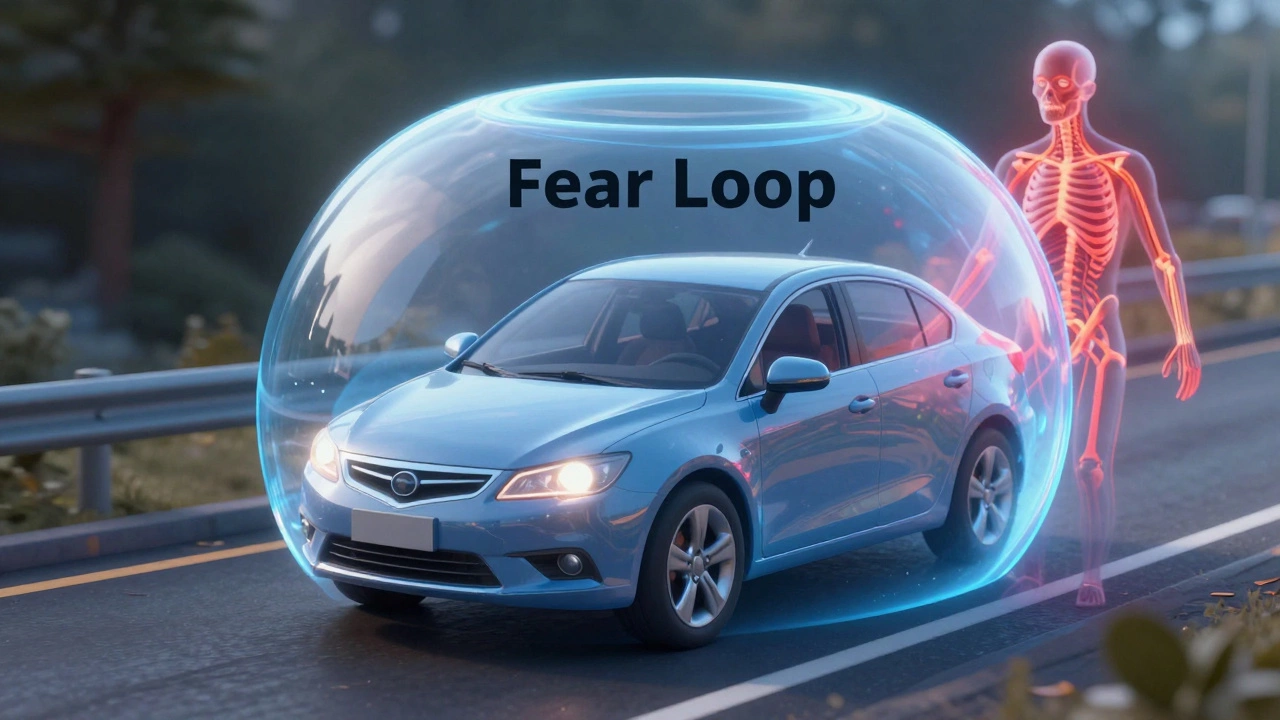
Why Automatic Lessons Can Be a Shortcut
Many people find that switching to Automatic Driving Lessons suddenly makes everything easier. Why? Because it removes a massive chunk of the cognitive load. By eliminating the clutch and gear stick, the brain no longer has to manage the complex timing of the transmission. This allows the student to dedicate 100% of their mental energy to spatial awareness, road signs, and hazard perception. It essentially "unlocks" the brain's capacity to focus on the environment rather than the machine. While this doesn't teach you how a gearbox works, it drastically reduces the initial frustration and anxiety associated with stalling and gear-grinding.How to Break Through the Plateau
If you feel like you've hit a wall, the key is to break the learning process into smaller, isolated chunks. This is known as "part-task training." Instead of trying to master everything at once, focus on one skill per session. Spend an hour just practicing smooth braking. Spend another hour just focusing on your mirror routine. Consistency also beats intensity. Taking one two-hour lesson every two weeks is far less effective than taking thirty-minute sessions three times a week. Frequent, short bursts of practice keep the neural pathways active and prevent you from "resetting" to zero every time you get back in the car. Finally, remember that the goal isn't to be perfect on day one; the goal is to move from conscious effort to unconscious habit.Is it normal to feel like I'm not improving after several lessons?
Yes, this is called a learning plateau. Skill acquisition isn't a straight line; it's a series of jumps. You might feel stuck for weeks, and then suddenly, the coordination of the clutch or the timing of a roundabout will just "click." This happens as your brain finishes building the necessary neural connections.
Why do I forget my signals when I'm concentrating on steering?
This is due to cognitive overload. Your brain has a limited amount of attention. When a task (like a difficult turn) requires 90% of your focus, the remaining 10% isn't enough to remember a secondary task like signaling. As steering becomes an automatic habit, you'll free up mental space for signaling.
Does learning in an automatic car make it harder to learn manual later?
Not necessarily. In fact, it can be easier because you've already mastered the "road craft" (steering, observation, and rules). You'll only need to learn the mechanical operation of the clutch and gears, rather than learning how to drive and how to shift at the same time.
How can I stop shaking or panicking during my lessons?
Controlled breathing is the most effective tool here. Deep, slow breaths signal to your nervous system that you are safe, which lowers cortisol levels and allows your prefrontal cortex to stay in control. Also, communicate with your instructor about your anxiety so they can adjust the pace of the lesson.
Why is parallel parking so much harder than other maneuvers?
Parallel parking requires a high level of spatial awareness and a counter-intuitive understanding of how the rear of the car pivots. It's a combination of precise steering angles and timing that doesn't mimic any other movement we make in daily life, making it a steep learning curve.