
CB Radio Code & Slang Translator
Enter a term or phrase to understand its meaning in trucking culture.
You’ve probably heard it in movies or on a podcast: a deep voice crackling over a static-filled channel saying, “Breaker one-nine.” It sounds cool, mysterious, and distinctly American. But if you are sitting behind the wheel of an HGV Heavy Goods Vehicle used for transporting large loads across long distances in Europe or Australia, you might be wondering why this phrase exists and whether you should use it.
The short answer is that Breaker 19 is a relic of the 1970s American trucking culture. It has very little to do with modern professional driving safety or logistics. However, understanding where it comes from helps new drivers navigate the social side of the road. It’s not just about knowing what to say; it’s about understanding the history of how drivers have always looked out for each other.
What Does "Breaker" Actually Mean?
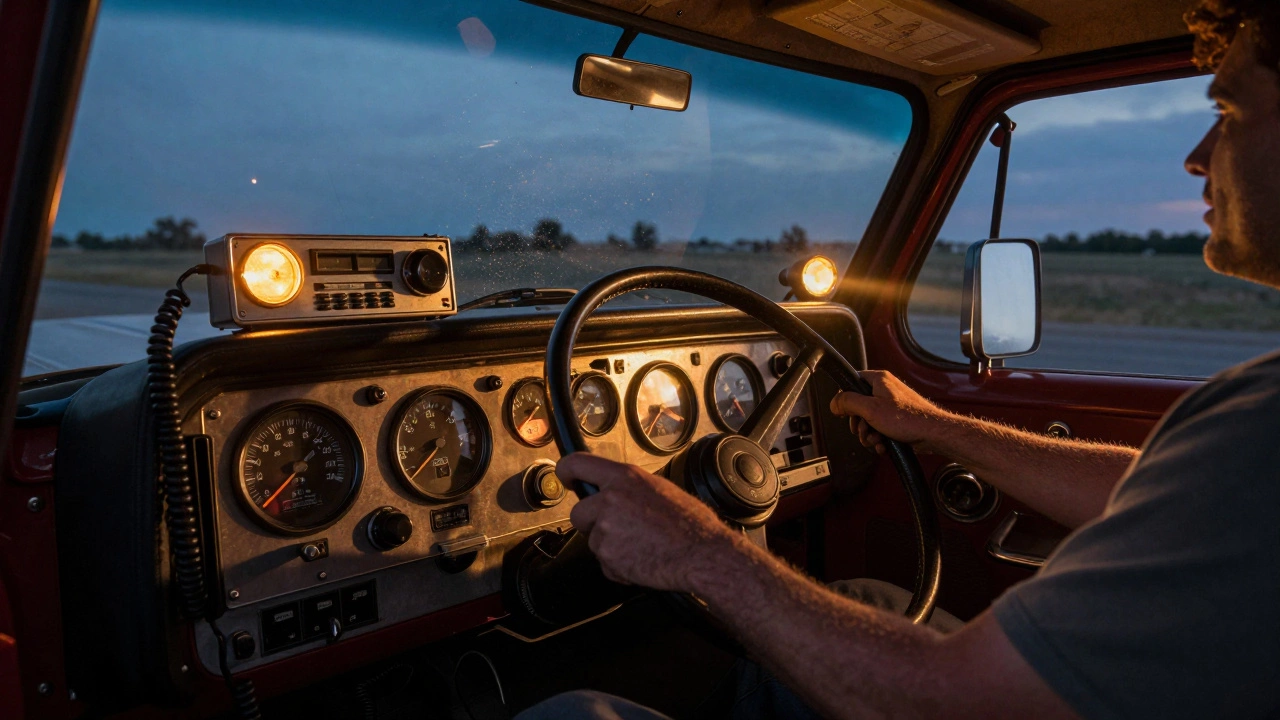
To understand the code, you have to look at the hardware. In the early days of two-way radio communication, the device wasn’t called a "radio." It was called a CB Radio Citizens Band Radio, a low-power short-range two-way radio system operating in the 27 MHz band. These radios were often referred to as "breakers" because they allowed users to break through the silence of a lonely highway drive.
The term stuck. When a driver wanted to get someone’s attention on the airwaves, they didn’t just yell. They used a call sign. Saying "Breaker" was like raising your hand in a classroom. It signaled, "Hey, I’m here, and I want to talk." It was a polite way to interrupt the ambient noise of the channel without being rude.
This isn’t unique to trucks. Ham radio operators and even some police units used similar terminology. But truckers adopted it and made it their own. For a beginner in HGV training, knowing this distinction is key. You aren’t just learning to shift gears; you are entering a community with its own language.
Why the Number 19?
If "Breaker" is the hello, then "19" is the identity. This is where the confusion usually starts. Many people think 19 refers to a specific channel on the radio. It doesn’t. Channel 19 is indeed the standard calling channel for truckers in the United States, but the number in the phrase "Breaker 19" is actually a handle or a nickname.
In CB radio culture, every driver picks a "handle." Some are funny, some are descriptive, and some are random numbers. "Breaker 19" became famous because of a song by Dean Martin called "Little Green Bag," which featured the lyrics "Breaker 1-9, breaker 1-9, come in, come in." The song hit the charts in 1969 and exploded the popularity of CB slang into mainstream culture.
So, when you hear "Breaker 19," it’s essentially a reference to pop culture history. It’s a nod to the golden age of trucking. Today, if you introduce yourself as "Breaker 19" on a live channel, most experienced drivers will smile. They’ll know you’re either joking, quoting a movie, or trying too hard to fit in.
The Evolution of Trucker Communication
Communication methods change fast. The CB radio was king in the 70s and 80s. Then came mobile phones. Now, we have smartphones, GPS trackers, and fleet management software. So, does anyone still use these codes?
Yes, but differently. Modern long-haul drivers still value real-time information. If there is a police speed trap ahead, a broken bridge, or a massive accident blocking the lane, that info needs to travel fast. While many fleets now use encrypted digital apps, the spirit of the CB remains. Drivers still share tips, warn each other of dangers, and offer companionship during night drives.
However, the language has evolved. You won’t hear much "10-code" talk (like 10-4) among serious professionals anymore. It’s seen as outdated or even unprofessional in certain corporate environments. Instead, plain English is preferred for clarity. "There’s a cop on the left shoulder" is clearer than "Bear right, ten-forty."
Common CB Codes Every Driver Should Know
Even if you don’t plan to spend hours chatting on the radio, knowing a few basic terms can help you understand what’s happening around you. Here are the most common ones you might encounter in media or older driver circles:
- Breaker: A request for permission to speak or to get attention.
- Handle: Your chosen name or callsign on the radio.
- Rig: Slang for the truck itself.
- Diamond Lil: A beautiful woman, often used humorously.
- Smokey: Short for Smokey Bear, referring to law enforcement officers.
- Thumper: Another term for a truck or rig.
- Chicken Coop: A truck stop or rest area.
Notice how none of these are technical driving instructions. They are social lubricants. They help build camaraderie. For a new driver, this social aspect can reduce the feeling of isolation that comes with spending weeks on the road.
Is It Safe to Use CB Radios Today?
This is a critical question for anyone undergoing commercial driving education. Using a handheld radio while driving can be dangerous. It distracts your eyes from the road and your hands from the wheel. Most modern regulations require that any communication device be mounted securely and operated via push-to-talk buttons on the steering wheel or dashboard.
In many countries, including the UK and parts of Europe, using a handheld device while driving is illegal and can result in heavy fines and points on your license. Even if the radio is legal, constant chatter can increase cognitive load. You need to focus on blind spots, tire pressure, and traffic flow, not on who is playing music in Texas.
Professional advice? Keep the radio off unless you are parked or moving slowly in a convoy. If you must communicate, keep it brief and factual. Safety always trumps socializing.
Modern Alternatives to CB Radio
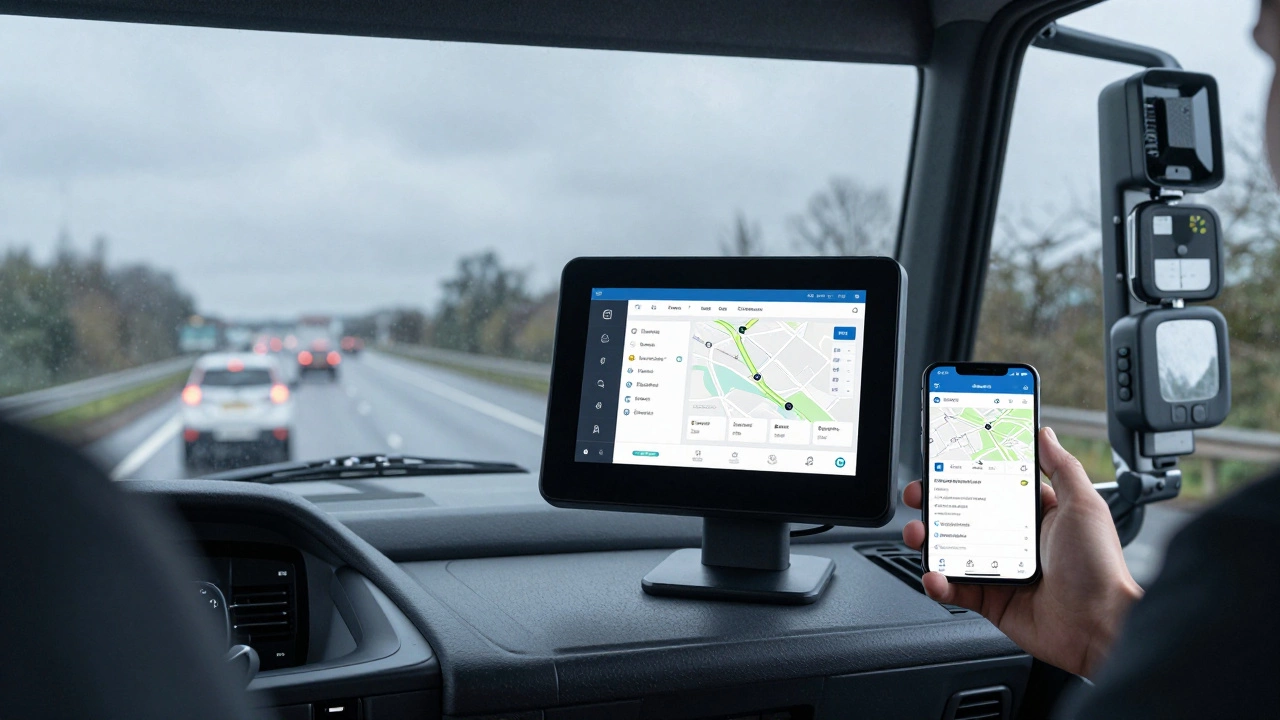
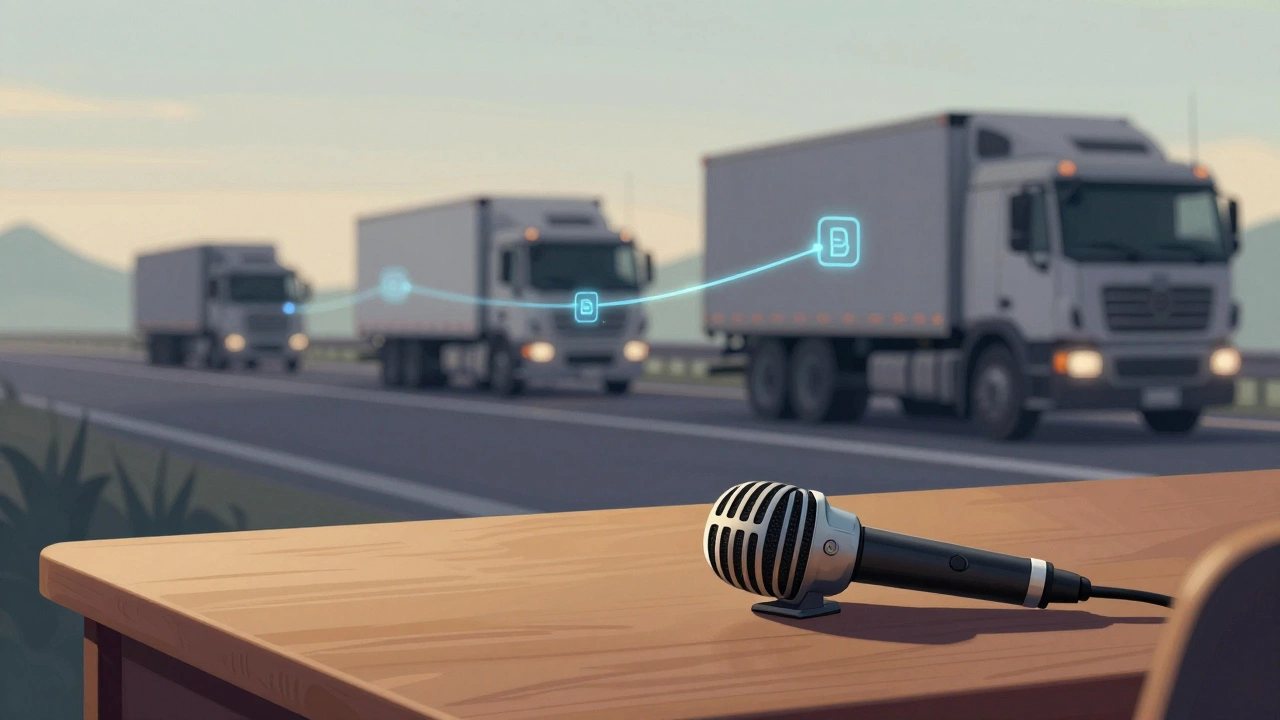
Technology has moved on. Most major logistics companies now use dedicated fleet communication systems. These systems integrate with the vehicle’s telematics. They can send automated alerts about weather, route changes, and maintenance needs.
Apps like Trucker Path A popular mobile application providing real-time data on truck stops, fuel prices, and weigh stations allow drivers to check reviews and availability before they arrive. This reduces the need to ask strangers on the radio, "Is the diner open?" or "How much is diesel?" You can see it on your phone instantly.
However, these apps lack the immediacy of voice radio for urgent warnings. If a semi-truck blows a tire and debris flies onto the highway, a voice warning travels faster than a text post. That’s why some independent owner-operators still keep a CB or a GMRS (General Mobile Radio Service) radio in the cab. It’s a backup lifeline.
Cultural Differences in Trucker Lingo
If you are driving outside the US, the slang changes. In the UK, you won’t hear "Breaker 19." You might hear "Mate" or references to local landmarks. In Australia, truckers have their own distinct slang, influenced by bush culture. Terms like "sheila" or "cobber" might appear, though they are fading with younger generations.
In Germany, the autobahn culture creates a different dynamic. Speed limits are higher, and communication focuses more on overtaking maneuvers and gap coordination. The friendly, chatty vibe of the American CB is less common. Understanding these cultural nuances is part of becoming a global driver. It shows respect for local norms and helps you integrate better wherever you work.
Should New Drivers Learn CB Etiquette?
Do you need to learn CB etiquette to pass your HGV test? No. The examiner will not ask you to identify a "Smokey" or explain the meaning of "Breaker." They will test your ability to reverse safely, check mirrors, and manage cargo weight.
But should you learn it? Maybe. If you plan to drive independently, especially at night, having a radio can make you feel safer. Knowing the basics prevents you from sounding like an outsider. It opens doors to helpful advice from veterans who have been doing this for thirty years. They can tell you which routes to avoid, which weigh stations are corrupt, and where the best coffee is.
Just remember: listen more than you talk. Old drivers appreciate humility. Don’t try to impress them with fake slang. Be genuine, be safe, and be respectful. That’s the real code of the road.
What does "Breaker 19" mean in trucking?
"Breaker 19" is a famous CB radio handle from the 1970s. "Breaker" means a CB radio operator, and "19" was a popular callsign popularized by Dean Martin's song "Little Green Bag." It is not a technical command but a cultural reference.
Do truckers still use CB radios today?
Some do, but usage has declined significantly. Many drivers now use smartphones and fleet apps for communication. However, CB radios remain popular among independent owner-operators for real-time hazard warnings and social connection.
Is it illegal to use a CB radio while driving an HGV?
It depends on the country and how it is used. In many places, using a handheld device is illegal. The radio must be mounted, and operation should be hands-free to ensure safety. Always check local traffic laws regarding electronic devices.
What is the difference between CB radio and GMRS?
CB (Citizens Band) operates on 27 MHz and requires no license in many countries. GMRS (General Mobile Radio Service) operates on UHF frequencies, offers clearer audio, and often requires a license. GMRS is generally considered more reliable for modern use.
Why is Channel 19 important for truckers?
Channel 19 is the designated calling channel for truckers in the United States. It is monitored by almost all commercial vehicles for general announcements, weather updates, and emergency warnings. It serves as the central hub for CB communication.