
Driving Test Difficulty Analyzer
Difficulty Rating
Key Challenge Factors
Common Pitfalls to Avoid
Personalized Preparation Tips
Success Probability Estimate
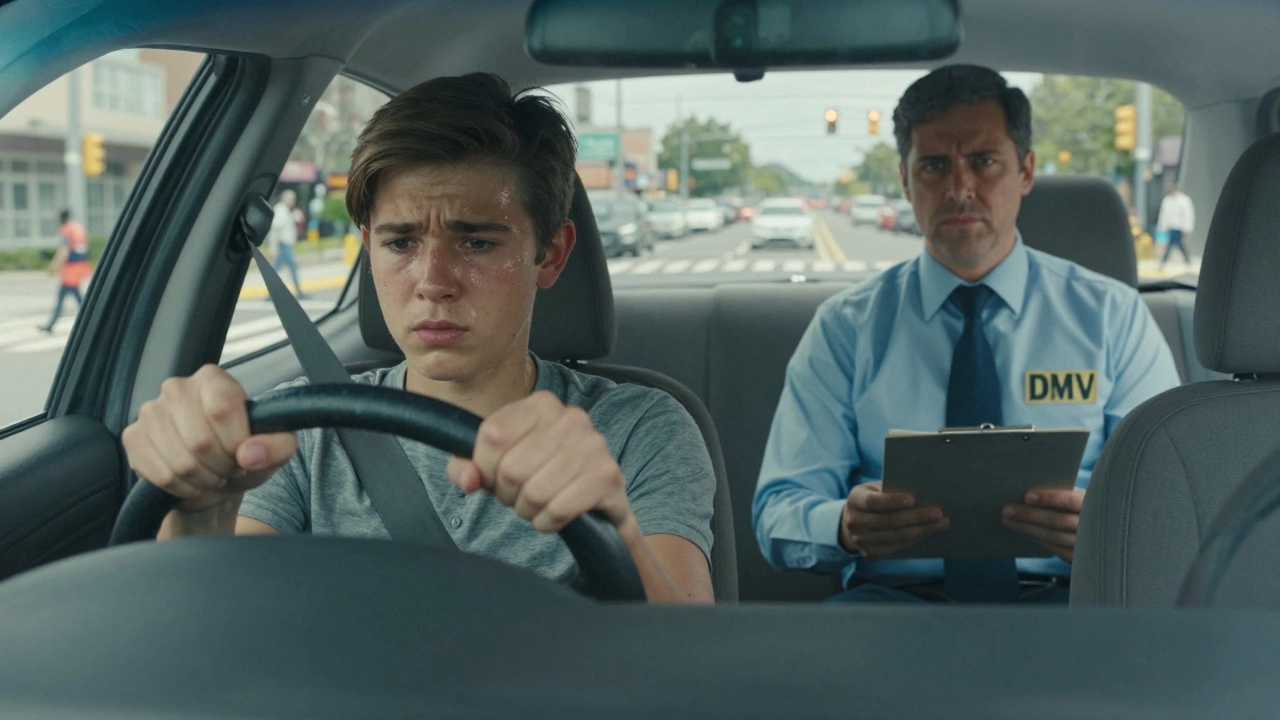
Imagine sitting in a car with a stern examiner, your palms sweating, as you approach a tricky intersection. You know the rules, but does this specific state’s Department of Motor Vehicles (DMV) care about the tiny details that others ignore? For many new drivers, the question isn't just "Can I drive?" but "Which state will make me prove it the most rigorously?"
The answer depends on how you define "hard." Some states demand perfect scores on their written exams. Others have road tests so detailed that missing one hand signal can mean failure. Still, others require you to demonstrate advanced skills like parallel parking in tight spaces or navigating complex highway merges without hesitation.
Why Driving Test Difficulty Varies by State
There is no single national standard for driver licensing in the United States. While the Department of Motor Vehicles (DMV) state agencies responsible for issuing driver's licenses and registering vehicles follow general guidelines from the National Highway Traffic Safety Administration (NHTSA), each state sets its own rules. This means the experience in California can be vastly different from the one in Texas or New York.
Several factors contribute to the perceived difficulty:
- Scoring Systems: Some states use a point-deduction system where you start with 100 points and lose them for mistakes. Others use a pass/fail checklist where one major error results in immediate failure.
- Examiner Discretion: In some regions, examiners have wide latitude to judge "safe driving habits," which can feel subjective and stressful.
- Test Environment: Urban centers often have more traffic, pedestrians, and complex intersections, making the test inherently harder than rural routes.
- Pre-Test Requirements: Some states require extensive behind-the-wheel training hours before you can even book a test.
The Top Contenders for the Hardest Driving Tests
While opinions vary, certain states consistently rank high in discussions about difficult driving tests. Here are the ones that stand out.
New York: The Precision Test
New York City’s driving test is legendary among learners. The city’s dense traffic, unpredictable pedestrians, and narrow streets create a challenging environment. Examiners in New York are known for being strict about minor infractions. For example, failing to check your blind spot thoroughly or not signaling early enough can lead to an automatic fail.
The route often includes multiple stops, turns, and interactions with other vehicles. You must demonstrate precise control over the vehicle, especially when parallel parking, which is a mandatory part of the test in many NYC boroughs.
California: The Point System Challenge
California uses a scoring system where you start with 100 points. Minor errors cost you a few points, while major errors-like running a stop sign or hitting a curb-can result in immediate failure. The challenge lies in maintaining a perfect score throughout the entire test. Even small mistakes add up quickly.
Additionally, California requires applicants to complete a driver education course and log significant practice hours before taking the test. This preparation ensures that candidates are well-versed in traffic laws, but it also raises the bar for performance.
Texas: The Comprehensive Evaluation
Texas has gained a reputation for thoroughness. The state’s driving test covers a wide range of scenarios, including highway driving, night driving simulations, and emergency maneuvers. Examiners look for smooth acceleration, braking, and steering control.
In Houston and Dallas, the volume of traffic adds another layer of complexity. You need to anticipate the actions of other drivers and react appropriately. Missing a lane change opportunity or hesitating at a merge point can be costly.
Florida: The Weather Factor
Florida’s driving tests are tough not just because of the rules, but because of the conditions. Heavy rain and thunderstorms are common, and examiners expect you to handle these situations safely. If it rains during your test, you’ll be judged on your ability to maintain visibility, control speed, and keep a safe distance from other cars.
Furthermore, Florida has a zero-tolerance policy for certain violations. Running a red light or failing to yield to pedestrians results in an instant fail, regardless of how well you performed elsewhere.
| State | Key Difficulty Factor | Scoring Method | Common Pitfalls |
|---|---|---|---|
| New York | Urban density & strict examiners | Pass/Fail with major/minor errors | Poor signaling, missed blind spots |
| California | Point deduction system | Start at 100, lose points for errors | Accumulating minor mistakes |
| Texas | Comprehensive skill evaluation | Pass/Fail based on safety criteria | Hesitation, poor lane changes |
| Florida | Weather conditions & zero tolerance | Immediate fail for critical errors | Speeding in rain, yielding failures |

Understanding the Components of a Hard Test
To prepare effectively, you need to understand what makes a test difficult. It’s not just about knowing the rules; it’s about applying them under pressure.
The Written Exam
Before you get behind the wheel, you must pass a written knowledge test. These exams cover traffic signs, road markings, and state-specific laws. States like Arizona and Colorado have particularly detailed questions. For instance, you might be asked about the exact distance required between vehicles when following a school bus or the penalties for texting while driving.
Tip: Use official study materials provided by your state’s DMV. Third-party apps can help, but they may not reflect the latest legal changes.
The Road Test
The road test evaluates your practical driving skills. Key areas include:
- Vehicle Control: Smooth starting, stopping, and turning.
- Observation: Checking mirrors, blind spots, and surroundings.
- Decision Making: Choosing appropriate speeds and lanes.
- Maneuvers: Parallel parking, three-point turns, and hill starts.
In states like Illinois and Ohio, parallel parking is a make-or-break element. You must fit into a space within a set number of attempts and avoid hitting curbs or other cars.
How to Prepare for Any Driving Test
No matter which state you’re in, preparation is key. Here’s how to boost your chances of passing.
Practice in Real Conditions
If possible, practice driving in the same type of environment where you’ll take your test. If your test is in a busy city, spend time navigating heavy traffic. If it’s in a suburban area, focus on residential streets and school zones.
Take a Professional Course
Enrolling in a certified driving school educational institution providing instruction on operating motor vehicles can provide structured learning and feedback. Instructors know what examiners look for and can help you refine your technique.
Simulate the Test
Ask a licensed adult to act as an examiner. Have them give you commands and critique your performance. This helps reduce anxiety and builds confidence.
Review Common Mistakes
Avoid these frequent errors:
- Failing to signal turns or lane changes.
- Not checking blind spots before changing lanes.
- Stalling the vehicle unnecessarily.
- Speeding or driving too slowly.
- Ignoring pedestrian right-of-way.

Booking Your Test: What You Need to Know
Once you feel ready, it’s time to schedule your appointment. Many states allow online booking through their DMV website official portal for managing driver services. Be aware that wait times can vary significantly. In popular areas like Los Angeles or New York City, slots may fill up weeks in advance.
Bring all required documents, including proof of identity, residency, and completion of any prerequisite courses. Arrive early to allow time for paperwork and verification.
Final Thoughts on Conquering the Hardest Tests
The hardest driving test isn’t necessarily the one with the toughest rules-it’s the one that catches you unprepared. By understanding your state’s specific requirements, practicing diligently, and staying calm, you can overcome any challenge. Remember, the goal is not just to pass the test but to become a safe, confident driver for life.
Which state has the easiest driving test?
States like South Dakota and North Dakota are often cited as having easier driving tests due to less traffic and simpler routes. However, "easy" is relative, and all tests require basic competence.
Do I need a driving instructor to pass the test?
Not always, but highly recommended. Some states require a certain number of supervised driving hours, and instructors can help you meet those requirements while teaching best practices.
What happens if I fail my driving test?
You can usually retake the test after a waiting period, which varies by state. You may need to pay a retesting fee. Review your mistakes and practice before scheduling again.
Is the written test harder than the road test?
It depends on the individual. Some people find memorizing traffic laws challenging, while others struggle with practical driving skills. Both components are important and require separate preparation.
Can I bring my own car for the driving test?
In most states, yes, provided the vehicle is insured, registered, and in good working condition. Check your local DMV’s specific requirements regarding brakes, lights, and seat belts.