
Driving Challenge Self-Assessment
Rate how difficult you find these common driving scenarios. Be honest—this helps us generate a tailored action plan.
Anxiety & Overthinking
Feeling overwhelmed by information or freezing up.
Clutch Control
Stalling, finding biting point, smooth starts.
Merging High-Speed
Slip roads, motorways, judging gaps.
Parallel Parking
Spatial awareness, steering precision.
Complex Junctions
Roundabouts, T-junctions, predicting others.
Reversing Safely
Blind spots, distance judgment.
Your Top Challenges
Primary Focus Area
Personalized Tips
Ask ten new drivers what they struggle with most, and you’ll get nine different answers. Some swear it’s the clutch control on a manual car. Others point to the terrifying moment you have to merge onto a busy motorway at 70 mph. Then there’s the silent killer: parallel parking in a tight spot while someone honks behind you.
There is no single "hardest" part of driving because difficulty is subjective. It depends on your coordination, your confidence, and even the car you’re learning in. However, data from driving schools and examiner reports consistently highlight a few universal bottlenecks. These are the moments where theory meets reality, and many learners stumble.
The Mental Game: Anxiety and Overthinking
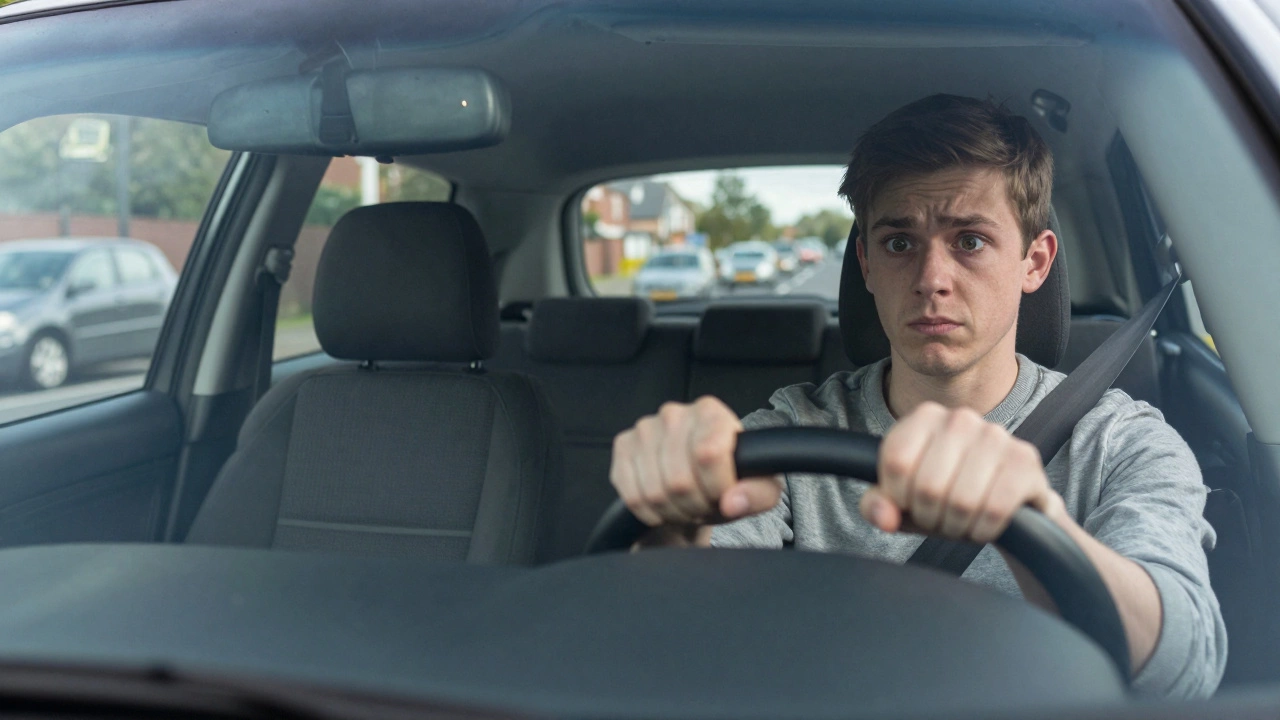
Before we talk about gears or mirrors, let’s address the elephant in the room: your brain. For many beginners, the hardest part of driving isn’t physical; it’s psychological. This is often called driving anxiety, which is a state of heightened stress and fear associated with operating a vehicle.
When you sit in the driver’s seat, your brain is trying to process too much information at once. You’re watching the road ahead, checking the mirror, feeling the pedals, and listening for traffic. For a learner, this causes cognitive overload. You freeze. Your foot hovers over the brake instead of pressing it smoothly. You forget to signal. This mental block makes simple tasks feel impossible.
The good news? Anxiety drops sharply after your first few hundred miles. As actions become muscle memory, your brain frees up space to actually think about navigation and hazard perception. Until then, the hardest part is simply trusting that you can handle the machine.
Clutch Control and Smooth Starts
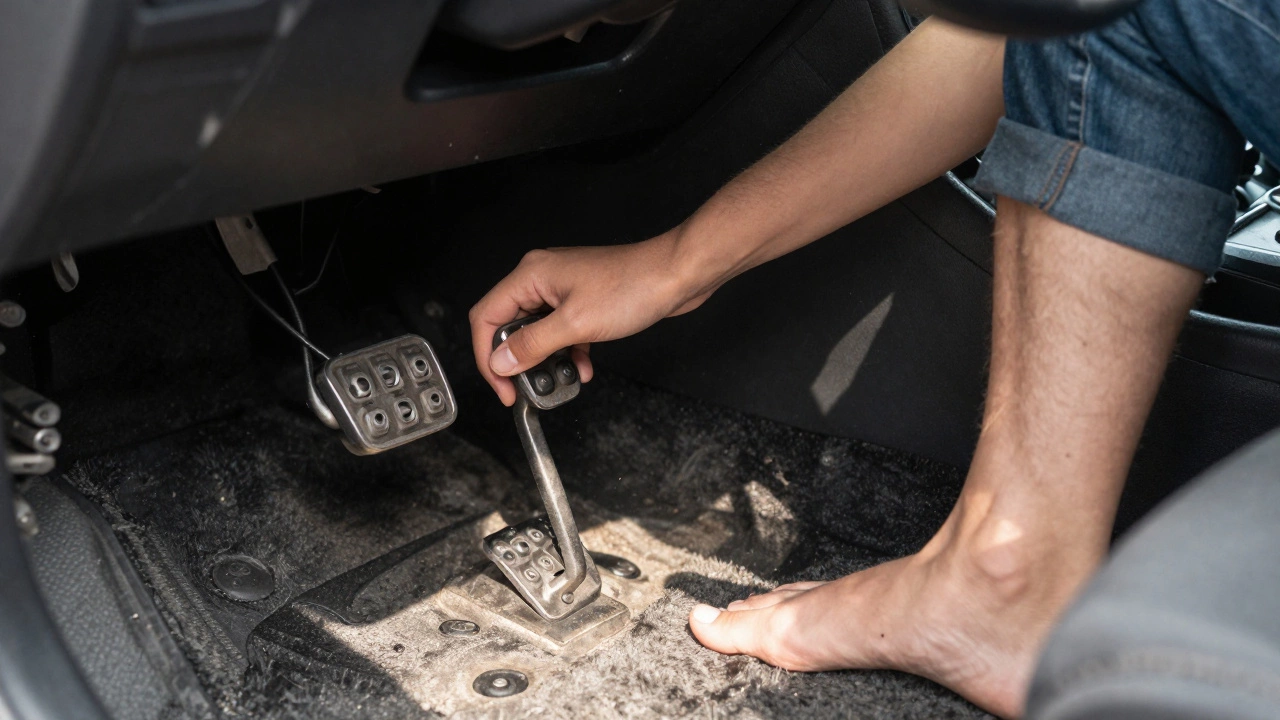
If you are learning on a manual transmission, the clutch is likely your biggest enemy. Specifically, finding the biting point, which is the precise position of the clutch pedal where the engine begins to engage with the wheels.
Why is this so hard? Because it requires fine motor skills that most people haven’t used since childhood. You need to lift your left foot slowly while simultaneously easing off the brake and gently adding gas. Do it too fast, and the car stalls. Do it too slow, and you grind the clutch. On a hill start, add gravity to the mix, and the pressure mounts significantly.
Many learners spend weeks just trying to move forward without jerking. It feels like you’re fighting the car. In reality, you’re just calibrating your sense of touch. Once you find that sweet spot where the car wants to move but hasn’t stalled yet, everything else gets easier. Automatic cars eliminate this hurdle entirely, which is why automatic lessons are seeing a surge in popularity among nervous learners.
Merging onto High-Speed Roads
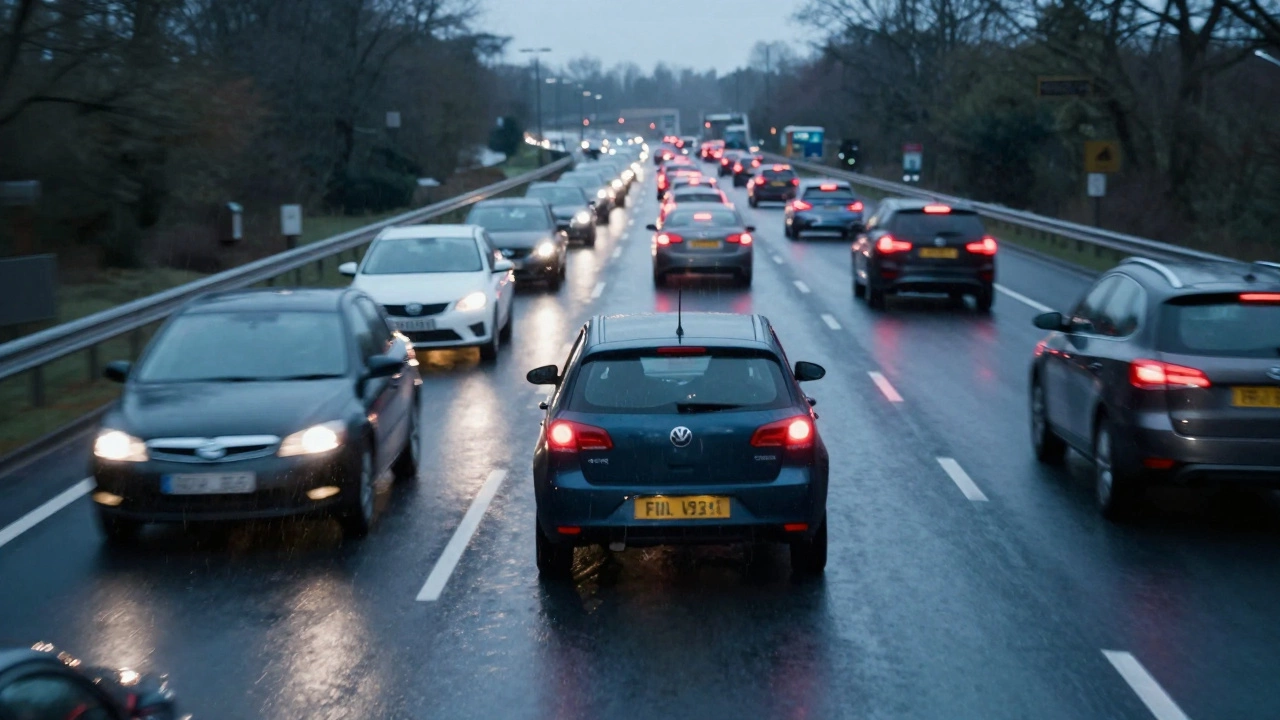
Let’s say you’ve mastered starting and stopping. Now you’re on a slip road, approaching a dual carriageway or motorway. Cars are zooming past at 60 to 70 mph. You need to accelerate, check your blind spot, and slot into a gap that seems to disappear before you reach it.
This is widely considered one of the most intimidating maneuvers for new drivers. The speed differential creates a sense of vulnerability. You feel small. The noise is louder. The stakes feel higher because a mistake here could lead to a serious collision.
The key isn’t just bravery; it’s speed management. Most learners hesitate. They creep onto the main road at 30 mph while traffic flows at 60 mph. That’s dangerous. The hardest part is overcoming the instinct to be cautious by being slow. Instead, you must accelerate decisively to match the flow of traffic. It feels reckless at first, but it’s actually the safest way to merge.
Parallel Parking and Maneuvers
Then there’s the classic nightmare: parallel parking. Why does this specific task cause so much panic? It’s not just about fitting into a space. It’s about doing it correctly, efficiently, and without hitting the curb or the cars around you, all while potentially having an audience.
Parallel parking requires spatial awareness and precise steering inputs. You have to judge distances without visual aids (since you can’t see the rear bumper directly). You need to reverse in a controlled arc, straighten out, and then adjust forward and backward. It’s a multi-step dance that goes against our natural instinct to drive forward.
Examiners often fail candidates here not because they hit a car, but because their movements are hesitant or they take too long. The pressure to perform perfectly under scrutiny turns a simple parking job into a high-stakes exam. Practice in empty carparks is essential, but replicating that calmness on a busy street is the real challenge.
Navigating Complex Junctions
T-intersections, roundabouts, and mini-roundabouts are where many competent drivers still make mistakes. The complexity comes from the number of decision points. You aren’t just looking at the road; you’re predicting the behavior of other drivers.
At a T-junction, you need to stop, look right, look left, look right again, and then pull out only when there’s enough time and space. But what if a car is approaching fast? Is it slowing down? Are they going to turn? This judgment call is difficult because it relies on experience, not just rules.
Roundabouts are even trickier. You have to manage lane discipline, signal correctly, and yield to traffic from the right. Many learners stall on the approach or fail to indicate when leaving. The hardest part is maintaining situational awareness while executing multiple technical steps simultaneously.
Reversing Safely
We drive forward 95% of the time. Reversing feels unnatural because you lose direct visibility. Even with cameras and sensors, relying solely on technology is risky. You still need to physically turn your head and check blind spots.
Reversing out of a driveway or backing into a parking spot requires smooth steering and gentle pedal work. If you jerk the wheel, the car swings unpredictably. If you press the accelerator too hard, you might hit something behind you. The lack of clear reference points makes distance judging difficult.
For many, the fear of hitting a pedestrian or another car while reversing is paralyzing. This is why instructors emphasize "slow and steady." But knowing that and doing it under pressure are two different things. Developing trust in your ability to see what’s behind you takes repetition.
Dealing with Other Drivers
Finally, the hardest part of driving might not be the car at all-it’s the people around you. Aggressive drivers, unpredictable cyclists, and pedestrians who ignore crossings add a layer of chaos to every journey.
New drivers often feel entitled to the same respect as experienced ones, but they quickly learn that others may not give them that grace. A tailgater can make you nervous. A driver who doesn’t signal can confuse you. Learning to stay calm and defensive, rather than reactive, is a crucial skill.
This emotional resilience is rarely taught in formal lessons. You learn it through exposure. Over time, you develop a radar for danger and a thicker skin for rudeness. Until then, dealing with the unpredictability of human behavior remains a significant stressor.
| Challenge | Why It's Hard | Key Skill Needed |
|---|---|---|
| Hill Starts | Fear of rolling back + clutch control | Coordination & Timing |
| Merging | Speed differential + decision making | Acceleration Confidence |
| Parallel Parking | Spatial judgment + multi-step process | Precise Steering |
| Junctions | Predicting other drivers' actions | Hazard Perception |
| Highway Driving | Cognitive overload + speed anxiety | Situational Awareness |
How to Get Past the Hard Parts
So, how do you conquer these hurdles? There’s no magic switch, but there are strategies.
- Practice in isolation: Master the clutch in an empty field before tackling city streets. Learn parallel parking in a quiet cul-de-sac before attempting it on a main road.
- Break it down: Don’t try to learn merging and signaling at the same time. Focus on acceleration first. Then add mirror checks. Then add signals. Layer the skills.
- Accept imperfection: Stalling is normal. Hesitating is normal. Every driver has been there. Be kind to yourself. Frustration blocks learning.
- Get professional feedback: An instructor can spot bad habits early. They know exactly what examiners look for and can guide you through the tricky bits safely.
Remember, the goal isn’t to be perfect. It’s to be safe and consistent. With time, the hardest parts will fade into background noise, and driving will just become... driving.
Is parallel parking really the hardest part of driving?
For many learners, yes. Parallel parking combines spatial awareness, precise steering, and multi-step coordination. It’s also often performed under social pressure, which increases anxiety. However, some find highway merging more challenging due to speed factors.
Why do I keep stalling when I start moving?
Stalling usually happens because you release the clutch too quickly or don’t give enough gas. Finding the biting point takes practice. Try lifting the clutch very slowly until you feel the car shudder slightly, then hold it there while adding gentle acceleration.
Should I learn on an automatic or manual car?
If your main struggle is clutch control and hill starts, an automatic car removes those physical challenges. This allows you to focus on observation and decision-making. However, a manual license gives you more flexibility to drive any type of car later.
How can I reduce my driving anxiety?
Start by practicing in low-stress environments like empty parks or quiet residential streets. Gradually increase the complexity of your routes. Deep breathing techniques can also help calm your nerves before getting behind the wheel.
What is the most common reason for failing the driving test?
Poor observation at junctions is a leading cause of failure. Examiners look for clear evidence that you’ve checked for traffic. Failing to mirror-check before changing lanes or turning is another frequent error.
Is it normal to feel scared on the motorway?
Absolutely. Motorways involve high speeds and complex merging. Fear is a natural response to perceived danger. Build confidence by practicing on slip roads during light traffic and focusing on matching the speed of surrounding vehicles.
How many hours of practice do I need to pass?
On average, successful candidates complete around 45 hours of professional instruction plus 20-30 hours of private practice. However, quality matters more than quantity. Focused practice on weak areas is more effective than mindless driving.