
Theory Test Success Calculator
See how your study habits affect your chances of passing the driving theory test. The NZ pass rate is 63%, but your preparation makes all the difference.
Your Preparation Habits
Your estimated pass probability:
72%
Based on your preparation habits
Your Success Tips
To increase your chances of passing:
- Take 3+ full mock tests under timed conditions
- Use only official NZTA materials
- Practice hazard perception clips daily
- Read the official Driver's Guide cover to cover
More than 1 in 3 people fail their driving theory test on the first try. That’s not a small number - it’s a reality for thousands of drivers every year. If you’re preparing for the test, hearing that stat might make you nervous. But here’s the truth: failing the theory test doesn’t mean you’re a bad driver. It usually means you didn’t prepare the right way.
How Many People Actually Fail?
In New Zealand, the latest data from the NZTA (New Zealand Transport Agency) shows that around 37% of first-time test takers fail the theory test. That’s roughly 37 out of every 100 people. The pass rate has stayed fairly steady over the last three years, hovering between 62% and 65%. In the UK, the failure rate is even higher - nearly 45%. Australia’s rates vary by state, but most hover around 35-40%.
These numbers aren’t random. They reflect how people study - or don’t study. The test isn’t about memorizing every road sign in a book. It’s about understanding rules, recognizing hazards, and applying logic in real-world driving situations. Most failures come from overconfidence, poor preparation, or misunderstanding how the test works.
Why Do People Fail?
There are three big reasons people fail the theory test - and they’re all avoidable.
- They treat it like a trivia quiz. A lot of learners think the test is just about recognizing signs or recalling speed limits. But the hazard perception part - where you watch video clips and click when you see a developing hazard - trips up even experienced drivers. You can’t guess your way through this. You need to train your eye to spot risks early.
- They use outdated materials. Road rules change. In 2024, New Zealand updated its guidelines around mobile phone use while driving, school zones, and cyclist priority. If you’re studying from a 2018 handbook or a random YouTube video, you’re learning wrong answers.
- They don’t practice under test conditions. Taking the test online or on paper is one thing. But the real challenge is doing it under timed pressure, with no second chances. People who only skim through practice questions once or twice rarely build the mental muscle memory needed to pass.
A 2023 study by the NZTA tracked 5,000 learners who failed their first theory test. The most common mistake? Misjudging the timing of hazards. Over 60% of failures came from clicking too late - or not at all - when a pedestrian stepped into the road or a car pulled out unexpectedly.
What’s on the Test?
The theory test isn’t one big exam. It’s two parts, and you need to pass both to pass overall.
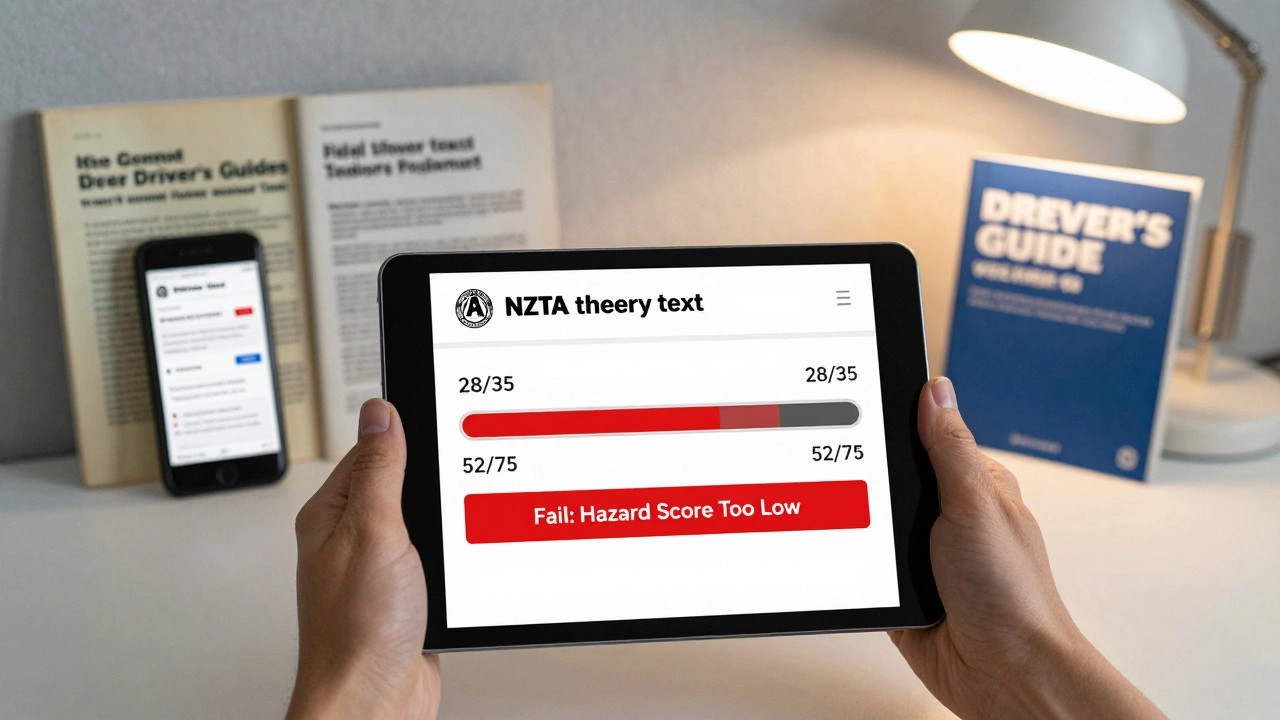
- Multiple Choice Questions (2024 version): 35 questions. You need at least 28 correct to pass. Topics include road rules, signs, vehicle safety, and road user responsibilities. Questions aren’t tricky - they’re straightforward. But if you’ve never read the official driver handbook, you’ll get tripped up by details like “What’s the legal limit for alcohol when supervising a learner driver?” (Answer: zero.)
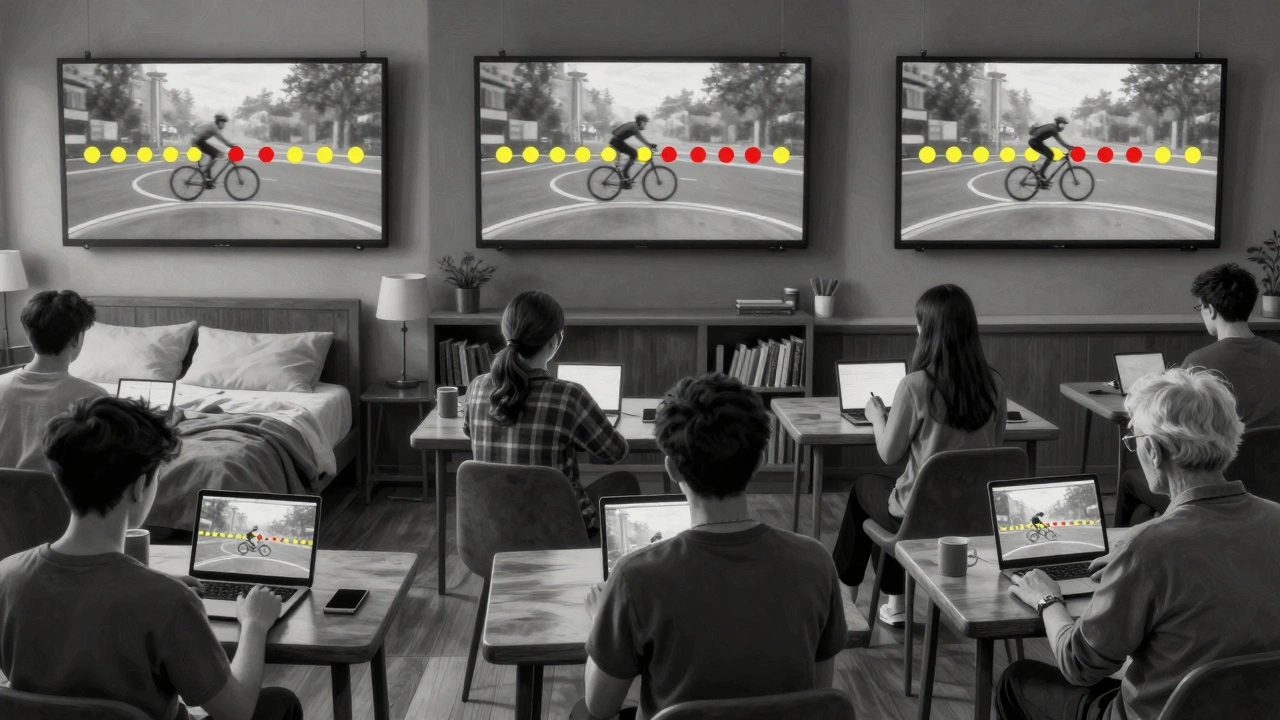
- Hazard Perception Test: 20 video clips. Each clip shows a real driving scenario. You click when you see a hazard developing. The system scores you based on timing and accuracy. You need a minimum of 57 out of 75 points. The highest-scoring clips are the ones where you click early - not when the hazard is obvious, but when it’s just starting to form.
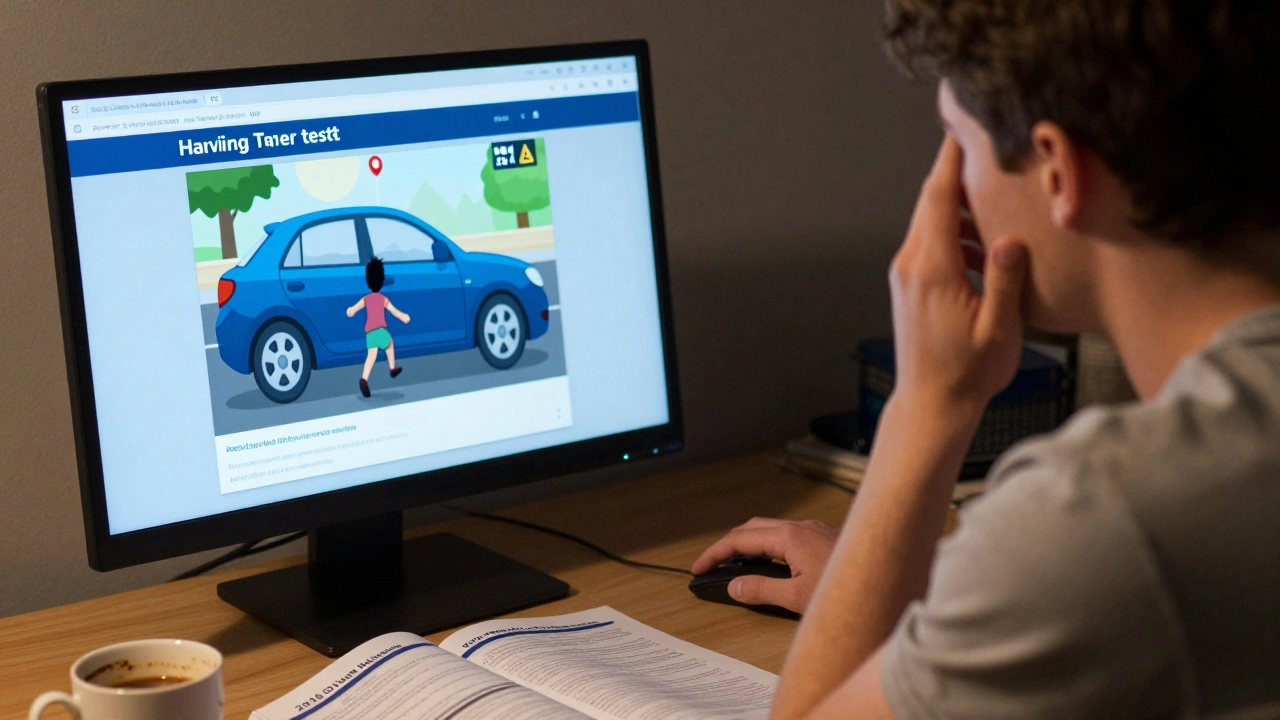
Here’s a real example: A car is parked on the side of the road with its hazard lights on. You might think that’s not a hazard. But if the driver opens the door suddenly, or a child runs out from behind the car, that’s a developing hazard. The test wants you to click before the door opens - not after.
Who Fails the Most?
It’s not just beginners. The biggest group of failures? People aged 25-34. That’s surprising, right? You’d think younger drivers are the ones who struggle. But here’s why it happens:
- They’ve been driving informally for years - maybe with family or friends - and think they know the rules.
- They rely on memory instead of studying official materials.
- They assume the test is easy because they’ve passed other tests before.
Teenagers (16-18) actually have a slightly higher pass rate - around 68%. Why? Because they’re more likely to take a structured course, use official apps, and practice daily. Older drivers (50+) also do better than the 25-34 group. They tend to take more time, review materials carefully, and aren’t as overconfident.
How to Increase Your Chances of Passing
If you want to be in the 63% who pass on the first try, here’s what actually works:
- Use the official NZTA practice app. It’s free. It mirrors the real test exactly - same questions, same hazard clips. Don’t waste time on third-party apps that don’t update with rule changes.
- Do 3 full mock tests. Don’t just answer 10 questions here and there. Sit down, time yourself, and simulate test conditions. If you score below 30/35 on the multiple choice, go back and study the topics you got wrong.
- Watch hazard clips with a friend. Ask them to pause the clip and ask, “What’s the hazard here?” If you both click at different times, discuss why. This builds better hazard awareness than watching alone.
- Study the handbook, not the cheat sheet. The official Driver’s Guide is only 80 pages. Read it cover to cover. Highlight the sections on giving way, speed limits in different zones, and what to do at roundabouts. You’ll be surprised how many questions come directly from those pages.
What Happens If You Fail?
Failing isn’t the end. It’s just a detour. You can retake the test after 7 days. Most people who fail once and then study properly pass on their second try. But here’s the catch: if you fail twice, you have to wait 28 days before your third attempt. And if you fail three times? You’ll need to complete a mandatory driver education session before trying again.
Don’t let the fear of failing stop you. The goal isn’t to be perfect on the first try - it’s to be ready. The theory test is designed to make sure you understand the rules before you hit the road. It’s not about tricking you. It’s about protecting you - and everyone else.
Final Thought: It’s Not About Memory - It’s About Awareness
The theory test isn’t a trap. It’s a checkpoint. The people who fail aren’t bad drivers. They’re just unprepared. The ones who pass? They didn’t memorize. They learned. They practiced. They paid attention to details most people skip.
If you’re serious about passing, stop scrolling through memes about the test. Open the official app. Do one mock test today. Watch one hazard clip slowly. Ask yourself: What would I do if that happened?
That’s how you turn a 37% failure rate into a 100% pass rate.
What is the pass rate for the driving theory test in New Zealand?
As of 2026, the pass rate for the driving theory test in New Zealand is around 63%. This means roughly 37% of first-time test takers fail. The pass rate has remained stable over the past three years, with minor fluctuations based on seasonal testing volumes and updates to the test content.
Can you fail the theory test on the hazard perception part only?
Yes. The theory test has two parts: multiple choice and hazard perception. You must pass both to pass overall. It’s possible to score high on the multiple choice questions (say, 34/35) but fail the hazard perception section by scoring below 57/75. Many people don’t realize the hazard test is scored separately - and they walk away thinking they did fine, only to find out they failed.
Is the theory test harder in New Zealand than in other countries?
It’s not necessarily harder - but it’s different. New Zealand’s test focuses heavily on real-world hazard recognition and local road rules, like giving way to cyclists at roundabouts and strict zero-tolerance for alcohol when supervising learners. The UK test has more questions about priority rules, while Australia’s varies by state. The difficulty comes from how well you’ve prepared for the specific rules in your country.
How many times can you retake the theory test?
There’s no limit to how many times you can retake the theory test in New Zealand. But there are waiting periods: after your first failure, you can retake it after 7 days. After a second failure, you must wait 28 days. After a third failure, you’re required to complete a mandatory driver education session before your next attempt. These rules are in place to encourage proper preparation, not to discourage you.
Do you need to study the Driver’s Guide to pass?
Yes - and not just because it’s recommended. Over 70% of the multiple choice questions come directly from the official Driver’s Guide. The hazard perception clips are also based on scenarios described in the guide. You can pass without reading it, but you’re gambling. The guide is free, available online, and updated yearly. Skipping it is the most common reason people fail.