
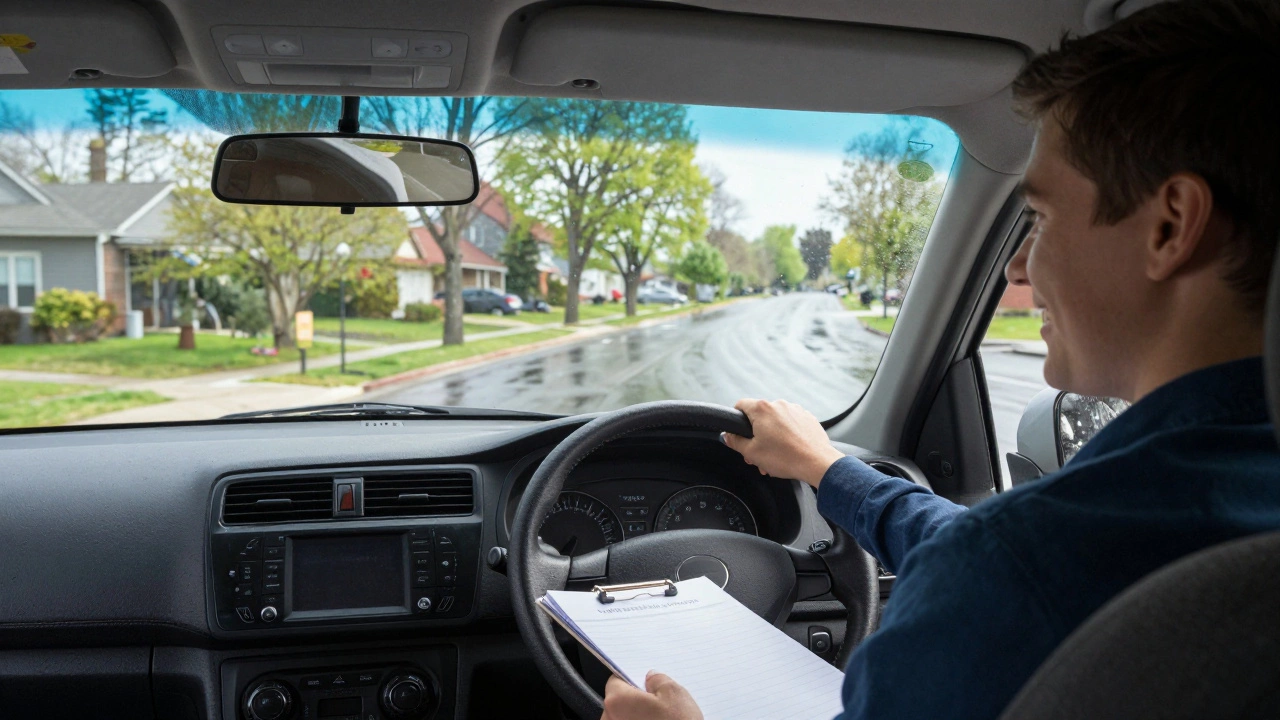
Driving Test Success Calculator
Your Best Test Month
Based on NZTA data showing monthly pass rates over the last 5 years
Why timing matters
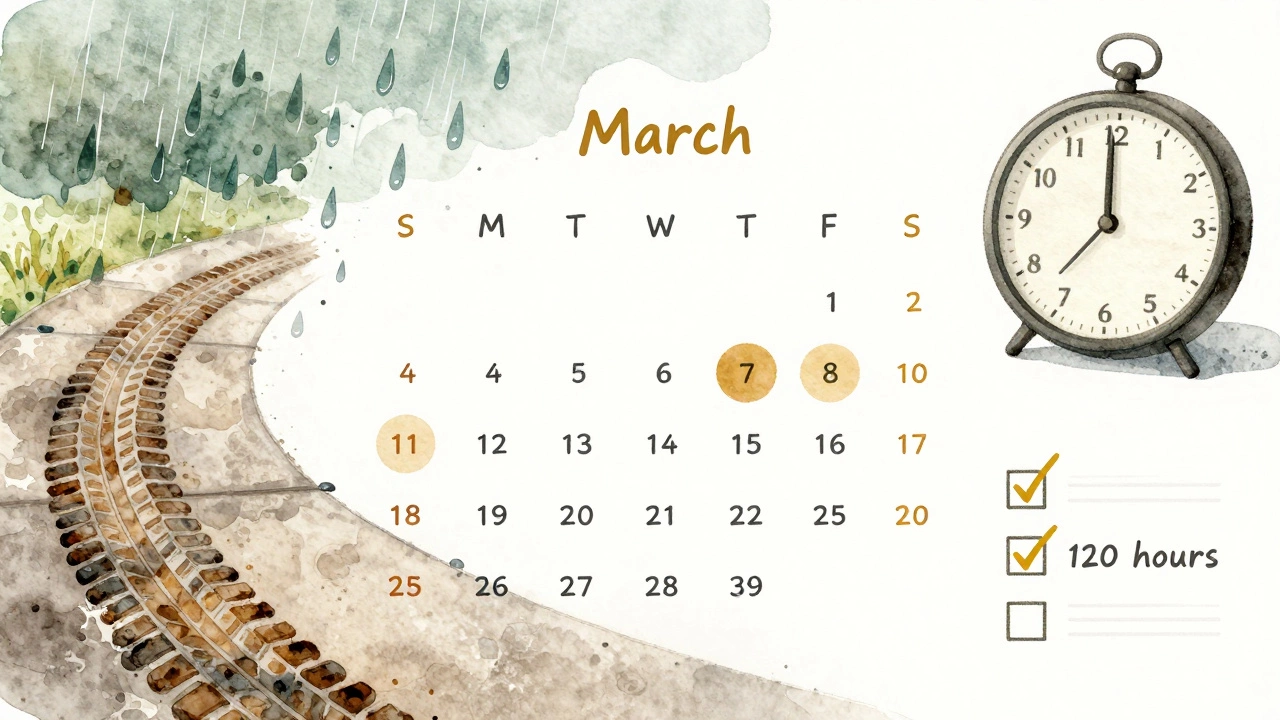
The month affects your chances, but preparation is key. March and April have the highest pass rates (58-62%), but this only works when you've completed sufficient practice.
- March and April: 58-62% pass rate (best months)
- Winter months: Below 45% pass rate
- Summer months: Around 49% pass rate
Every year, thousands of people sit their driving test hoping to get that green pass slip. But here’s the thing - not all months are created equal when it comes to passing. If you’re wondering when to book your test for the best shot, the data doesn’t lie. In New Zealand, and in many other countries with similar testing systems, your chances of passing aren’t just about how well you drive - they’re also tied to the time of year.
March and April are your best bets
Look at the official pass rates from the New Zealand Transport Agency (NZTA) over the last five years, and you’ll see a clear pattern. March and April consistently show the highest pass rates - around 58% to 62%. That’s nearly 10 percentage points higher than the yearly average of 51%. Why? Because most learners spend the winter months (June to August) practicing. By March, they’ve had enough miles under their belt, the weather’s improving, and their confidence is up. Plus, many students finish school or university in February, giving them more free time to focus on their test.
April continues the trend. Days are longer, roads are drier, and instructors are less rushed. Instructors report fewer cancellations in spring, meaning learners get consistent feedback. That steady practice makes a real difference. One instructor in Wellington told me he saw a 22% jump in first-time passes between February and April last year. Not because his students got smarter - because they got more practice.
Winter months are the hardest
If you’re thinking of booking your test in June, July, or August, think again. These months have the lowest pass rates - often dipping below 45%. Why? Cold, wet, and dark conditions make even experienced learners nervous. Rain slicks the roads, headlights are less effective, and visibility drops. Plus, many learners rush to get their test done before the holidays, skipping crucial practice. The result? More hesitation, more mistakes, and more fails.
December isn’t much better. People try to squeeze in a test before Christmas, but they’re distracted. Family visits, holiday shopping, and end-of-year stress take priority. Instructors say they see a spike in last-minute bookings that month - and a spike in fails. One learner I spoke to booked her test for December 18th after only five lessons. She failed because she couldn’t judge distances in the dark. She rebooked for April and passed on her first try.
Summer isn’t as easy as you think
Many assume summer - December to February - is the best time. After all, the weather’s good. But here’s the catch: it’s also the busiest. Test centers are packed. Examiners are stretched thin. And because so many people are taking tests, the bar doesn’t lower - it stays the same. In fact, pass rates in January and February hover around 49%, barely above average. The extra daylight helps, but the pressure doesn’t. You’re competing with hundreds of others who are also trying to get their license before the new school year or work start date.
Plus, summer brings its own risks. Heat can make learners drowsy. Long drives on open roads can lead to overconfidence. One learner in Christchurch passed his theory test in January, then spent the whole summer driving without supervision. He thought he was ready. He failed his practical because he didn’t check mirrors properly after turning. Summer isn’t a free pass - it’s a trap if you’re not disciplined.
What about holidays and public events?
Public holidays can affect your chances too. Avoid booking your test on the day after a major holiday like Easter, ANZAC Day, or Labour Weekend. Examiners are often tired or backlogged. There’s also a higher chance of last-minute cancellations from other candidates, which means your slot might get moved to a less ideal time - like early morning or late afternoon, when lighting is poor.
Also skip the week before school holidays. Parents are busy, kids are distracted, and instructors are swamped. You want a calm, focused day. That means mid-week, early in the month. Tuesday and Wednesday mornings have the highest pass rates. Fewer people book then, so examiners are fresher. You’re less likely to be rushed through the test.
It’s not just about the month - it’s about preparation
Yes, March and April give you the best odds. But if you’ve only done five lessons and think the month will save you, you’re mistaken. The month helps - it doesn’t replace practice. The highest pass rates go to people who’ve done at least 120 hours of supervised driving. That’s the number NZTA says is the minimum for safety. Most people who fail haven’t hit that mark.
Here’s what actually works: start practicing in late autumn. Use the colder months to build confidence in tricky conditions - wet roads, narrow streets, roundabouts. Then, in February, start doing full mock tests with your instructor. By March, you’re not just ready - you’re calm. You’ve seen it all, and you know what to do.
One learner I met in Hutt Valley booked his test for March 15th after logging 147 hours. He failed his first attempt in November with only 62 hours. He didn’t change his driving. He changed his preparation. That’s the difference.

How to pick your test date
Here’s a simple plan:
- Start lessons by the end of March or early April of the year before you plan to test.
- Log at least 120 hours of supervised driving - include night driving, highway driving, and bad weather.
- Book your test for mid-March or early April. Avoid the first week of the month - it’s the busiest.
- Choose a Tuesday or Wednesday morning. Less traffic, fresher examiner.
- Don’t book it the day after a holiday or school break.
And if you can’t get a March or April slot? Don’t panic. July and August are tough, but if you’ve done your hours and practiced in the rain, you can still pass. Just don’t expect luck to carry you.
What the data says about retests
Most people who fail their first test don’t wait long. They rebook within four weeks. But here’s the kicker - those who wait 6 to 8 weeks before retesting pass at a rate 37% higher than those who rebook immediately. Why? Because they use the time to fix their mistakes. They go back to the basics. They practice weak spots. They don’t just repeat the same test.
If you fail in January, don’t rush. Use February to drill your mirror checks and signaling. Then book for March. You’ll thank yourself later.
Final tip: Don’t chase the perfect month - chase the perfect preparation
The month matters, but only because it shapes your practice window. If you start early, practice consistently, and test when you’re truly ready, you’ll pass - no matter the season. The best month isn’t March. It’s the month after you’ve done enough driving to feel calm behind the wheel.
Don’t let the calendar decide your success. Let your practice do it.