
Curb Impact Damage & Cost Estimator
Impact Details
Enter your impact details and click Analyze to see potential damage scenarios and estimated repair costs.
You’re pulling out of a tight spot, or maybe you just missed your parking angle by an inch. Thud. That sharp impact against the concrete edge sends a jolt through the steering wheel. Your heart skips a beat. Did you break something? Is this going to cost a fortune? And if you’re taking your driving test right now, did you just fail?
Hitting a curb is one of the most common mistakes new drivers make. It happens in busy city streets, narrow residential driveways, and even during parallel parking maneuvers. The consequences range from a minor cosmetic scratch to catastrophic mechanical failure that leaves you stranded on the side of the road. Understanding exactly what fails when you strike a curb helps you diagnose problems early, avoid expensive repairs, and keep your driving test examiner happy.
The Immediate Victims: Tyres and Wheels
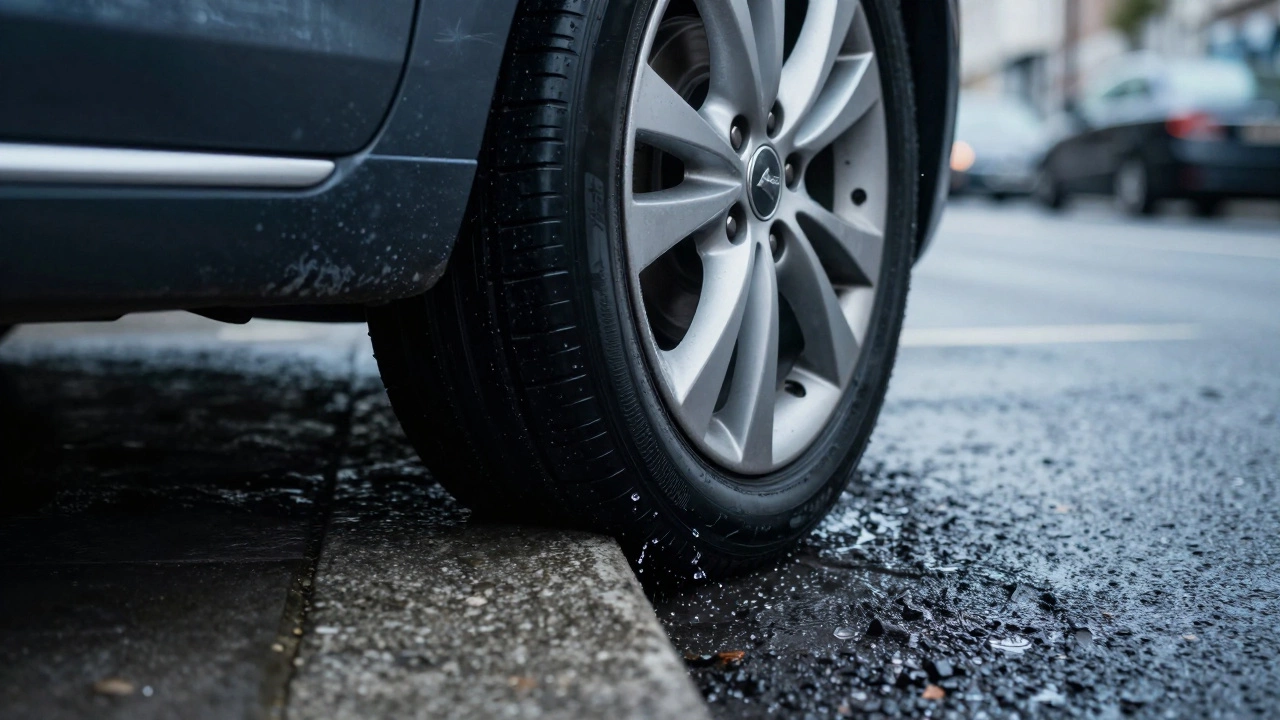
When your car strikes a curb, the first components to absorb the shock are the tyres and the rubber tires mounted on your vehicle's wheels. Specifically, the sidewall takes the brunt of the force. This vertical part of the tyre connects the tread to the rim and contains layers of steel belts and fabric cords designed for flexibility, not impact resistance.
If you clip the curb at low speed (under 10 mph), you might only get a scuff mark. These are usually superficial and don’t affect safety. However, if the impact creates a bulge, bubble, or visible tear in the sidewall, the internal structure has failed. A compromised sidewall can blow out suddenly while driving, especially at highway speeds. Never ignore a bulge. Replace the tyre immediately.
The wheel rim is the metal component that holds the tyre in place also suffers. Alloy wheels, popular for their lightweight design, are prone to cracking or bending upon impact. Steel wheels are more durable but can still dent. A bent rim causes vibrations at high speeds and makes it difficult to maintain air pressure. You’ll notice the car shaking between 50-70 mph or see air leaking rapidly after filling the tyres.
- Bulging sidewall: Indicates broken internal cords. Immediate replacement required.
- Curb rash: Cosmetic scratches on the alloy rim. Safe to drive but looks bad.
- Dented rim: Can cause vibration and air leaks. Needs straightening or replacement.
- Punctured tyre: If the tread hits the curb sharply, nails or debris may penetrate. Check for slow leaks.
Suspension and Steering Components
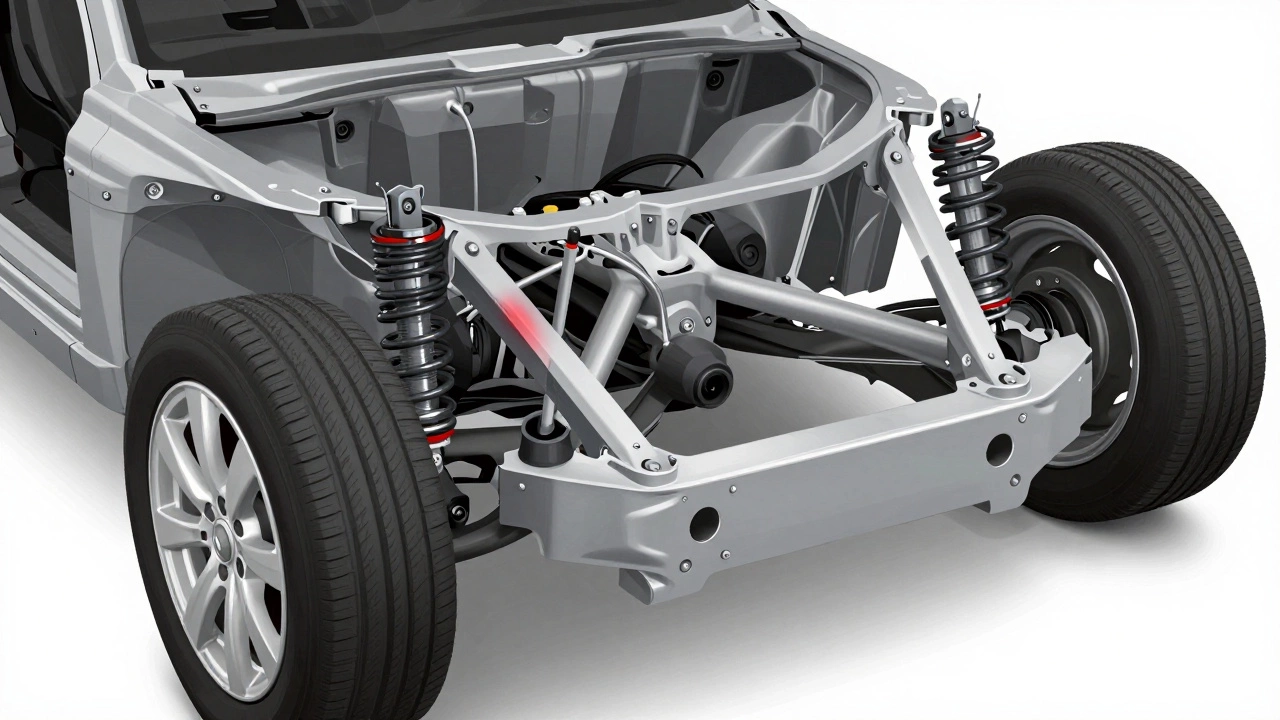
Beneath the visible damage lies the suspension system, which is the network of springs, shocks, and linkages that connect the wheels to the chassis. Hitting a curb sideways applies lateral force that these parts aren't designed to handle repeatedly. Even a single hard impact can misalign or break critical components.
The control arm is a structural bar that connects the wheel hub to the vehicle frame. A sharp curb strike can bend the control arm or crack its mounting bushings. If the control arm bends, the wheel’s position changes relative to the car body. This leads to uneven tyre wear and poor handling. You’ll feel the car pulling to one side even when you’re holding the steering wheel straight.
Another vulnerable part is the tie rod end, which is a joint that connects the steering rack to the wheel. Impact can loosen or break the tie rod boot, allowing grease to escape and dirt to enter. Over time, this causes excessive play in the steering. You might notice the steering wheel feels loose or wobbly, especially when turning corners.
Shock absorbers and struts rarely break instantly from a curb hit, but they can lose fluid or become misaligned. If your car bounces excessively after hitting a bump following the curb incident, the dampers may be damaged. Always have a mechanic inspect the suspension if you hear clunking noises when going over speed bumps.
Wheel Alignment Issues
Even if nothing appears broken, hitting a curb almost always affects wheel alignment, which is the adjustment of angles of the wheels to ensure optimal contact with the road. The camber, toe, and caster angles shift when the suspension mounts take a beating. Misalignment forces your tyres to scrub against the road rather than roll smoothly.
The symptoms of bad alignment are subtle at first. Your car might drift slightly to the left or right when you let go of the steering wheel on a flat road. Later, you’ll notice uneven tyre wear-one edge wearing down faster than the other. This reduces tyre lifespan significantly and increases rolling resistance, hurting fuel economy. A professional wheel alignment check costs around $50-$100 and prevents thousands of dollars in premature tyre replacements.
| Symptom | Likely Cause | Action Required |
|---|---|---|
| Car pulls to one side | Misalignment or bent suspension | Get alignment checked; inspect suspension |
| Vibration at high speed | Bent rim or unbalanced tyre | Check rim integrity; balance tyres |
| Uneven tyre wear | Bad camber/toe settings | Wheel alignment service |
| Steering wheel off-center | Tie rod damage or alignment shift | Inspect steering linkage; realign |
| Clunking noise over bumps | Loose ball joints or bushings | Urgent suspension inspection |
Impact on Your Driving Test
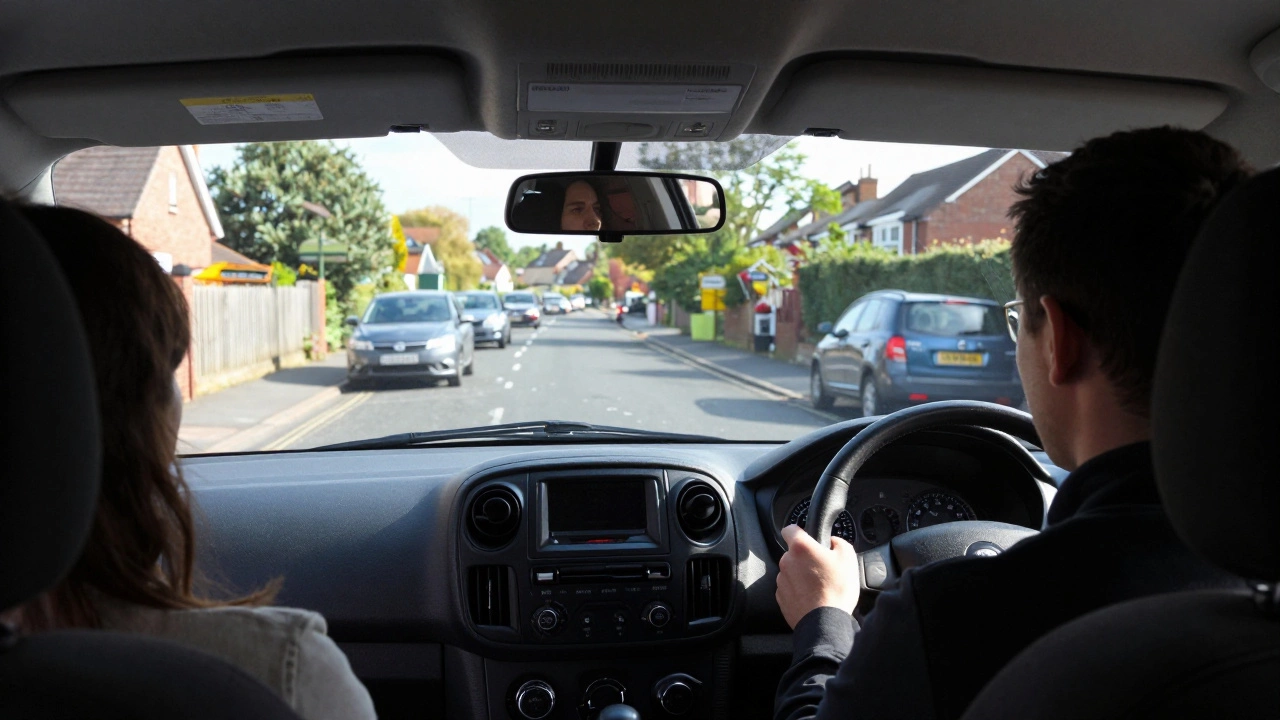
If you’re learning to drive, hitting a curb carries specific risks beyond mechanical damage. In many jurisdictions, including New Zealand and the UK, striking a curb during a practical driving test can result in an automatic fail depending on severity and context.
Examiners look for three key factors: safety, control, and observation. If you hit a curb because you failed to check mirrors or blind spots before pulling out, that’s a major fault. If the impact causes loss of control-such as swerving into another lane-it’s also an immediate fail. Minor curb touches without affecting other road users might only incur a minor fault, but repeated incidents show poor spatial awareness.
To avoid failing your test due to curb strikes, practice wide turns. Give yourself extra room when approaching intersections. Use reference points on your dashboard or windshield to judge distance accurately. When parallel parking, stop completely before reversing to assess your gap. Rushing leads to errors. Remember, examiners value smooth, controlled movements over speed. It’s better to take two attempts to park correctly than to scrape the curb once.
How Much Does Repair Cost?
The financial impact of hitting a curb varies widely based on damage extent. Cosmetic fixes like polishing curb rash on alloy wheels cost $30-$80 per wheel. Replacing a single tyre ranges from $80 to $200 depending on brand and size. If the rim needs straightening, expect to pay $100-$250.
Suspension repairs get expensive quickly. Replacing a control arm runs $200-$600 including labor. Tie rod ends cost $100-$300 each. Wheel alignment services add another $50-$100. Total bills often exceed $1,000 if multiple components are damaged. Insurance may cover collision damage, but filing a claim could raise premiums. For minor issues, paying out-of-pocket is usually cheaper long-term.
Prevention Strategies
Avoiding curb damage starts with defensive driving habits. Always scan ahead for obstacles. Adjust your seating position so you have full visibility of front corners. Install dash cams-they help review close calls and improve judgment over time. Practice parking in empty lots until muscle memory develops. Slow down when navigating tight spaces. Speed amplifies impact force exponentially. At 15 mph, a curb hit delivers four times more energy than at 7.5 mph.
Use technology wisely. Many modern cars feature front/rear cameras and ultrasonic sensors. Enable audible warnings when objects are detected. Don’t rely solely on tech though-always visually confirm clearance. Finally, accept that small scrapes happen. Focus on preventing structural damage rather than achieving perfection. Every experienced driver has a story about a curb encounter. Learn from yours, adjust your technique, and keep moving forward safely.
Will hitting a curb void my warranty?
No, hitting a curb does not automatically void your manufacturer’s warranty. Warranties cover defects in materials and workmanship, not accidental damage. However, if curb-induced damage leads to secondary failures (like misalignment causing premature bearing wear), those claims might be denied since the root cause was external impact.
Can I drive safely after hitting a curb?
Only if there’s no visible damage to tyres, rims, or suspension. Check for bulges, cracks, or fluid leaks immediately. If the car drives straight without vibration or pulling, it’s likely safe for short trips to a mechanic. Avoid highway speeds until inspected.
Does insurance cover curb damage?
Comprehensive auto insurance typically covers collision-related damage, including curb strikes. Collision coverage applies if you hit the curb while moving. Comprehensive covers static impacts (e.g., backing into a parked car). Check your deductible-if repair costs are lower than the deductible, don’t file a claim.
How do I know if my wheel alignment is off?
Watch for these signs: the steering wheel isn’t centered when driving straight, the car drifts left or right without input, uneven tyre wear patterns, or increased fuel consumption. Get a free alignment check at any tire shop-they’ll measure angles precisely using laser equipment.
Is it worse to hit a curb forward or backward?
Hitting a curb backward is generally less damaging because rear suspensions are simpler and lack complex steering linkages. Front-end impacts risk damaging tie rods, ball joints, and power steering pumps. Always try to reverse away from curbs if possible, but prioritize avoiding pedestrians and vehicles first.