
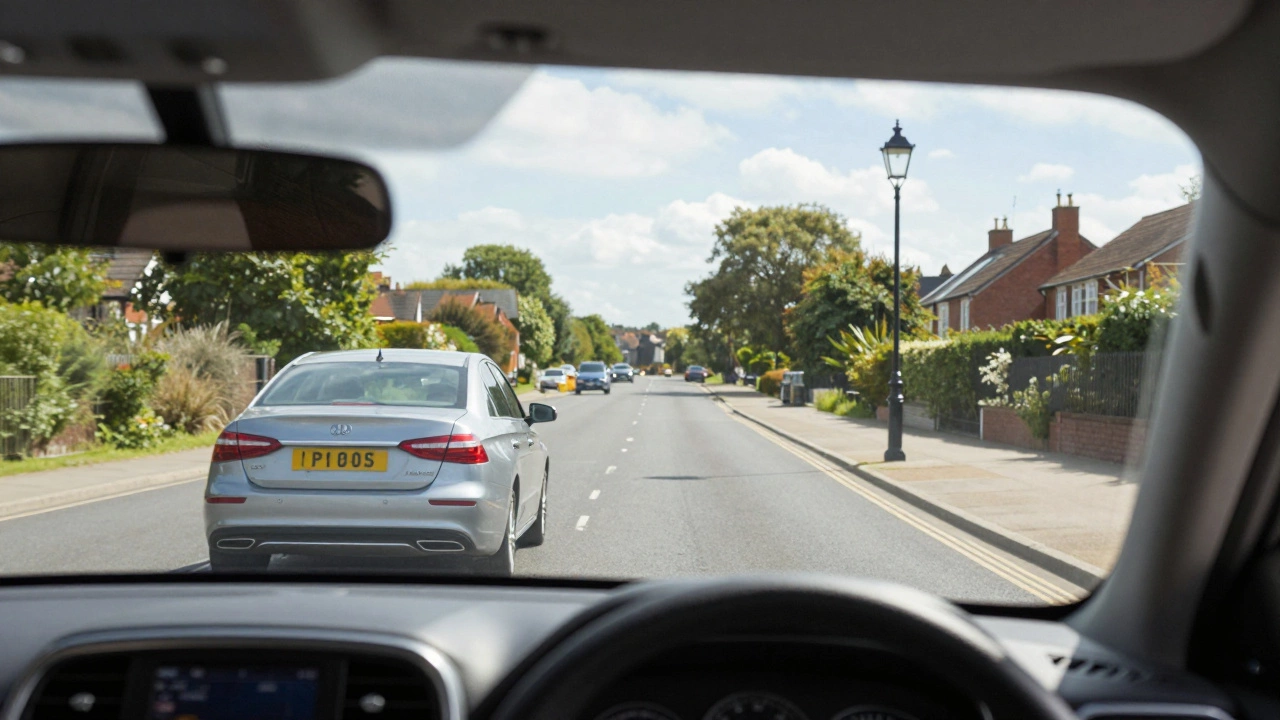
Safe Following Distance Calculator
Standard baseline for safe driving.
Recommended Time Gap
Count: "One thousand one..."
Physical Distance
Approximate space required
💡 Safety Tip:
Always find a fixed point on the side of the road. Start counting when the car ahead passes it. If you reach the point before finishing the count, you are too close.
You’re cruising along a quiet road. The car ahead taps its brakes. You react instantly, but maybe not fast enough. That split-second hesitation is exactly why the three second plus rule exists. It isn’t just a suggestion written in a dusty manual; it’s the single most effective tool you have to avoid rear-end collisions and pass your driving test with confidence.
If you’ve ever felt nervous about judging gaps or worried about being tailgated, this guide breaks down exactly how to measure that distance, when to extend it, and why examiners watch this specific skill like hawks. We’ll move beyond the basic definition into practical application, ensuring you drive safely on real roads, not just in theory.
The Core Concept: Why Three Seconds?
At its heart, the three-second rule is a method for maintaining a safe following distance. It’s not about speed alone; it’s about reaction time. When the vehicle in front of you stops suddenly, you need enough space to perceive the danger, decide to brake, and physically bring your car to a halt without hitting them.
Research from traffic safety organizations consistently shows that human reaction time averages around 1.5 seconds under normal conditions. Add another 1.5 seconds for your vehicle’s braking distance at moderate speeds, and you hit that three-second mark. This buffer accounts for the physics of friction and the biology of human reflexes.
The Three-Second Rule is a standard driving technique used to maintain a safe following distance between vehicles, calculated by timing the gap between passing a fixed point and the vehicle ahead passing the same point.This rule applies to dry, clear weather conditions with light traffic. It is the baseline for safe driving. If you are closer than three seconds, you are tailgating, even if you feel comfortable. Examiners will fail you for "inadequate following distance" if they see you creeping into this danger zone during your test.
How to Measure Your Gap Step-by-Step
Knowing the rule is one thing; applying it while driving is another. Here is the practical method you should use every time you get behind a moving vehicle.
- Find a Fixed Point: Look for a stationary object on the side of the road. This could be a lamp post, a tree, a signpost, or even a crack in the pavement. Avoid moving objects like other cars or pedestrians.
- Start Counting: As soon as the rear bumper of the vehicle in front passes that fixed point, start counting aloud or in your head. Use a steady pace: "One thousand one, one thousand two, one thousand three."
- Check Your Position: When you reach "one thousand three," check where your own front bumper is relative to that same fixed point.
- Adjust Speed: If your car has already passed the point before you finish counting, you are too close. Ease off the accelerator immediately. If you haven’t reached the point yet, you have a safe margin.
Practice this until it becomes muscle memory. At first, it feels awkward to look away from the road ahead, but you are only glancing at a reference point for a second. This habit ensures you always have an escape route if the driver ahead makes a mistake.
The "Plus" Factor: When to Extend Your Distance
The "plus" in the three-second-plus rule is critical. It acknowledges that perfect conditions rarely exist. The base three seconds is for ideal scenarios. Real-world driving requires you to add more time to your count based on specific variables.
| Condition | Recommended Action | Reason |
|---|---|---|
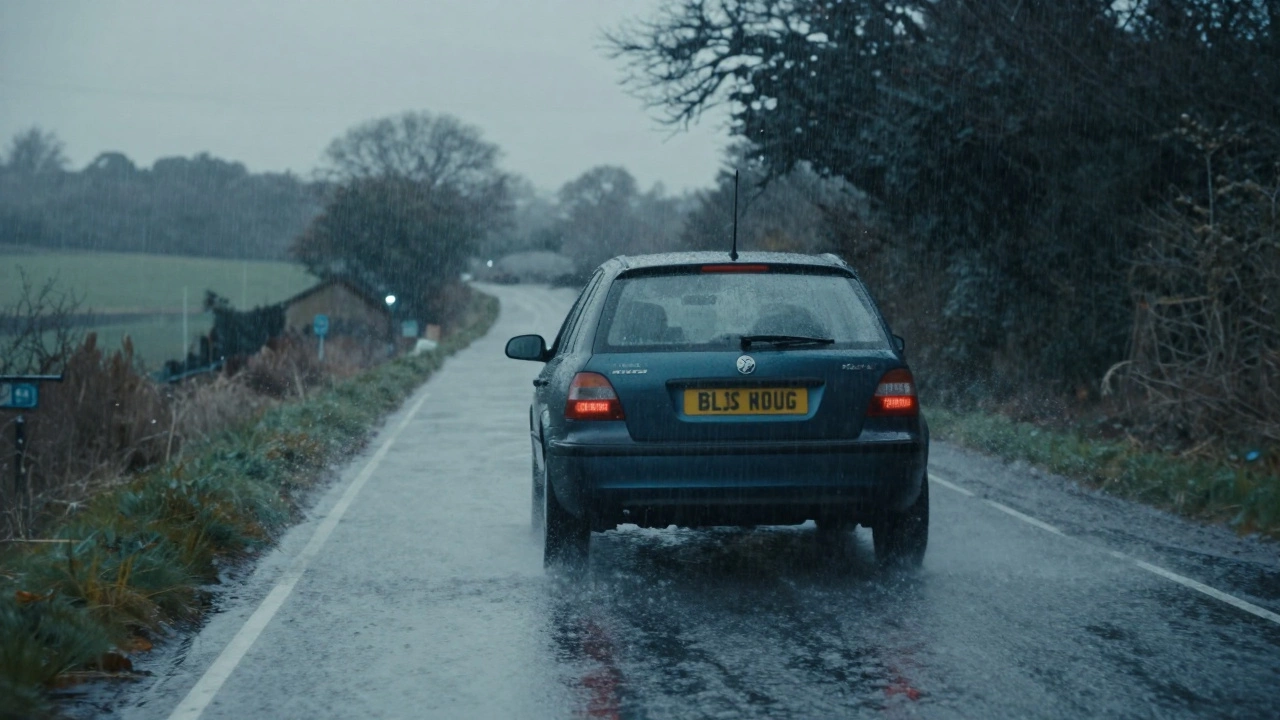
| Wet Roads | Double to 6 seconds | Reduced tire grip increases stopping distance significantly. |
| Heavy Rain/Fog/Snow | Triple to 9+ seconds | Poor visibility and slippery surfaces demand maximum reaction time. |
| Towing a Trailer | Add 2-3 seconds | Increased weight lengthens braking distance and reduces maneuverability. |
| Following Motorcycles | Add 1-2 seconds | Riders can stop much faster than cars; give them space to filter safely. |
| Large Trucks/Buses | Maintain 3+ seconds | They block your view of the road ahead; ensure you can see their wheels and the road surface. |
Consider Wellington’s variable weather. One moment it’s sunny, the next it’s lashing rain. If you were using a strict three-second count in the sun, you must consciously switch to six seconds the moment the rain starts. Failing to adjust for wet roads is a common reason for accidents and test failures.
Why Examiners Care About Following Distance
During your driving test, the examiner isn’t just watching your steering or gear changes. They are constantly assessing your hazard perception. Following distance is a primary indicator of this skill.
If you tailgate, the examiner sees a driver who is reactive rather than proactive. You are forcing yourself to brake hard if anything happens, which looks dangerous and uncomfortable for passengers. Conversely, if you leave massive gaps unnecessarily, you may be seen as impeding traffic flow, though this is less likely to cause an immediate fail than tailgating.
Examiners look for smoothness. By maintaining the correct gap, you can anticipate slowing traffic earlier. Instead of slamming on the brakes, you can lift off the throttle gently. This "coasting" technique demonstrates control and awareness. It shows you are scanning the road far ahead, not just focusing on the bumper in front of you.
Common Mistakes New Drivers Make
Even experienced drivers struggle with consistent gap judgment. Here are the pitfalls to avoid:
- Speed Illusion: At higher speeds, distances appear larger than they are. On highways, three seconds covers a much greater physical distance than in a city center. Don’t let the speed make you complacent.
- Fixed Point Errors: Using moving objects (like a cyclist or another car) as your reference point leads to inaccurate measurements. Always use static infrastructure.
- Inconsistent Counting: Some people count quickly when nervous. Stick to the "one thousand one" rhythm. It’s slower and more accurate than "one, two, three."
- Ignoring Traffic Flow: In heavy congestion, maintaining three seconds might mean crawling very slowly. While frustrating, it is safer. However, if everyone is moving at 5 mph, a slightly shorter gap (but still visible space) may be necessary to prevent cut-ins, provided you remain alert.

Practical Scenarios for Practice
To master this, you need varied practice environments. Try these exercises with your instructor:
The Urban Stop-and-Go: Drive through busy town centers where lights change frequently. Focus on finding fixed points like shop signs or traffic light poles. Practice counting as the car ahead moves away from the line. Aim to never come to a complete stop unless absolutely necessary; instead, modulate your speed to keep rolling.
The Rural Straight: Find a long, straight country road with light traffic. Pick a distant landmark. As the car ahead passes a milestone, start your count. Notice how much further you travel in three seconds at 60 km/h compared to 40 km/h. This visualizes the importance of speed in distance calculation.
The Weather Switch: If possible, practice in light rain. Compare the effort required to maintain a six-second gap versus a three-second gap. You’ll notice you have to think more actively about lifting off the gas earlier. This builds the mental habit of adjusting for conditions.
Advanced Techniques: Predictive Driving
Once you’ve mastered the three-second-plus rule, you can elevate your driving to a professional level. This involves looking further ahead-up to 15 seconds down the road. By spotting hazards early (like a pedestrian stepping onto the curb or a car braking in the distance), you can adjust your speed before the car directly in front of you reacts.
This predictive approach means you rarely have to brake hard. You become part of the traffic flow, smoothing out the jerky movements that characterize new drivers. It also makes your passengers more comfortable, which is a subtle but positive signal to your examiner.
Remember, the goal isn’t just to pass a test. It’s to develop habits that protect you, your passengers, and others on the road. The three-second-plus rule is simple, but its application requires constant attention. Make it a non-negotiable part of every drive, and you’ll find yourself becoming a calmer, safer, and more confident driver.
Does the three-second rule apply to motorcycles?
Yes, but with adjustments. Motorcycles can often stop faster than cars due to lighter weight and different braking dynamics. Additionally, riders may need space to filter between lanes. It is recommended to allow at least 4-5 seconds behind a motorcycle to ensure their safety and yours.
What should I do if someone is tailgating me?
Do not speed up or brake check them, as this escalates danger. Safely pull over to the side of the road when possible and let them pass. Maintain your lane position and continue driving defensively. If you cannot pull over, increase your following distance from the car in front to give yourself more room to maneuver if needed.
Is there a legal minimum following distance?
In many jurisdictions, including New Zealand, there is no specific meter-based law for all situations, but failing to keep a safe distance is considered careless driving. Examiners use the three-second rule as the standard for "safe." Violating this can lead to a test failure or fines if an accident occurs.
How does towing affect my following distance?
Towing adds significant weight and length to your vehicle, increasing braking distance. You should add at least 2-3 seconds to your standard count. For example, if you normally use 3 seconds, use 5-6 seconds when towing. This gives you extra time to react and prevents jackknifing or trailer sway.
Can I use the two-second rule instead?
The two-second rule is sometimes cited in older manuals or specific low-speed urban contexts, but the three-second rule is the widely accepted modern standard for general driving. Two seconds leaves very little margin for error, especially for new drivers. Stick to three seconds as a minimum to ensure safety.