
Drive Mode Selector
Select Your Driving Conditions
When you’re learning to drive-especially in an intensive course-you’re not just memorizing rules. You’re learning how to read the road, react to traffic, and make split-second decisions. One of the most overlooked tools in that process? Your car’s drive mode.
Most modern cars come with multiple drive modes: Eco, Comfort, Sport, and sometimes Snow, Mud, or Off-Road. But what does any of that actually mean when you’re behind the wheel on a wet Wellington street at 7 a.m., or merging onto a highway after a night of rain? The answer isn’t about which mode is "best" in general. It’s about which mode matches the conditions you’re in right now.
What Each Drive Mode Actually Does
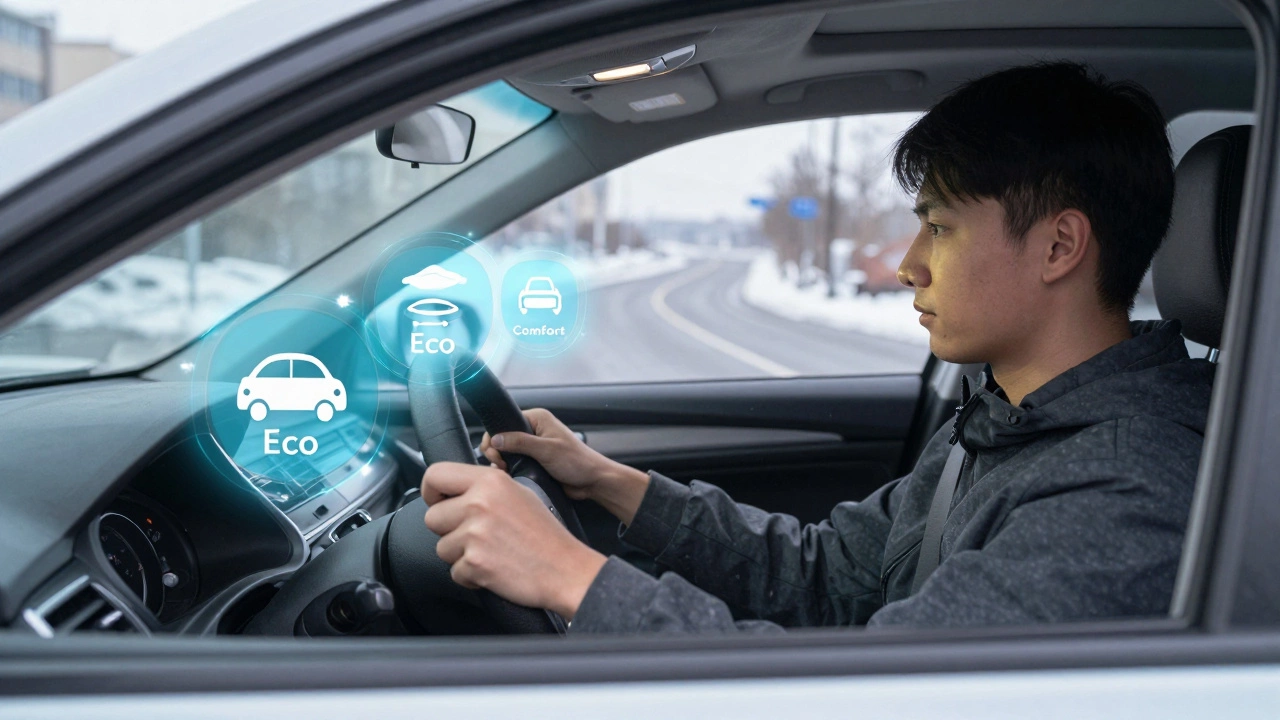
Drive modes don’t just change how the car feels-they change how it thinks. The engine control unit (ECU), transmission, steering weight, and even suspension settings shift based on the mode you pick. Here’s what happens in each:
- Eco mode: Reduces throttle response, shifts gears earlier, and may disable cylinder activation. Fuel economy improves by 5-10% in steady driving, but acceleration feels sluggish. Best for highway cruising or stop-and-go city traffic where you don’t need quick responses.
- Comfort mode: The default setting in most cars. Balanced throttle, smooth gear changes, light steering. This is what manufacturers design the car to feel like out of the box. Ideal for everyday driving in mixed conditions.
- Sport mode: Tightens steering, delays upshifts, sharpens throttle response, and may stiffen suspension. Gives you quicker acceleration and more feedback, but uses more fuel and can make the ride bumpy on rough roads.
- Snow/Ice mode: Starts in second gear to reduce wheel spin, limits power delivery, and increases traction control sensitivity. Critical in icy or snowy conditions, even if you have winter tires.
- Off-Road/Mud mode: Adjusts traction control, disables stability control in some cases, and raises suspension if the car has adaptive air ride. Only useful on dirt, gravel, or deep mud.
Many drivers stick with Comfort or Sport and never touch the others. That’s a mistake. You’re not driving in a vacuum. Weather, road surface, traffic density, and your own skill level all change what the car needs from you-and what you need from the car.
Best Drive Mode for City Driving
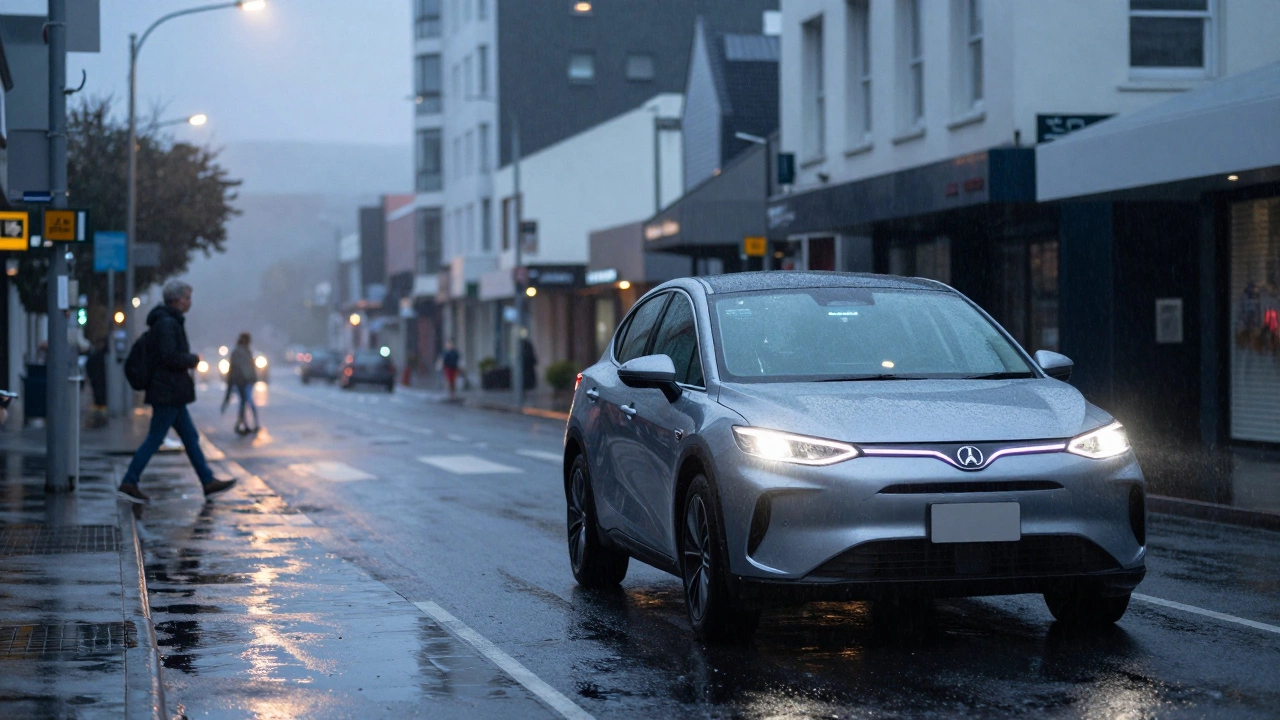
In dense urban traffic, especially in places like Wellington where hills, narrow streets, and sudden pedestrian crossings are common, Eco mode might seem like the obvious pick. But here’s the catch: Eco mode can be dangerous if you’re trying to merge into fast-moving traffic or need to brake quickly after a slow crawl.
Most drivers in cities do better in Comfort mode. Why? Because it gives you enough responsiveness to react to gaps in traffic without being overly aggressive. The throttle isn’t numb, the steering isn’t too heavy, and the transmission doesn’t hunt for gears. You stay in control without being fatigued.
There’s one exception: if you’re stuck in a traffic jam for more than 20 minutes, switch to Eco. It reduces engine load, lowers fuel burn, and keeps the cabin cooler in summer. But as soon as you start moving again, go back to Comfort.
Best Drive Mode for Highway Driving
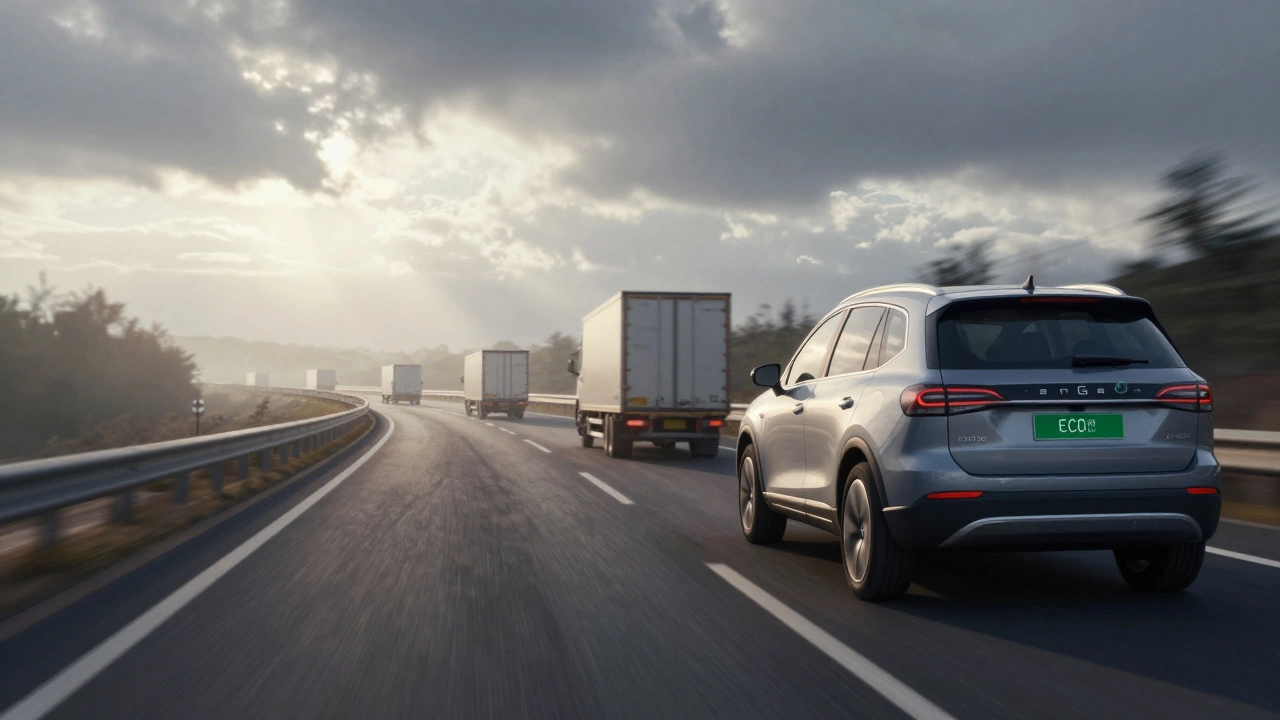
On open roads-whether it’s the Southern Motorway near Auckland or the coastal route down the South Island-Eco mode shines. You’re not stopping and starting. You’re maintaining speed. The car’s system can optimize gear selection and throttle input to save fuel without sacrificing safety.
But don’t turn on Eco and forget it. If you need to overtake a slow truck, you’ll notice the delay in acceleration. That’s not a flaw-it’s a feature. But it means you need to plan your moves. Tap the accelerator harder to override Eco temporarily, or switch to Comfort for more immediate power.
Pro tip: If your car has a "Sport+" or "Manual" mode, use it to hold gears longer when descending steep hills. Engine braking reduces wear on your brakes and keeps speed under control without constant pedal pressure.
Best Drive Mode for Wet or Icy Roads
This is where most drivers get it wrong. They think "all-wheel drive means I’m safe" or "I have winter tires, so I’m fine." But traction control and tire grip are only part of the story. The car’s throttle mapping matters just as much.
On wet or icy roads, Snow/Ice mode is non-negotiable. It reduces torque delivery at startup, which prevents wheelspin when pulling away from a stop. In New Zealand’s South Island, where frost forms overnight and rain turns roads slick by morning, this mode can mean the difference between a smooth start and a spin-out.
Even if your car doesn’t have a dedicated Snow mode, many cars let you turn off traction control manually. Don’t do that. Traction control is your friend on slippery surfaces. What you want is to reduce power input, not remove safety systems.
And never use Sport mode in the rain. The aggressive throttle response can easily overwhelm wet pavement, especially in front-wheel-drive cars. You’ll feel the rear end slide before you even realize what happened.
Best Drive Mode for Learning in an Intensive Course
If you’re in a 5-day intensive driving course, your instructor should be teaching you to adapt-not just to drive, but to think like a driver. That means practicing in different modes.
Here’s how to use drive modes as a learning tool:
- Start in Comfort mode. Get used to how the car normally responds.
- Switch to Eco and drive for 10 minutes. Notice how much slower the car feels. Learn to anticipate stops and plan ahead.
- Switch to Sport and drive on a quiet road. Feel how the steering tightens and the engine revs higher. Understand how power delivery changes your control.
- On a wet road, switch to Snow mode (if available). Feel how the car holds back power. This builds confidence in low-traction conditions.
This isn’t about mastering the car’s settings. It’s about understanding how the car’s behavior affects your decisions. The best drivers aren’t the ones who know the fastest mode. They’re the ones who know which mode to pick-and when to change it.
Common Mistakes Drivers Make
Here are the top three mistakes people make with drive modes:
- Leaving it in Sport all the time: It’s fun, but it wears out tires faster, burns more fuel, and makes the car harder to control in traffic. You’re not racing.
- Ignoring Snow mode in rain: Rain isn’t snow, but the physics are similar. Water reduces grip. Reducing throttle sensitivity helps you stay in control.
- Thinking mode changes are permanent: Drive modes are temporary settings. You should change them as conditions change-just like you adjust your speed or mirror angles.
One student I worked with in Nelson kept his car in Sport mode during his intensive course. He thought it made him look "more skilled." He got through the test-but on his first solo trip after passing, he spun out on a wet roundabout. He didn’t realize his car had less traction control in Sport mode. He didn’t know he could change it.
Final Rule: Match Mode to Moment
There’s no single "best" drive mode. The best mode is the one that fits the road, the weather, and your driving goal right now.
Use this simple checklist:
- City traffic? → Comfort
- Highway cruise? → Eco
- Rain, fog, or ice? → Snow/Ice
- Steep downhill? → Sport or Manual (to hold gear)
- Learning or practicing? → Switch between modes to feel the difference
The goal isn’t to be the fastest driver. It’s to be the safest, most predictable one. Drive modes are not gimmicks. They’re tools. And like any tool, their value depends on how well you use them.
What If Your Car Doesn’t Have Drive Modes?
Many older or budget cars don’t have selectable drive modes. That doesn’t mean you’re stuck. You can still mimic their effects:
- To mimic Eco: Ease off the accelerator gently. Avoid rapid acceleration. Use engine braking by lifting off early.
- To mimic Sport: Hold gears longer. Use the accelerator more deliberately. Don’t let the car shift too early.
- To mimic Snow: Start in second gear (if you have a manual). Avoid sudden inputs. Keep speed low and smooth.
Even without buttons, your driving habits determine how the car behaves. You’re still in control.