
Driving Readiness & Cost Estimator
Answer honestly. Ages are guidelines — behaviour is the truth.
There is a moment every parent dreads: the day your teenager asks to use the car keys. But before you hand them over, you need to answer a harder question. Is your child actually ready? The legal minimum age in the UK is 17 for manual cars and 17 for automatics (with some exceptions for disabled drivers), but legality does not equal readiness. Cognitive maturity is the brain's ability to process complex information, make quick decisions, and control impulses, which typically stabilizes around age 20-25. This biological reality often conflicts with social pressure and insurance costs, making the "best" age a nuanced balance of law, psychology, and practicality.
The Legal Baseline vs. Biological Reality
In the United Kingdom, you can apply for a Provisional Licence as soon as you are 15 years and 9 months old for an automatic car, or 16 years and 6 months for a manual car. However, you cannot take your full driving test until you are 17. This gap exists because most learners need time to build confidence and complete their theory tests. Yet, waiting until 17 is just the floor, not the ceiling. Neuroscientists at the University of California, San Francisco, have long noted that the prefrontal cortex-the part of the brain responsible for judgment and risk assessment-is still under construction well into the mid-twenties. Driving requires splitting attention between the road, mirrors, traffic lights, and pedestrians. A 17-year-old brain is capable, but it is also highly susceptible to peer influence and distraction, particularly from smartphones.
Why Waiting Until 18 Might Save You Money
If you are weighing the pros and cons, look at the wallet. Car insurance premiums for 17-year-olds are notoriously high, often ranging from £3,000 to £5,000 per year depending on the car and location. By waiting until 18, you drop out of the "teenager" bracket and enter the "young adult" category, where rates begin to dip slightly. More importantly, delaying formal lessons allows for informal practice. Many parents find that letting their child observe driving, understand blind spots, and practice steering in a quiet field or empty parking lot at age 14 or 15 builds muscle memory without the stress of passing a test. This "pre-learning" phase means that when they do start official Driving Lessons, they progress faster, reducing the total number of hours needed-and thus the cost-significantly.
The Sweet Spot: Balancing Maturity and Momentum
So, what is the ideal window? Most driving instructors and psychologists suggest that ages 18 to 21 offer the best combination of cognitive readiness and financial feasibility. Here is why this range works:
- Impulse Control: By 18, many young adults have developed better emotional regulation than at 16 or 17. They are less likely to speed up to impress friends or ignore a hazard warning.
- Responsibility: At 18, students are often starting university or first jobs. The need for independence is real, which drives motivation. A motivated learner absorbs skills twice as fast as one who feels forced into lessons.
- Insurance Transition: While still expensive, premiums at 18 are lower than at 17. Furthermore, if the learner has completed a Pass Plus Course after passing their test, insurers may offer further discounts, recognizing their advanced training.

Signs Your Child Is Ready (And Signs They Aren’t)
Ages are guidelines; behavior is the truth. Before booking the first hour of tuition, watch for these behavioral cues. Ready Signals:
- They consistently follow house rules without nagging.
- They show patience in stressful situations (like waiting in line or dealing with slow internet).
- They understand basic physics concepts like speed and distance.
- They are willing to accept constructive criticism without getting defensive.
- They get angry easily over small inconveniences.
- They struggle to focus on tasks for more than 15 minutes.
- They view driving as a status symbol rather than a responsibility.
- They have poor academic performance due to lack of discipline (not necessarily intelligence, but consistency).
Comparison: Starting Early vs. Starting Later
To help you decide, here is a breakdown of the trade-offs involved in different starting ages.
| Age Group | Pros | Cons | Typical Insurance Impact |
|---|---|---|---|
| 16-17 Years | High plasticity, learns quickly, fewer distractions from work/social life | Lower impulse control, higher accident risk, very high insurance costs | Highest premiums (£3,500+) |
| 18-20 Years | Better emotional regulation, stronger motivation, moderate insurance costs | May face university/work commitments limiting lesson frequency | Moderate premiums (£2,500 - £3,000) |
| 21+ Years | Highest maturity, lowest risk, significant insurance savings | Less urgent need for license, potential loss of momentum | Lower premiums (£1,500 - £2,000) |
How to Prepare Your Child Before the First Lesson
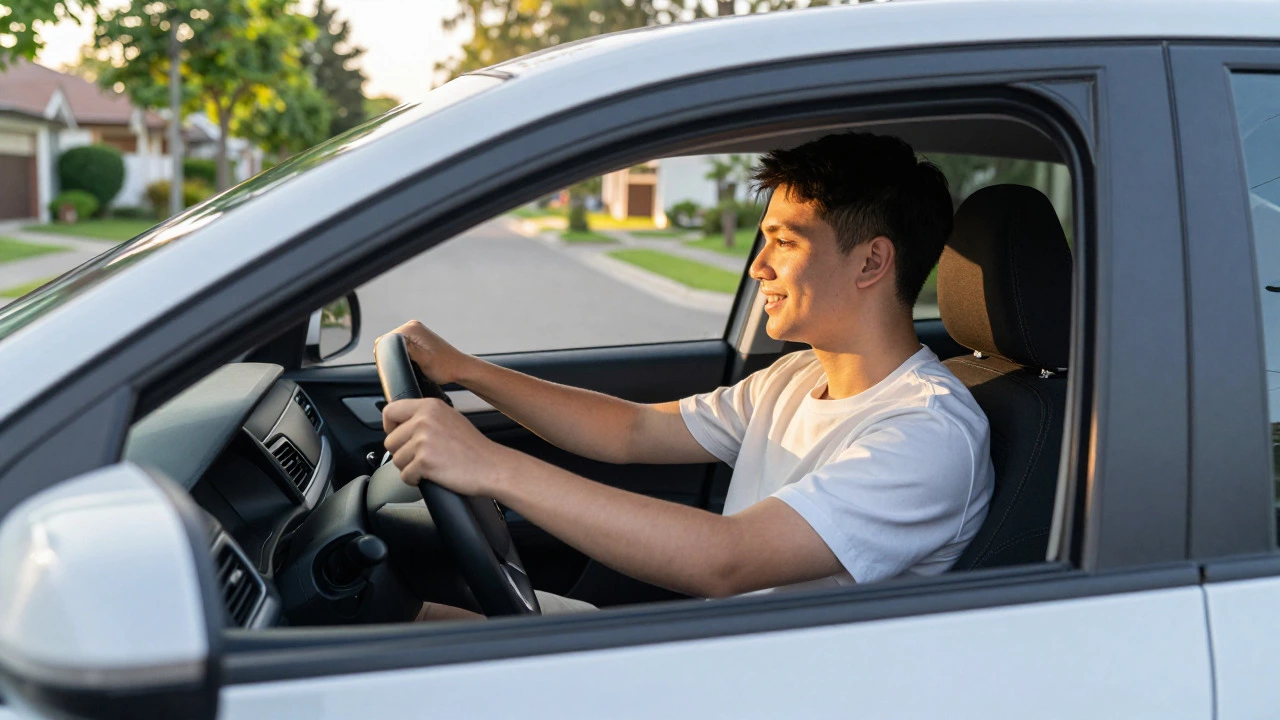
You don't need to be a professional instructor to prepare your teen. In fact, being too technical can cause anxiety. Instead, focus on awareness. Take them for a ride in a quiet area and ask them to point out hazards. "Do you see that pedestrian near the curb? What would you do if they stepped off?" This simple exercise teaches them to scan the environment proactively. Also, ensure they pass their Driving Theory Test before starting practical lessons. Failing the theory test while learning to drive creates unnecessary stress and delays the whole process. Aim for them to study for the theory test during their school holidays or summer breaks when their schedule is lighter.
Frequently Asked Questions
Is it too late to learn to drive at 20?
No, 20 is an excellent age to learn. Your brain is more mature than at 17, meaning you will likely make safer decisions. The only downside is that you might feel older than your peers, but this rarely affects learning speed. In fact, many 20-year-olds finish their training faster because they are more focused.
Does taking lessons at 16 affect my insurance forever?
No. Insurance premiums are calculated based on your current age, driving history, and vehicle. If you learn at 16 and drive cleanly, your rates will drop significantly as you age. There is no permanent penalty for starting young, provided you maintain a clean record.
Should I let my child drive an automatic or manual car first?
Consider what type of car you plan to buy later. If you intend to purchase a manual car, start with manual. It is harder to learn but allows you to drive both manual and automatic vehicles. If you only want an automatic car, learn automatic-it is easier, reduces stress, and lets you focus on road awareness rather than gear changes.
How many hours of lessons do I need to pass?
The DVLA recommends an average of 45 hours of professional instruction plus 20 hours of private practice. However, this varies wildly. A mature 19-year-old with good spatial awareness might pass in 30 hours. A younger, more anxious learner might need 60+. Focus on quality over quantity; one focused hour is better than three distracted ones.
Can I practice driving my child on public roads before they have a provisional licence?
Technically, yes, but with strict conditions. They must be accompanied by a qualified driver aged 21 or over. However, they cannot drive on motorways or dual carriageways unless specifically trained. It is safer and legally clearer to wait until they hold a valid provisional licence before doing any structured practice on public roads.