
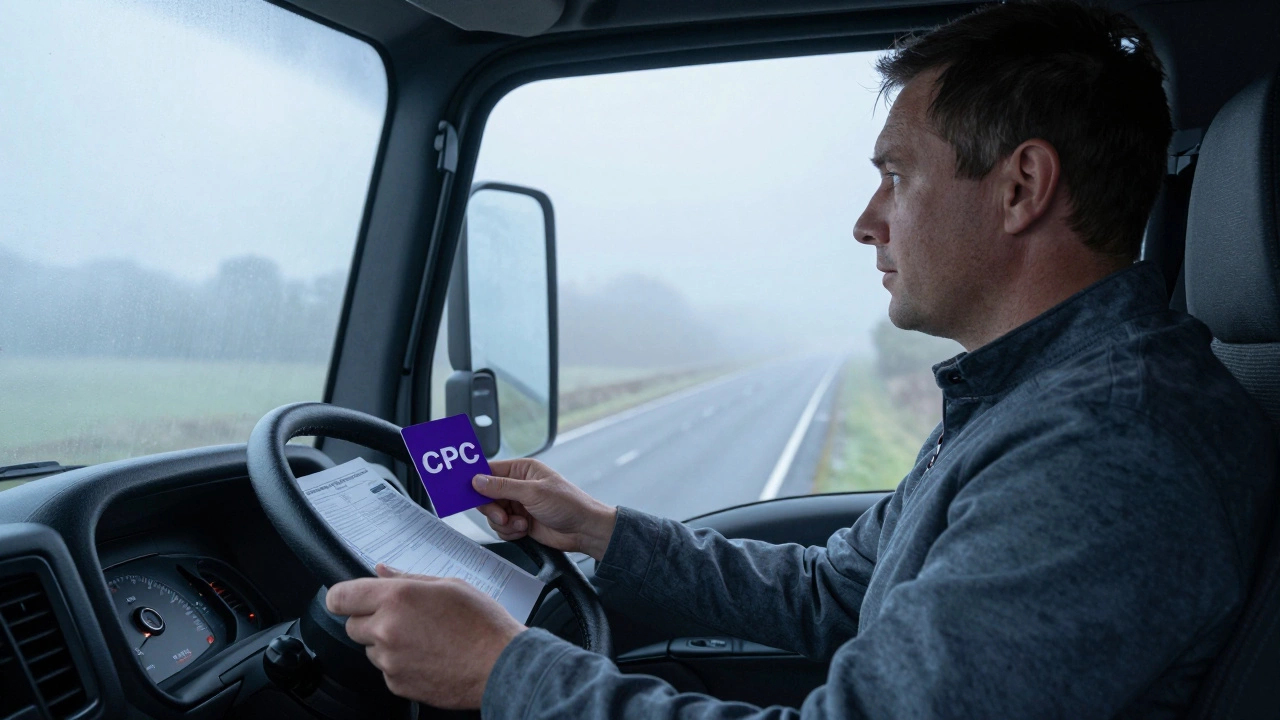
HGV Driver CPC Progress Tracker
Your Qualification Status
Qualification Units Breakdown:
Imagine you have just passed your heavy goods vehicle (HGV) practical test. You feel ready to hit the road and start earning a living. But before you can legally drive for hire or reward in the UK, there is one final hurdle: the 20-hour rule. This requirement often confuses new drivers who think their licence is enough. It isn’t. Without completing this specific training block, you cannot get your Driver Certificate of Professional Competence (CPC) card, which means you are restricted to non-commercial driving only.
This guide breaks down exactly what the 20-hour rule is, why it exists, and how to navigate it efficiently so you can start your career without unnecessary delays.
Understanding the Core Requirement
The 20-hour rule refers to the mandatory additional training that all new professional lorry drivers must complete after passing their initial category C (rigid) or C+E (articulated) practical tests. This rule was introduced as part of the EU Directive on Driver Qualifications, which the UK retained post-Brexit to maintain high safety standards in the logistics industry.
Here is the critical distinction: Passing your driving test gives you the entitlement to drive an HGV, but it does not give you the legal right to do so professionally. To drive commercially-meaning you are paid to drive or you are transporting goods for business purposes-you need two things:
- An HGV Licence with the correct categories (C or C+E).
- A valid Driver CPC Card.
You obtain the CPC Card by accumulating 28 units of training. The first 14 units come from passing your theory and practical tests. The remaining 14 units come from the 20 hours of approved training. Each hour of training counts as one unit. Therefore, 20 hours = 20 units, but you only need 14 more to reach the total of 28 required for your initial qualification.
Why Does This Rule Exist?
It might seem like bureaucratic red tape, but the purpose is straightforward: safety and professionalism. Heavy goods vehicles weigh up to 44 tonnes. They require specialized skills beyond basic car driving, such as advanced hazard perception, load security management, and fatigue awareness.
The European Union originally implemented this system to reduce accidents involving large trucks. By ensuring every professional driver undergoes standardized, expert-led training, the industry aims to lower collision rates and improve fuel efficiency through better driving techniques. For employers, hiring a driver with a full CPC card means they are compliant with the law and less likely to cause costly incidents on the road.
Who Needs to Complete the 20 Hours?
Not everyone who drives a big truck needs this training. The rule applies specifically to "professional" drivers. Here is how to determine if you fall into this category:
| Driver Type | Needs 20-Hour Training? | Reason |
|---|---|---|
| Professional Lorry Driver (Paid) | Yes | Driving for hire or reward requires a CPC card. |
| Own-Account Driver (Business Owner) | Yes | Transporting goods for your own business counts as commercial use. |
| Military Personnel | No* | Exempt if driving within military operations; may need it for civilian work. |
| Emergency Services | No | Firefighters, police, and ambulance crews are exempt during duty. |
| Volunteer Groups | No | Driving for charitable organizations without payment is exempt. |
| Personal Use Only | No | If you drive a truck solely for personal reasons (e.g., moving house yourself), no CPC is needed. |
*Note: Military exemptions can be complex. If you plan to transition to civilian driving, check your status carefully.
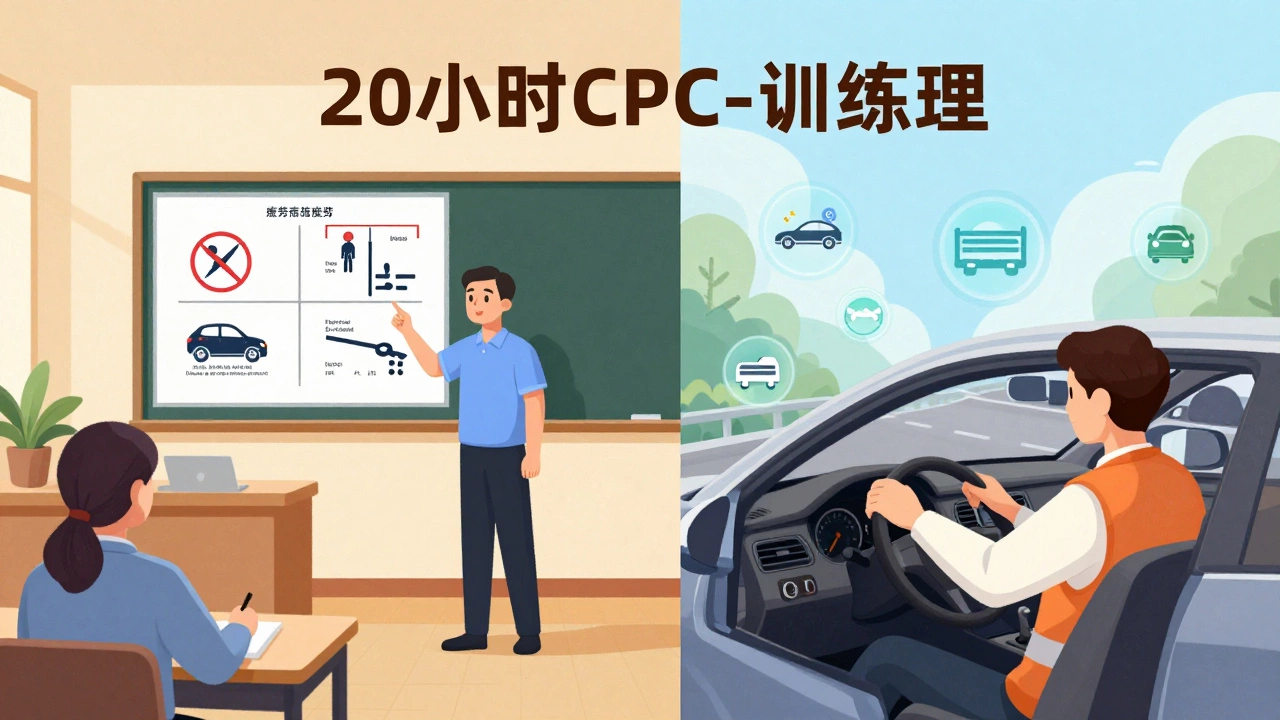
What Can You Do During These 20 Hours?
The Department for Transport (DfT) specifies that the training must cover certain core subjects. You cannot just spend 20 hours practicing reversing in an empty lot. The curriculum is designed to build well-rounded professional skills. Approved courses typically include:
- Safe Driving Techniques: Advanced braking, cornering, and maintaining control in adverse weather conditions.
- Fatigue Management: Understanding working time regulations, recognizing signs of tiredness, and planning rest breaks effectively.
- Vehicle Security: How to secure loads properly to prevent shifting, which can cause accidents or damage.
- Environmental Awareness: Eco-driving techniques to reduce fuel consumption and emissions.
- Legal Requirements: Deep dive into tachograph rules, weight limits, and border controls.
You can choose between classroom-based learning or practical on-road training. Many driving schools offer blended courses where you spend some time studying theory and the rest behind the wheel. The key is that the provider must be accredited by the DfT to deliver CPC training.
How to Book Your Training
Once you have passed your practical test, you should act quickly. There is no strict deadline to complete the 20 hours, but you cannot drive professionally until you do. Here is a step-by-step approach:
- Find an Accredited Provider: Search for "DfT approved CPC training" near you. Check reviews and ask about their pass rates for the subsequent modules.
- Schedule Early: Popular times are immediately after peak test seasons. Booking weeks in advance ensures you get a slot that fits your schedule.
- Prepare Documentation: Bring your provisional licence, your passed test certificate, and any medical declarations if required.
- Complete the Course: Attend all sessions. Engagement matters because instructors often provide insights that help with future periodic training.
- Receive Your Certificate: After finishing, the school will issue a certificate of completion. They usually submit the details to the DfT electronically.
Within a few weeks, you will receive your Driver CPC Card in the post. This card looks similar to your photocard licence but has a distinct purple background and states "Professional Competence."

Common Mistakes to Avoid
New drivers often make errors that delay their entry into the workforce. Avoid these pitfalls:
Assuming Your Test Centre Offers It: Most test centres only administer exams. They do not provide the 20-hour training. You must book separately with a training school.
Ignoring Expiry Dates: While the initial 20 hours don't expire, your CPC card itself requires renewal every five years through 35 hours of periodic training. Starting good habits now helps later.
Driving Commercially Before Certification: Even if you have a job lined up, do not touch the steering wheel for paid work until you hold the physical CPC card. Fines for non-compliance are severe, and insurance will be voided.
Costs Involved
The price for 20-hour CPC training varies depending on location and provider type. In the UK, prices generally range from £300 to £600. Some employers offer to pay for this training as part of a recruitment package. If you are self-employed, factor this cost into your startup budget. Remember, cheaper isn't always better. Ensure the course covers all required topics and provides a recognized certificate.
Next Steps After Completion
Once you have your CPC card, you are fully qualified. However, your education doesn't stop there. Every five years, you must complete 35 hours of periodic CPC training. This ongoing education keeps your skills sharp and updates you on new laws or technologies. Treat these sessions as valuable opportunities to network with other drivers and learn new tricks of the trade.
For those looking to expand their careers, consider adding endorsements like ADR (dangerous goods) or tankers. These specializations often require additional training but command higher wages. The 20-hour rule is just the beginning of a long and rewarding journey in the transport sector.
Can I drive an HGV without the 20-hour CPC training?
You can drive an HGV for personal use or non-commercial purposes without the CPC card. However, if you are being paid to drive or transporting goods for your business, you must have completed the 20 hours and hold a valid CPC card. Driving commercially without it is illegal.
How long does it take to complete the 20-hour rule?
Most providers offer intensive courses that can be completed in 2 to 3 days. Some schools also spread the training over several weekends to accommodate those who are already working. The total contact time is always 20 hours.
Do I need to pass a test for the 20 hours?
There is no formal exam for the initial 20-hour training. It is purely educational. As long as you attend the sessions and participate, you will receive your certificate of completion. This differs from the periodic training, which also has no exam but requires attendance records.
What happens if I lose my CPC card?
If you lose your CPC card, you must report it to the DVLA immediately. You can apply for a replacement online or by post. Until you receive the new card, you should carry proof of your training completion if possible, though technically you cannot drive professionally without the card in hand.
Is the 20-hour rule different in Northern Ireland?
The rules are largely the same across the UK, including Northern Ireland. However, administrative bodies differ slightly. In Northern Ireland, the Driver & Vehicle Agency (DVA) handles CPC cards instead of the DVLA. Always check with the local authority for specific procedural differences.