

The 2-4-12 Second Rule Simulator
Select your current road condition and speed to see the required time gap. Then, use the timer to practice measuring your distance.
At 60 km/h in Dry & Clear conditions, you need approximately 33 meters of space.
Target Time Gap
Visualize passing a stationary object (tree/sign) when the car ahead passes it.
You’re cruising down the motorway, music on, windows down. Suddenly, the car ahead slams its brakes. Do you have time to stop? Or are you just a split-second away from becoming part of a fender-bender report? Most drivers think they know how much space they need. But in reality, most people drive way too close. That’s where the 2-4-12 second rule comes in. It’s not just a catchy number sequence; it’s a lifesaving formula for keeping your distance safe under any condition.
Why Seconds Matter More Than Meters
Think about this: if you measure distance in meters, you might say, "I'm 50 meters back." But 50 meters means nothing if you're doing 100 km/h versus 30 km/h. Time is the universal constant here. Whether you’re moving fast or slow, the time it takes to react and stop remains relatively consistent. That’s why professional drivers and examiners look for time gaps, not just physical space.
The core idea is simple. You pick a stationary object on the side of the road-a signpost, a tree, a bridge pillar. When the rear bumper of the car in front of you passes that object, you start counting. If you reach the object before you finish counting, you’re too close. If you pass it after you’ve finished, you’re safe. The numbers 2, 4, and 12 tell you how long to count depending on what’s happening around you.
Breaking Down the Numbers
Let’s strip away the confusion. Each number represents a specific scenario. Using them correctly can mean the difference between a smooth commute and a stressful near-miss.
The 2-Second Rule: Your Baseline
This is your default setting. On dry roads, with good visibility, and moderate traffic, aim for a two-second gap. Why two? Because studies show the average driver needs about 0.7 to 1.5 seconds just to recognize a hazard and move their foot to the brake pedal. Add another second for the actual braking process, and you hit that two-second minimum. Anything less, and you’re gambling with physics.
The 4-Second Rule: When Things Get Tricky
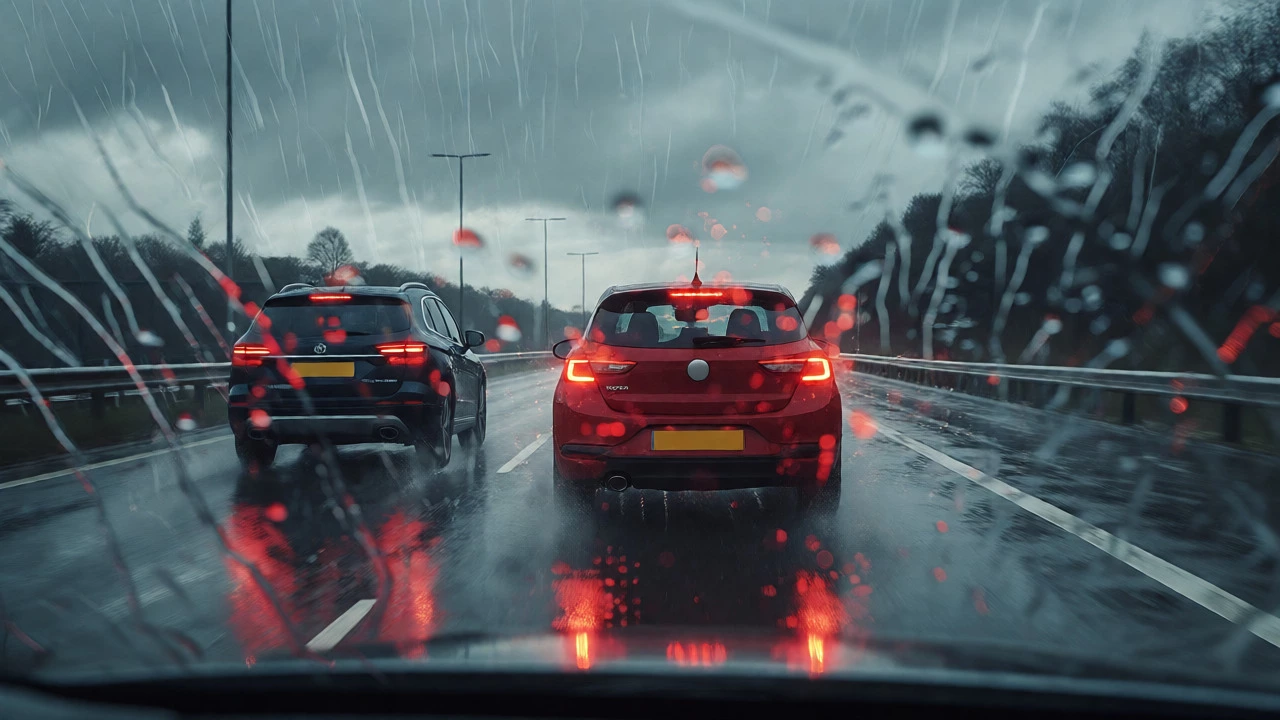
Rain starts falling. Fog rolls in. Or maybe you’re towing a trailer. These factors double your risk. Wet roads reduce tire grip significantly. A car that stops in 40 meters on dry pavement might need 80 meters on wet asphalt. By extending your gap to four seconds, you give yourself enough buffer to handle sudden stops without panic-braking. This is also crucial in heavy city traffic where cars cut in and out unpredictably.
The 12-Second Rule: Extreme Conditions
When does it get bad enough to require twelve seconds? Think dense fog where you can barely see ten meters ahead. Or icy roads where tires lose all traction. At these levels, standard reaction times fail. You need massive margins. Twelve seconds sounds like forever, but at highway speeds, it covers hundreds of meters. It ensures that even if the car ahead disappears into mist or ice, you have ample room to come to a gentle halt.
| Condition | Recommended Gap | Why? |
|---|---|---|
| Dry Road, Good Visibility | 2 Seconds | Standard reaction time plus basic braking distance. |
| Rain, Light Fog, Heavy Traffic | 4 Seconds | Reduced traction requires longer stopping distances. |
| Ice, Snow, Dense Fog | 8-12 Seconds | Tires may slide; visibility limits hazard detection. |
| High Speed (Motorway) | 4+ Seconds | Kinetic energy increases exponentially with speed. |
How to Measure It Without a Stopwatch
You don’t need a gadget. Use a mental trick. Pick your reference point. As the car ahead passes it, say "One thousand one, one thousand two" in your head. These phrases take roughly one second each to say. If you pass the marker while saying "one thousand three," you’re only two seconds back. Perfect for dry days.
If it’s raining, keep counting. "One thousand one, one thousand two, one thousand three, one thousand four." If you pass the marker after finishing this phrase, you’re good. It feels awkward at first. Other drivers might honk because they think you’re leaving too big a gap. Ignore them. They’re usually the ones who will be in an accident later.
Common Mistakes Drivers Make
Most people fail this test not because they don’t know the rule, but because they forget to apply it dynamically. Here are the traps:
- Static Thinking: Sticking to two seconds even when it starts drizzling. Rain changes everything instantly.
- Speed Ignorance: Applying the same gap at 30 km/h as at 110 km/h. Higher speeds demand more time, not just more space.
- Distraction Lag: Checking your phone adds half a second to your reaction time. Factor that in.
- Vehicle Weight: Driving an SUV or carrying heavy loads increases momentum. You need extra seconds to stop safely.
Why Examiners Love This Rule
If you’re preparing for your driving test, mastering the 2-4-12 rule is non-negotiable. Examiners aren’t just watching your steering; they’re assessing your judgment. Showing awareness of following distances demonstrates defensive driving skills. It proves you’re thinking ahead, not just reacting. In New Zealand, where weather can shift rapidly from sunny to stormy, this adaptability is critical. Failing to adjust your gap in rain is a common reason for test failures.

Adjusting for Vehicle Type
Not all cars stop the same way. A lightweight hatchback with new tires behaves differently than a heavy pickup truck with worn brakes. If you’re driving a larger vehicle, add an extra second to whatever baseline you use. For motorcycles, riders often need even more space because they can disappear from blind spots quickly. Always err on the side of caution.
Real-World Example: The Highway Merge
Imagine merging onto a busy motorway. Cars are speeding past. You find a gap. Instead of squeezing in tightly, wait for a wider opening. Once merged, immediately assess your speed relative to the car ahead. Is it slowing down? Increase your gap. Is traffic flowing smoothly? Maintain two seconds. This proactive approach prevents the "accordion effect," where small braking actions cascade into major jams behind you.
Is the 2-second rule legal everywhere?
While laws vary by country, most jurisdictions define safe following distance qualitatively rather than strictly numerically. However, failing to maintain adequate distance is often cited as a cause for accidents. The 2-second rule is widely accepted as a best practice for meeting legal requirements of 'due care' and 'reasonable distance.'
Does the rule change for automatic vs manual cars?
No, the fundamental physics of stopping distance remain similar. However, some argue manual drivers might react slightly faster due to engine braking engagement, but the difference is negligible for general safety purposes. Stick to the time-based gap regardless of transmission type.
What if I’m tailgated by someone else?
If someone is driving too close behind you, increase your own following distance from the car ahead. This gives you more room to brake gently, preventing a chain-reaction collision. If possible, change lanes to let them pass.
Can I use this rule in city traffic?
Yes, but practically, strict two-second gaps are hard to maintain in stop-and-go urban traffic due to frequent lane changes by other vehicles. Aim for as much space as possible, but prioritize smooth acceleration and deceleration over rigid timing in congested areas.
How does night driving affect the rule?
Night driving reduces visibility, making it harder to spot hazards early. Treat nighttime driving similarly to rainy conditions and extend your following distance to at least 3-4 seconds to compensate for delayed hazard recognition.