

HGV Salary Calculator
Calculate Your HGV Salary
Estimated Annual Salary
Important Note: This is an estimate based on industry data. Actual salaries vary by company, specific role, and individual performance.
A HGV driver isn’t just someone who drives a big truck. It’s a job that keeps supermarkets stocked, factories running, and construction sites supplied. If you’ve ever wondered what it takes to haul a 44-tonne trailer across the country, this is what you need to know.
What Exactly Does an HGV Driver Do?
An HGV driver operates Heavy Goods Vehicles - trucks that weigh over 3.5 tonnes. These include rigid trucks, articulated lorries, and even specialized vehicles like refrigerated trailers or tankers. The job isn’t just about turning the steering wheel. It’s about planning routes, checking loads, following safety rules, and dealing with delays.
Most HGV drivers start their day with a vehicle inspection. That means checking brakes, lights, tires, and fluid levels. If something’s wrong, they report it. No shortcuts. A faulty brake on a 40-tonne truck isn’t just a problem - it’s a danger.
Then comes the drive. Some drivers stay local, making multiple deliveries in a day. Others spend weeks on the road, hauling goods across Europe or between major ports. Delivery times are tight. Missing a window can mean lost contracts, angry customers, and fines.
What’s the Difference Between HGV and LGV?
You’ll hear both terms used. HGV stands for Heavy Goods Vehicle. LGV stands for Large Goods Vehicle. In the UK and many Commonwealth countries, they’re used interchangeably. But technically, LGV is the legal term for the licence category, while HGV refers to the vehicle itself.
For example, if you hold an LGV Class C1 licence, you can drive a rigid truck up to 7.5 tonnes. An LGV Class C licence lets you drive anything over 7.5 tonnes - that’s the full HGV range. So when people say ‘HGV driver’, they usually mean someone with a Class C or C+E licence.
What Licences Do You Need?
You can’t just walk into a truck and start driving. You need a full car licence first. Then you need to pass a series of tests to get your HGV licence.
Here’s the breakdown:
- Apply for a provisional HGV licence through the DVLA (or equivalent in your country).
- Pass a medical check. You need good eyesight, no uncontrolled epilepsy, and no serious heart conditions.
- Complete the Driver Certificate of Professional Competence (CPC). This includes a theory test, hazard perception test, and practical driving test.
- Finish 35 hours of periodic training every five years to keep your licence valid.
There are different licence categories:
- C1: Rigid trucks up to 7.5 tonnes
- C: Rigid trucks over 7.5 tonnes
- C+E: Articulated lorries (truck + trailer)
Most people start with C+E - it opens the most doors. But if you’re only planning to drive smaller delivery trucks, C1 might be enough.
How Long Does HGV Training Take?
It depends on your schedule and how fast you learn. Most full-time training courses last between 4 and 8 weeks. You’ll spend time in the classroom learning regulations, vehicle mechanics, and load safety. Then you’ll hit the road with an instructor.
Some training schools offer accelerated courses - 5 days of theory, 10 days of driving, then the test. But rushing isn’t always the best idea. The practical test is tough. In 2024, the pass rate for the HGV driving test in the UK was just 58%. That’s lower than the car test.
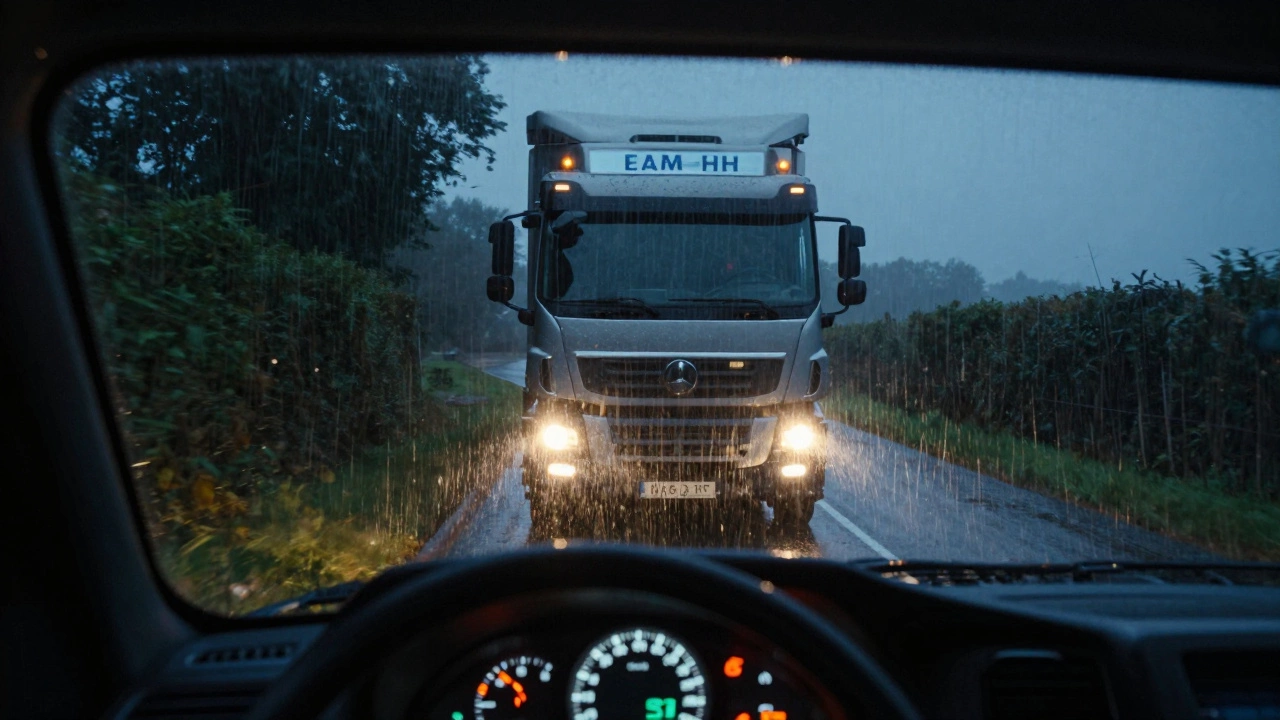
Practice matters. The more hours you spend behind the wheel, especially in tricky conditions like night driving, heavy traffic, or narrow rural roads, the better your chances.
What’s the Pay Like?
HGV drivers earn more than most people think. Entry-level drivers start around £32,000 a year in the UK. Experienced drivers with a C+E licence and good safety records can earn £45,000 to £55,000. Some specialist roles - like driving hazardous materials or operating in cold chain logistics - pay even more.
Long-haul drivers often get paid by the mile or by the delivery. That means overtime can add up. Many companies also pay for fuel, accommodation, and meals on the road.
In New Zealand, the average salary is NZ$65,000 to NZ$85,000, depending on experience and whether you’re driving locally or internationally.
What’s the Daily Life Really Like?
It’s not glamorous. You’ll wake up before dawn. You’ll eat meals in rest stops. You’ll deal with traffic jams, bad weather, and GPS that leads you down a dirt track.
But it’s also rewarding. You’re independent. You’re not stuck in an office. You see different places. You feel pride when you deliver a critical shipment on time - whether it’s medicine to a hospital or parts to keep a factory running.
Most drivers work 5 to 6 days a week. EU and UK rules limit driving to 9 hours a day (10 hours twice a week), with a 45-minute break after 4.5 hours. You must use a digital tachograph to record your hours. It’s not optional. Faking logs gets you fined, suspended, or even jailed.
Who Should Become an HGV Driver?
This job isn’t for everyone. You need:
- Patience - traffic, delays, and difficult customers are part of the job.
- Attention to detail - one missed check can lead to a breakdown or accident.
- Physical fitness - you’ll be loading/unloading, climbing in and out of cabs, and standing for long periods.
- Reliability - companies need drivers they can count on.
If you’re someone who likes working alone, values freedom, and doesn’t mind early mornings, this could be a great fit. It’s not a job you do for a year and move on. Most HGV drivers stay in it for decades.

What Are the Biggest Challenges?
There are three big ones:
- Driver shortage: There aren’t enough trained drivers. In the UK alone, there’s a shortfall of over 70,000 HGV drivers. That means good opportunities - but also pressure to perform.
- Regulations: Rules on hours, emissions, and safety change often. You have to keep learning.
- Isolation: Long hours alone on the road can be lonely. Many drivers use apps to stay connected or join driver communities.
Technology is changing things too. More trucks now have lane assist, automatic braking, and satellite tracking. Drivers need to understand these systems - they’re not just tools, they’re part of the job.
How Do You Get Started?
Step one: Check if you’re eligible. You must be at least 18 (or 21 in some countries) and hold a full car licence.
Step two: Book a medical. Your GP can do it, or you can go to a certified HGV medical examiner.
Step three: Find a training school. Look for one approved by the DVSA (UK) or NZTA (New Zealand). Ask about pass rates, instructor experience, and whether they help with job placement after training.
Step four: Train. Don’t cut corners. Practice reversing, coupling trailers, and driving in tight spaces. These are the hardest parts of the test.
Step five: Take the test. If you pass, you’ll get your provisional HGV licence. Then you’ll need to complete your Driver CPC training within 5 years.
Is It Worth It?
Yes - if you’re ready for the responsibility. HGV driving isn’t easy, but it’s stable. Demand will keep growing. Global supply chains need drivers. Automated trucks are still years away from replacing human drivers on complex routes.
It’s a trade that gives you independence, decent pay, and a real sense of purpose. You’re not just driving a truck. You’re keeping the economy moving.
Can I drive an HGV with a regular car licence?
No. A standard car licence only lets you drive vehicles up to 3.5 tonnes. To drive anything larger - including a 7.5-tonne truck or articulated lorry - you need a separate HGV (LGV) licence. You must pass additional tests and complete medical checks.
How much does HGV training cost?
Training costs between £2,500 and £4,500 in the UK, depending on the course length and type of licence. In New Zealand, expect NZ$4,000 to NZ$7,000. Some employers offer sponsorship if you agree to work for them after training. Always check what’s included - some schools charge extra for theory tests or medicals.
Do I need to be physically strong to be an HGV driver?
You don’t need to be a bodybuilder, but you do need to be fit enough to climb in and out of the cab, handle heavy doors, and occasionally load or unload goods. Many modern trucks have automated systems, but manual handling still happens. A basic level of fitness is required to pass the medical.
Can women become HGV drivers?
Absolutely. While the industry has been male-dominated, more women are entering the field. Companies are actively recruiting female drivers because of the shortage. The job doesn’t require male strength - it requires skill, focus, and reliability. Many women thrive in this role.
What’s the difference between a Class C and Class C+E licence?
A Class C licence lets you drive a rigid truck over 3.5 tonnes - like a delivery van or a dump truck. A Class C+E licence lets you drive a truck pulling a trailer. That’s the most common type of HGV - the articulated lorry you see on motorways. C+E is more valuable because it opens up more job options.
How often do HGV drivers have to renew their licence?
Your driving licence itself doesn’t expire unless you’re over 70. But your Driver CPC (Certificate of Professional Competence) must be renewed every five years with 35 hours of training. If you don’t complete this, you can’t legally drive an HGV for work, even if your licence is valid.
Are there age limits for HGV drivers?
You must be at least 18 to get a Class C1 licence and 21 for Class C or C+E. There’s no upper age limit as long as you pass the medical every five years after age 45, and every year after 65. Many drivers work into their 60s and 70s if they stay healthy.