

Driving Theory Test Pass/Fail Simulator
Total Questions: 50 | Pass Mark: 43
Max Score: 75 | Pass Mark: 44
Enter your scores above
Click calculate to see if you would pass the test.
You’ve booked your practical lesson. You’ve practiced your mirrors and signals in the driveway. But there is a gatekeeper standing between you and that car: the driving theory test is the mandatory written and observational exam required to obtain a provisional driving licence upgrade in the United Kingdom. It sounds straightforward enough-just answer some questions on a computer screen, right? Wrong. For many learners, this two-part assessment is more nerve-wracking than the actual drive.
The reason isn't just the content; it's the format. You aren't just being tested on what you know about road signs. You are being tested on how you process information under time pressure and how well you can predict danger before it happens. If you walk into the test center without understanding exactly how these two distinct sections work, you’re gambling with your license.
This guide breaks down the anatomy of the test so you know precisely what to expect when you sit down at that terminal.
The Multiple Choice Section: More Than Just Memory
The first part of the examination is the multiple-choice section. This is where most people start sweating. You will face 50 questions drawn from the official Highway Code and supporting driver education materials. You have 57 minutes to complete them. That gives you roughly one minute per question, which sounds generous until you realize some questions require reading long scenarios or interpreting complex diagrams.
To pass, you need to get at least 43 out of 50 correct. That’s an 86% success rate. Missing seven questions means failure. There is no partial credit. It’s binary: right or wrong.
The questions cover three main areas:
- Road Signs and Signals: You’ll be shown images of traffic lights, road markings, and static signs. You need to know their specific meanings. For example, do you know the difference between a solid white line and a broken white line in the center of the road? One allows overtaking if safe; the other generally prohibits it unless specific exceptions apply.
- Rules of the Road: These questions test your knowledge of legal requirements. Think speed limits, parking restrictions, and when you must stop for emergency vehicles. These are black-and-white facts found directly in the Highway Code is the official handbook containing rules, guidelines, and advice for all road users in Great Britain.
- Situational Awareness: These are the trickiest. They present a scenario, like "You are approaching a junction with limited visibility." You have to choose the safest action from four options. Often, two answers might seem plausible, but only one is the *safest* according to examiner standards.
A common mistake candidates make is overthinking. The examiners don’t want creative solutions; they want textbook safety. If an option involves slowing down, checking mirrors, and signaling, it’s usually the right answer. If another option says "accelerate to beat the light," it’s wrong. Always prioritize caution.
Hazard Perception: The Eye Test for Drivers
Once you survive the multiple-choice section, you move immediately to hazard perception. This is unique to the UK and several other countries. It tests your ability to spot developing hazards on the road. You won’t be asked to identify a red octagon as a stop sign here. Instead, you’ll watch video clips of real-life driving situations.
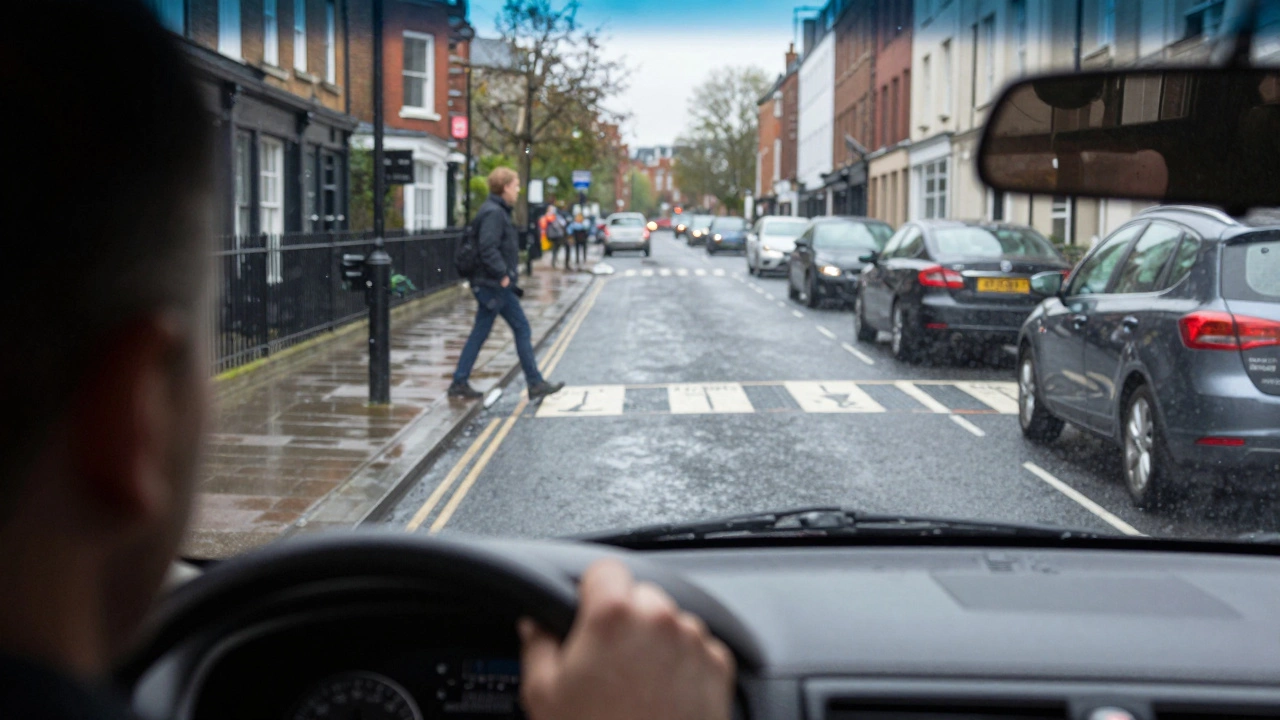
You will view 14 video clips. In 13 of them, there will be a developing hazard. In one clip, there is no hazard at all-it’s a control clip designed to see if you panic-click when nothing is happening. A "developing hazard" is something that could affect your driving in the future. A pedestrian standing still on the sidewalk isn’t a hazard. A pedestrian stepping off the curb onto the street is.
Here is how scoring works, because it’s not as simple as right or wrong:
- Early Detection (5 points): You click the mouse as soon as you notice the hazard starting to develop. This shows you are scanning ahead effectively.
- Late Detection (1 point): You click after the hazard has become obvious or immediate. This suggests you were distracted or reacting too slowly.
- No Click (0 points): You missed the hazard entirely.
The maximum score is 75 points. To pass, you need 44 points. Notice that you don’t need to get every single hazard early. You can miss a few late detections and still pass, provided you catch the majority early. However, missing the "no hazard" clip by clicking randomly will cost you valuable points.
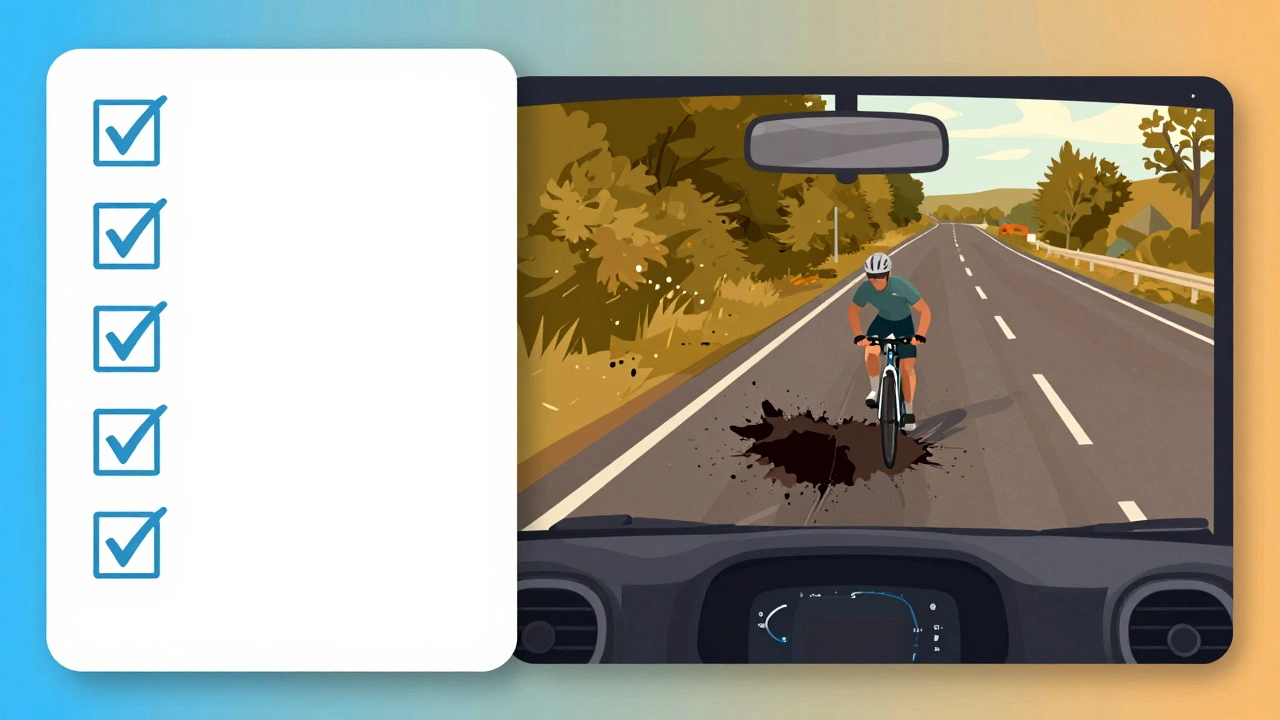
The videos are taken from dashcams and fixed cameras. They include urban streets, rural roads, and motorways. Hazards include pedestrians crossing unexpectedly, cars pulling out from side streets, cyclists swerving around potholes, and animals running onto the road. Your job is to anticipate their movement before it impacts your vehicle.
Understanding the Scoring System
Let’s look at the numbers again to understand the margin for error. In the multiple-choice section, you can afford to miss 7 questions. In hazard perception, you need 44 out of 75. This means you can lose up to 31 points in the video section and still pass. That sounds like a lot of room for error, but remember: each missed early detection costs you 4 points (5 potential minus 1 awarded). Missing three hazards completely costs you 15 points. You can quickly burn through your buffer if you’re not paying attention.
| Section | Total Questions/Points | Pass Mark | Failure Threshold |
|---|---|---|---|
| Multiple Choice | 50 Questions | 43 Correct | 42 or fewer correct |
| Hazard Perception | 75 Points Max | 44 Points | 43 or fewer points |
If you fail one section but pass the other, you fail the entire test. You cannot retake just the failed portion. You have to book and pay for the whole thing again. This makes preparation critical.
What Happens on Test Day?
When you arrive at the test center, you’ll need to bring your provisional driving license and your appointment confirmation. You’ll check in, store any bags in lockers, and then proceed to the testing area. The environment is quiet, with rows of computers separated by partitions. Headsets are provided for audio cues in the hazard perception section.
You’ll be given a pen and paper for notes during the multiple-choice section. Many candidates use this to cross off incorrect answers or jot down quick reminders. It’s a useful tool if you get stuck on a tricky question.
At the end of the test, you’ll receive your result immediately on screen. If you pass, you’ll get a certificate to take to your practical driving instructor. If you fail, the screen will show which section(s) you failed and provide feedback on your performance. You can leave the center and try again later, but you must wait at least 3 days before rebooking.
Common Pitfalls to Avoid
Even well-prepared drivers stumble. Here are the most frequent reasons candidates fail:
- Ignoring the "No Hazard" Clip: In hazard perception, if you click on the control clip, you lose points. Stay calm. If nothing seems to be happening, wait. Don’t force a click.
- Second-Guessing Answers: In multiple-choice, your first instinct is often correct. Changing answers due to doubt leads to more errors. Trust your training.
- Poor Time Management: Spending 3 minutes on one difficult question leaves you rushing through the last ten. If you’re stuck, mark it and move on. You can return if time permits.
- Misinterpreting "Safe" vs. "Legal": Some questions ask what is legally permitted, while others ask what is safest. Read the question carefully. "What should you do?" implies safety. "Are you allowed to...?" implies legality.
How to Prepare Effectively
Preparation shouldn’t start the week before your test. It should begin when you get your provisional license. Start by reading the Highway Code cover to cover. Don’t skim it. Understand the principles behind the rules.
Use official practice tests available online. The government provides free mock tests that mimic the real exam interface. Practice hazard perception regularly. Watch the videos, pause them, and ask yourself: "What am I looking at? What could happen next?" Train your eyes to scan the road continuously-left, right, center, mirrors.
Consider using apps that offer thousands of practice questions. Repetition builds familiarity. When you’ve seen a question type five times, it becomes intuitive. Also, join forums or study groups where learners discuss tricky questions. Explaining your reasoning to others reinforces your own understanding.
Finally, manage your stress. Anxiety impairs cognitive function. Get a good night’s sleep before the test. Eat a light meal. Arrive early. Treat the test as a formality rather than a judgment of your worth. You’ve done the work. Now go prove it.
Can I use a calculator during the driving theory test?
No, calculators are not permitted. All calculations required, such as estimating stopping distances or fuel consumption, are designed to be done mentally or with simple estimation techniques taught in the Highway Code.
What happens if I fail the hazard perception section but pass the multiple choice?
You fail the entire test. Both sections must be passed simultaneously. You will need to rebook and retake both parts of the test, even though you already passed the multiple-choice portion.
Is the driving theory test different for motorcycles and cars?
The core structure is the same, but motorcycle-specific questions appear in the multiple-choice section for bike applicants. Hazard perception clips may also feature motorcycles more prominently. The pass marks remain identical.
How many times can I retake the driving theory test?
There is no limit to the number of attempts. However, each attempt requires a new booking fee. Most candidates pass within two or three tries if they prepare adequately using official resources.
Do I need to memorize the Highway Code word for word?
Not necessarily. You need to understand the concepts and applications. The test focuses on practical decision-making rather than rote memorization. Focus on understanding why certain actions are safer than others.