
US vs. UK Truck Terminology Translator
Select a Term
Click a term to see its translation and context.Select a term from the list to view its US/UK equivalent, legal classification, and usage tips.
Term
OriginDirect Translation / Equivalent
--
Legal Classification
--
Key Difference / Context
--
Pro Tip
--
You’re standing in a depot in Ohio or Texas, trying to explain your background to a local dispatcher. You mention you’ve been driving an HGV for five years. The dispatcher looks at you like you just spoke Martian. Why? Because in the United States, nobody uses that term. If you want to get hired, understand regulations, or just chat with fellow drivers across the Atlantic, you need to know what they actually call these beasts.
The short answer is simple: Americans call them trucks, specifically semi-trucks, tractor-trailers, or by their weight class, commercial motor vehicles (CMVs). But it’s more nuanced than that. The terminology shifts based on context-whether you’re talking to police, hiring managers, or other drivers. Getting this wrong can make you look inexperienced, even if you have decades of experience behind the wheel.
The Core Translation: HGV vs. CMV
In the UK and Europe, Heavy Goods Vehicle (HGV) is the standard legal and colloquial term for any road-going vehicle over 3.5 tonnes gross weight. It covers everything from a small delivery van upgraded for cargo to massive articulated lorries. In the US, the equivalent regulatory term is Commercial Motor Vehicle (CMV). However, no one on the CB radio says, "Hey, watch out for that CMV." They say "big rig," "truck," or "eighteen-wheeler."
The disconnect stems from how each country regulates transport. The US Department of Transportation defines a CMV as any vehicle used for business that exceeds specific weight thresholds (usually 10,001 pounds) or carries hazardous materials. The UK’s Driver and Vehicle Licensing Agency (DVLA) sets the threshold at 3.5 tonnes (approx. 7,716 lbs). This means some vehicles classified as HGVs in the UK might fall under different categories in the US, often simply called "box trucks" or "straight trucks" rather than full-blown "semis."
| UK Term | US Common Term | US Legal/Industry Term | Key Difference |
|---|---|---|---|
| Lorry / HGV | Truck / Big Rig | Commercial Motor Vehicle (CMV) | US focuses on function (business use); UK on weight class. |
| Articulated Lorry | Semi-truck / Tractor-Trailer | Combination Vehicle | US emphasizes the detachable nature (tractor + trailer). |
| Rigid Truck | Straight Truck / Box Truck | Straight Truck | US distinguishes rigid frames clearly for licensing tiers. |
| Cabover | Cabover | Conventional Cab | US prefers long-nose conventional cabs due to length laws. |
| Tacho Card | ELD (Electronic Logging Device) | ELD Data | US mandates digital logs; UK allows analog/mixed systems longer. |
Why "Semi" Is the Magic Word
If you tell an American driver you drive a "lorry," they might nod politely but think you mean a small delivery van. If you say "HGV," they’ll likely ask what country you’re from. But if you say you drive a semi or a semi-truck, heads will turn. That word signals size, complexity, and the specific skill set required to handle a combination vehicle.
The term "semi" comes from "semi-trailer," which refers to the fact that the trailer rests partly on its own wheels and partly on the tractor unit. Unlike a full trailer, which has axles at both ends, a semi-trailer relies on the front coupling. Understanding this mechanical difference helps when discussing maintenance or loading issues. For instance, explaining a "fifth wheel" issue makes instant sense to an American mechanic because they know exactly where the kingpin locks into the fifth wheel plate on the tractor.
Also, be careful with the term "truck." In the US, a pickup truck is a truck. A Ford F-150 is a truck. A Peterbilt 579 is also a truck. Context matters. When speaking professionally, always specify "heavy-duty truck," "Class 8 truck," or "combination vehicle" to avoid confusion with light-duty consumer vehicles.
Licensing: From PCV/CPC to CDL
Terminology extends deeply into licensing. In the UK, you hold a Category C or C+E license, plus a Driver CPC (Certificate of Professional Competence). In the US, you need a Commercial Driver License (CDL). The structure differs significantly.
- Category C (UK): Rigid trucks over 3.5t. In the US, this aligns roughly with a Class B CDL (single vehicle over 26,001 lbs).
- Category C+E (UK): Articulated vehicles. This matches a Class A CDL (combination vehicle with GCWR over 26,001 lbs and towed unit over 10,000 lbs).
- Driver CPC (UK): Requires periodic training every five years. The US doesn't have a direct equivalent for all drivers, though Hazmat endorsements require TSA background checks and frequent renewals.
If you’re moving from the UK to the US, don’t assume your HGV license translates directly. You’ll likely need to take written and practical tests again. State laws vary-California requires stricter emissions testing for older trucks compared to Texas. Knowing the local slang for these licenses helps too. Drivers talk about "getting their Class A," not "passing their C+E."
Common Slang and Jargon Decoded
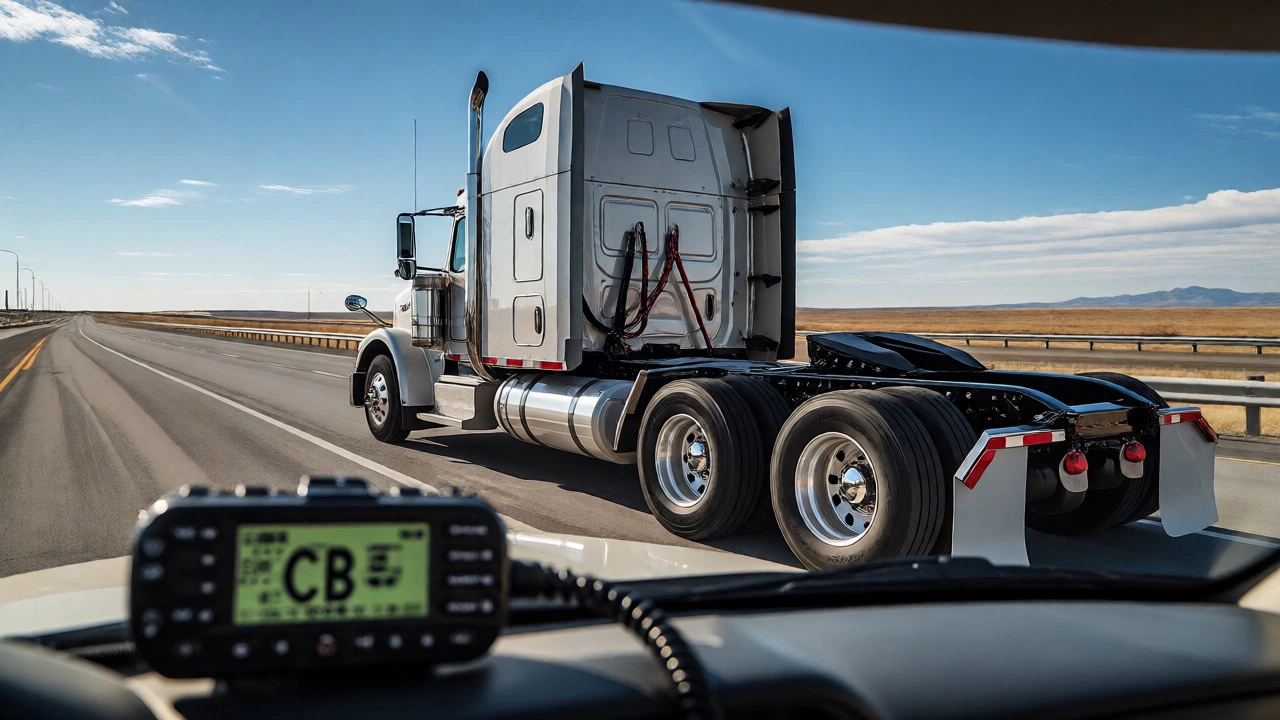
American trucking culture has its own lexicon, heavily influenced by CB radio history. While smartphones have replaced CBs for many, the language sticks around. Here’s what you’ll hear:
- Four Wheeler: A car. Yes, cars have four wheels. Don’t call a sedan a "car" in a truck stop conversation if you want to blend in; call it a "four wheeler" or "cage."
- Chicken Coop: The sleeper cab area. Not because chickens live there, but because early sleepers were cramped and felt enclosed.
- Greeley: A traffic cop. Originating from a famous incident in Greeley, Colorado, involving a state trooper and a trucker.
- Bear: Also a police officer. "Bear in the air" means helicopter patrol.
- Skid: A pallet. If you load "ten skids," you’re loading ten pallets of goods.
- Reefer: A refrigerated trailer. Short for refrigerator. Never call it a "fridge" unless you want to sound amateur.
- Deadhead: Driving with an empty trailer. It’s bad news financially, so everyone tries to avoid it.
Using these terms correctly shows you understand the industry’s operational reality, not just the technical specs. It builds rapport faster than quoting engine horsepower ever could.
Regulatory Differences That Affect Terminology
The way roads are built influences what we call things. In the UK, narrow lanes and tight turns favor shorter, maneuverable vehicles. Hence, the prevalence of smaller HGVs and rigid trucks. In the US, vast interstate highways allow for longer combinations. This leads to terms like "double" (two trailers pulled by one tractor) or "triple" (three trailers), common in western states but rare or illegal in many eastern states and almost unheard of in the UK.
Weight limits also dictate naming. The UK allows up to 44 tonnes for a standard articulated lorry. The US federal limit is 80,000 pounds (approx. 36 tonnes) for standard configurations, though bridge formula exceptions exist. Because US trucks often carry less total weight per axle group, they sometimes need more axles to spread the load legally. You’ll see "super singles" (wide single tires instead of duals) debated frequently in US forums, a concept rarely discussed in UK HGV circles due to different infrastructure pressures.
Furthermore, inspection standards differ. In the US, a DOT inspection is rigorous and frequent. Drivers fear the "red dot" sticker indicating a critical failure. In the UK, while MOT and tachograph checks are strict, the cultural emphasis on roadside random inspections varies by region. Knowing that a "DOT check" is a major event in a US driver's week helps you empathize with their stress levels during peak season.
Practical Tips for Cross-Border Communication
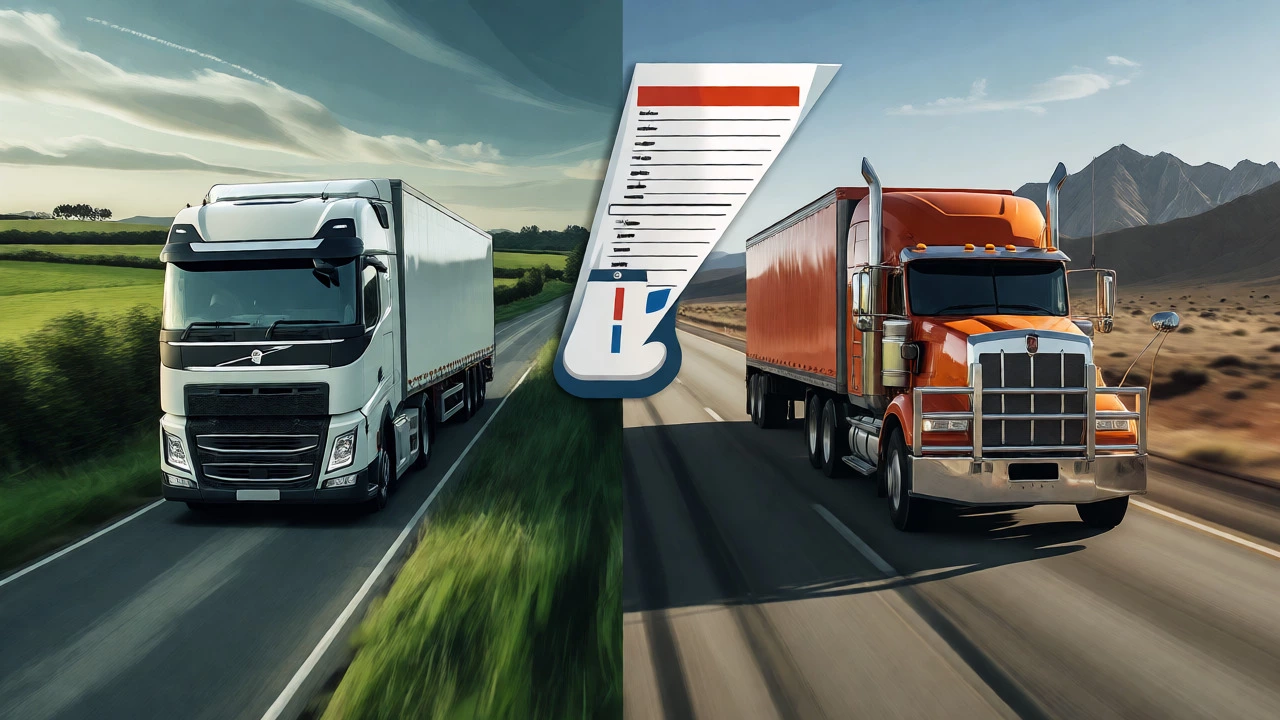
If you’re working with international logistics companies, clarity saves money. Misunderstanding whether a client wants a "straight truck" or a "dry van" can lead to costly rejections at loading docks.
- Clarify Dimensions First: Don’t just say "large truck." Specify length, width, and height. US trailers are typically 53 feet long. UK trailers are usually 13.6 meters (approx. 44.6 feet). That seven-foot difference matters for dock compatibility.
- Use Weight in Pounds: Even if you prefer metric, convert to pounds when dealing with US dispatchers. Saying "40 tons" might confuse them-are you using long tons, short tons, or metric tonnes? Say "80,000 lbs GVW" and everyone knows exactly what you mean.
- Avoid "Lorry": It’s harmless, but it marks you as foreign immediately. Stick to "truck" or "rig."
- Learn the Endorsements: Know what "HazMat," "Tanker," and "Doubles/Triples" mean. These aren’t just paperwork checkboxes; they define what jobs you can legally accept.
Remember, language evolves. Younger US drivers increasingly use terms from ride-sharing apps or tech logistics platforms. "Last mile" is now common in trucking contexts, referring to final delivery legs, often handled by smaller vans that wouldn’t qualify as HGVs in the UK but are crucial in US supply chains.
Frequently Asked Questions
Can I drive in the US with a UK HGV license?
No, not directly. You must obtain a Commercial Driver License (CDL) from the specific US state where you reside. While some countries have reciprocity agreements, the UK does not currently have a direct exchange agreement for commercial licenses with the US. You will likely need to pass written knowledge tests and a skills test, including pre-trip inspection, basic control, and on-road driving.
What is the closest US equivalent to a UK Category C+E license?
The closest equivalent is a Class A CDL. This license allows you to operate combination vehicles with a Gross Combination Weight Rating (GCWR) of 26,001 pounds or more, provided the towed unit is over 10,000 pounds. This mirrors the capability of driving an articulated lorry (tractor and trailer) in the UK.
Do Americans use the term 'lorry'?
Rarely. Most Americans do not know what a 'lorry' is. If you use the term, expect blank stares or polite confusion. The standard terms are 'truck,' 'semi,' 'tractor-trailer,' or 'rig.' Using 'lorry' immediately identifies you as British or European.
What is a 'cabover' in the US?
A cabover is a truck where the driver sits above the engine, similar to most modern UK HGVs. However, in the US, 'conventional' trucks (with a hood/nose) are far more common due to historical length restrictions that favored shorter overall vehicle lengths for the tractor itself. Cabovers are mostly seen in regional distribution or specialized applications today.
Is an HGV the same as a 'big rig'?
Colloquially, yes, but technically no. An HGV is a broad category covering any heavy goods vehicle over 3.5 tonnes. A 'big rig' specifically refers to a large combination vehicle (tractor and semi-trailer). A small delivery van classified as an HGV in the UK would not be called a 'big rig' in the US; it would be a 'box truck' or 'step van.'