
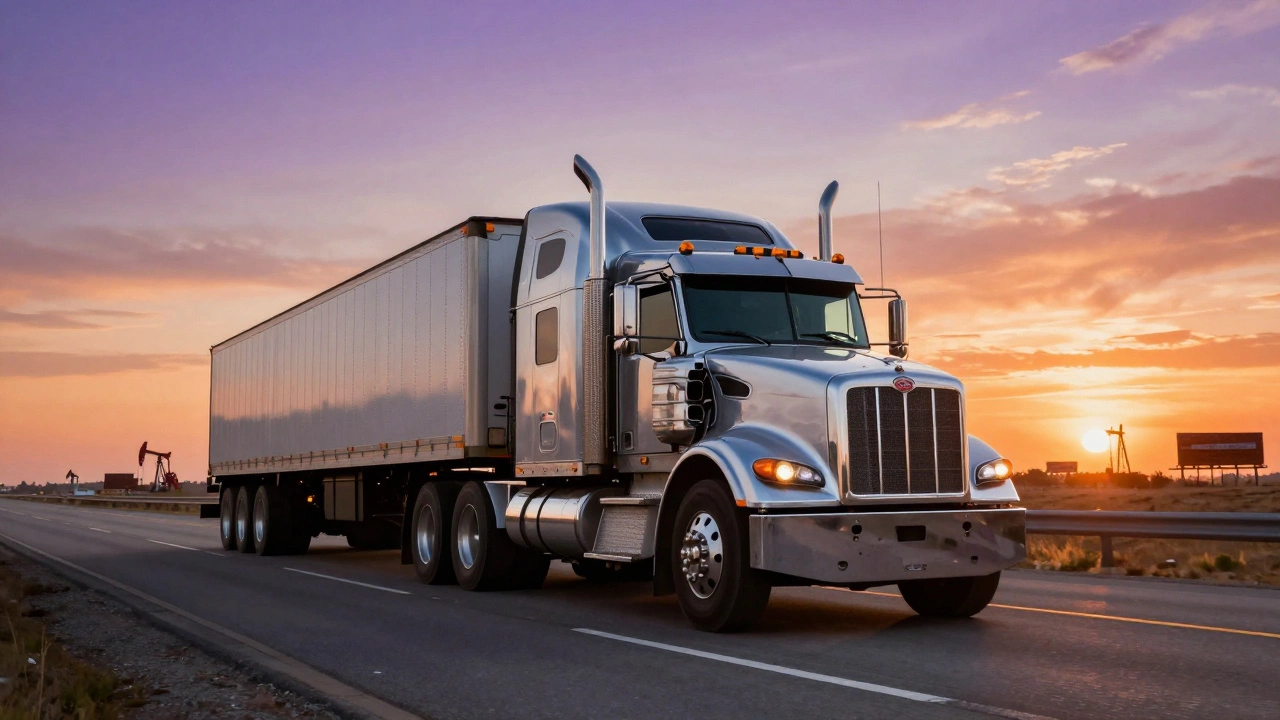
Truck/Lorry Licensing Comparison Tool
Licensing Comparison
Compare requirements for driving heavy goods vehicles between the UK and US
United Kingdom
HGV Licence
- Minimum Age: 18 (C), 21 (C+E)
- License Class: C or C+E
- Medical: DVLA medical form
- Training: 4-8 weeks
Common terms: Lorry, HGV, Heavy Goods Vehicle
United States
Commercial Driver's License (CDL)
- Minimum Age: 21 (interstate)
- License Class: A, B, or C
- Medical: DOT physical exam
- Training: 3-6 weeks
Common terms: Truck, Semi, Tractor-Trailer, 18-wheeler
License Transfer Guide
If you’ve ever watched an American movie or scrolled through a U.S. trucking forum, you’ve probably noticed they don’t say lorry. Not once. That word doesn’t show up in their vocabulary. So what do they call it? The answer is simple: truck. But the difference between a lorry and a truck isn’t just about words - it’s about culture, regulations, and how freight moves across continents.
Why Americans Don’t Say ‘Lorry’
The word lorry comes from British English, dating back to the late 19th century. It originally referred to a flatbed cart pulled by horses, and later evolved to mean any large motorized vehicle used for hauling goods. In the UK, Australia, and parts of the Commonwealth, lorry is still the standard term for what Americans call a truck. In the U.S., the word truck has always been the go-to term. It comes from an older English word meaning a wheel or a cart, and by the early 1900s, it was firmly attached to motorized freight vehicles. There was never a need to adopt lorry because American manufacturers, drivers, and regulators all used truck from the start.What Kind of Truck Are We Talking About?
When someone in the UK says lorry, they usually mean a heavy goods vehicle (HGV) - the big rigs that haul containers, pallets, and bulk cargo across highways. In the U.S., that same vehicle is called a semi-truck, tractor-trailer, or sometimes just a 18-wheeler. It’s important to note that Americans use the word truck for many sizes:- Compact pickup - called a truck
- Delivery van - also called a truck
- Heavy-duty freight hauler - definitely a truck
Regulations and Licensing: HGV vs. CDL
The difference in terminology reflects deeper differences in how freight is regulated. In the UK, driving a lorry over 3.5 tonnes requires an HGV licence. There are different classes: C1 for medium goods vehicles, C for large goods vehicles, and C+E for articulated trailers. In the U.S., the equivalent is the Commercial Driver’s License (CDL). To drive a tractor-trailer, you need a Class A CDL. The testing process is similar - written exams, skills tests, pre-trip inspections - but the rules are set by the U.S. Department of Transportation, not the DVLA. Here’s a quick comparison:| Aspect | United Kingdom | United States |
|---|---|---|
| Vehicle Type | Lorry (HGV) | Truck (Tractor-Trailer) |
| License Required | HGV Licence (Category C or C+E) | Class A CDL |
| Minimum Age | 18 for Category C, 21 for C+E | 21 for interstate hauling |
| Medical Requirements | DVLA medical form | DOT physical exam |
| Training Duration | Typically 4-8 weeks | Typically 3-6 weeks |
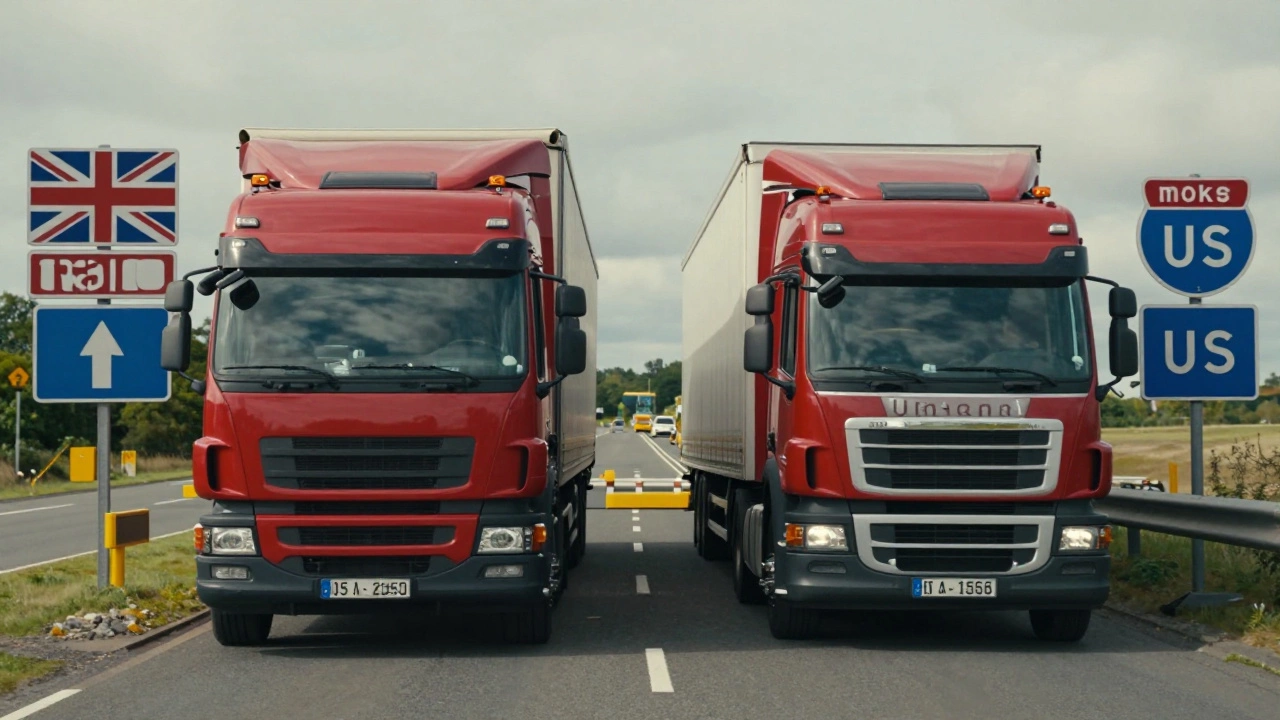
Why This Matters for Drivers
If you’re a British driver considering work in the U.S., or an American looking to drive in the UK, the language gap is just the start. You’ll also face:- Different road rules (UK drives on the left; U.S. on the right)
- Different weight limits (metric vs. imperial)
- Different rest hour laws (EU rules vs. FMCSA hours-of-service)
- Different paperwork (tachograph logs vs. electronic logging devices)
Is There Any Overlap?
Yes - but only in specific contexts. International shipping companies, global logistics firms, and military operations often use both terms. You might see a British company’s website say, “We operate a fleet of 50 lorries across Europe and 70 trucks in North America.” That’s not a mistake - it’s intentional. Also, in aviation and marine industries, the word lorry occasionally pops up in technical documents, especially those written by British engineers. But on the highway? You’ll never hear it.
What About Other Countries?
Australia and New Zealand use truck mostly, though lorry is still understood. Canada leans American - they say truck too. South Africa uses both, depending on the region. India uses truck in urban areas and lorries in rural ones. Language evolves with infrastructure.Bottom Line
If you’re asking what Americans call a lorry, the answer is straightforward: truck. But if you’re thinking about driving one - whether you’re from the UK, Australia, or anywhere else - you need to understand that it’s not just a word swap. It’s a shift in systems, laws, and culture. The next time you see a massive trailer rolling down an American highway, remember: it’s not a lorry. It’s a truck. And behind the wheel? Someone who trained for a Class A CDL, not an HGV licence. Same machine. Different world.Do Americans ever use the word ‘lorry’?
Rarely, and only if they’ve been exposed to British media or literature. In everyday conversation, driving, or logistics, Americans use ‘truck.’ If you say ‘lorry’ to a U.S. trucker, they’ll likely ask, ‘You mean a semi?’
Can a UK HGV driver drive a truck in the U.S.?
Not without getting a U.S. Commercial Driver’s License (CDL). Even with years of experience, UK drivers must pass the U.S. written and skills tests. Some states offer expedited testing for foreign drivers, but there’s no automatic recognition of HGV licences.
Is a semi-truck the same as a lorry?
Yes, in function and size. A semi-truck (tractor-trailer) is the American equivalent of a UK HGV lorry. Both haul heavy freight, use similar engine specs, and require specialized training. The difference is in terminology and regulation, not design.
Why does the UK use ‘lorry’ and the U.S. use ‘truck’?
It’s largely historical. The word ‘lorry’ emerged in Britain in the 1800s for horse-drawn freight carts, while ‘truck’ was already used in America for wheeled carts and later motor vehicles. Each country developed its own transport industry independently, so the terminology stuck.
Are there different types of trucks in the U.S.?
Yes. Class A: tractor-trailers (18-wheelers). Class B: straight trucks like box trucks or large buses. Class C: smaller commercial vehicles like delivery vans. The size and weight determine the CDL class needed.