
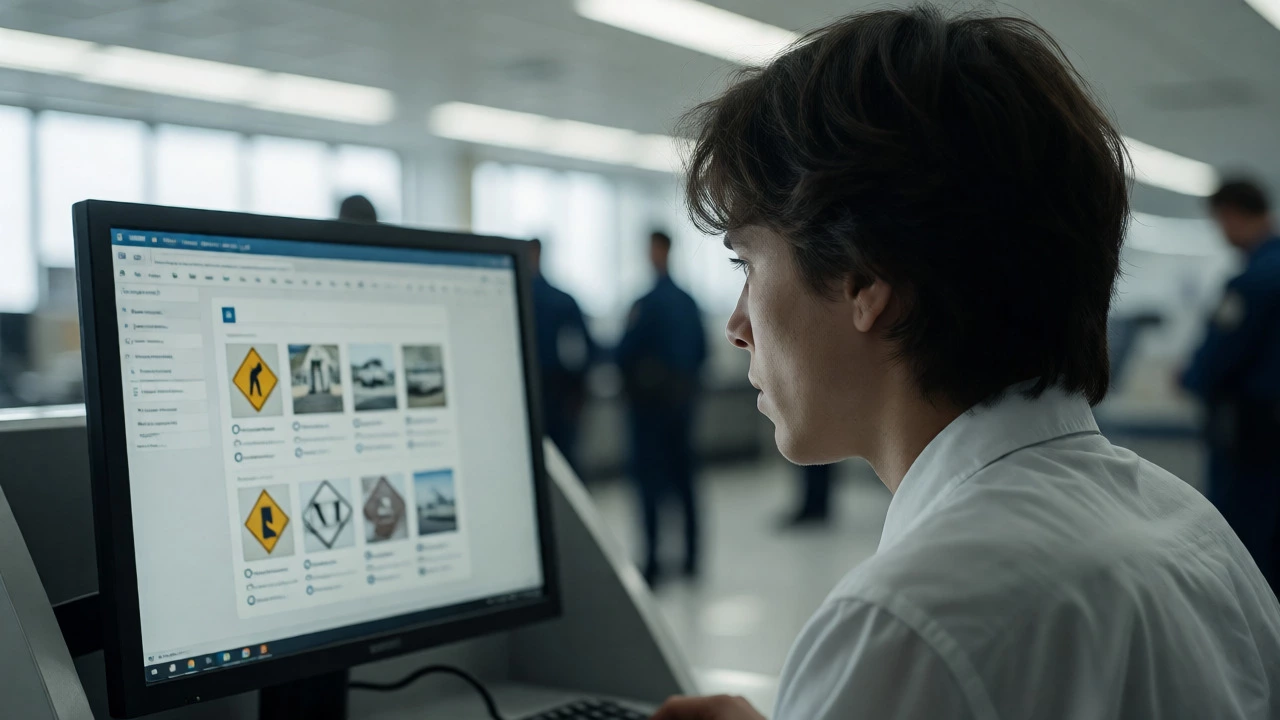
Virginia Permit Test Simulator
Test your readiness for the Virginia Knowledge Test. You need 15 out of 20 correct to pass (75%). This simulator contains a sample set of questions representative of the actual exam.
Ready to Start?
This is a short simulation of the real exam. Remember:
- Tip Read carefully for words like "NOT" or "EXCEPT".
- Tip Eliminate obviously wrong answers first.
- Rule Blank answers count as incorrect.
Loading question...
Test Complete!
Calculating results...
Correct
0
Incorrect
0
You just walked into the DMV, heart pounding a little faster than usual. You’ve studied the handbook, maybe taken a few practice quizzes online, and you’re ready to get that plastic card in your wallet that lets you start driving with supervision. But then it hits you: How many questions do I actually have to get right?
If you’re taking the Virginia Knowledge Test (also known as the permit test or written exam), administered by the Department of Motor Vehicles (DMV), here is the short answer: You need to answer 15 out of 20 questions correctly to pass.
That’s a 75% passing grade. Sounds straightforward? It should be. But knowing the number isn’t enough if you don’t know what those questions look like or how the scoring works when you miss one. Let’s break down exactly what you face on test day so you can walk in confident, not confused.
The Math Behind the Passing Score
The Virginia DMV doesn’t give partial credit for close answers. It’s binary: you either know the rule, or you don’t. The test consists of 20 multiple-choice questions drawn from the official Virginia Driver’s Manual. These aren’t trick questions designed to fail you; they are practical checks on whether you understand traffic laws, safety procedures, and vehicle operation basics.
To pass, you must score at least 75%. Here is how the math plays out:
- Total Questions: 20
- Minimum Correct Answers Needed: 15
- Maximum Wrong Answers Allowed: 5
This means you can miss up to five questions and still walk out with a learner’s permit. If you miss six, you fail. There is no curve, no extra time bonus, and no "close enough." If you are unsure about a question, guess strategically rather than leaving it blank, because a blank counts as wrong.
What Kind of Questions Are on the Test?
Many people panic thinking the test will ask obscure legal codes or complex physics equations. It won’t. The Virginia DMV focuses on three main areas. Understanding these categories helps you study smarter, not harder.
| Topic Area | Approximate Weight | Example Question Type |
|---|---|---|
| Traffic Laws & Rules | 40-50% | Right-of-way scenarios, speed limits, DUI penalties. |
| Road Signs & Signals | 30-40% | Identifying warning signs, interpreting pavement markings. |
| Safe Driving Practices | 10-20% | Following distance, blind spots, emergency maneuvers. |
Traffic Laws are the biggest chunk. You’ll see questions about who yields at a four-way stop, what happens if you refuse a breathalyzer, or how far you must park from a fire hydrant. These come directly from the Driver’s Manual chapters on "Rules of the Road" and "Alcohol and Drugs."
Road Signs are visual. You might see an image of a diamond-shaped orange sign and be asked what it means. Hint: Orange usually means construction or temporary conditions. Diamond shapes warn of hazards. Rectangles provide information. Memorizing shapes and colors is often easier than memorizing every single word on every sign.
Safe Driving Practices cover things like the "two-second rule" for following distance or how to handle hydroplaning. These questions test common sense backed by specific guidelines found in the manual.
How to Study Without Losing Your Mind
You don’t need to read the entire 200-page manual cover-to-cover if you’re short on time. But you do need to hit the high-yield sections. Here is a practical approach that works for most first-time test-takers:
- Read the Key Chapters: Focus on Chapter 2 (Traffic Control Devices), Chapter 3 (Safety and Vehicle Operation), and Chapter 4 (Rules of the Road). These contain 80% of the test material.
- Use Official Practice Tests: The Virginia DMV website offers free sample questions. Take them repeatedly until you consistently score above 90%. This builds muscle memory for the types of phrasing used.
- Learn the Signs First: Spend 30 minutes specifically studying road signs. Use flashcards or apps. Since these are visual, they are often the easiest points to secure.
- Understand, Don’t Just Memorize: For example, instead of just memorizing "Stop at a red light," understand why. What if the light is flashing red? That’s a stop sign. Flashing yellow? Proceed with caution. Knowing the logic helps if the question is worded slightly differently.
A common mistake is relying solely on third-party apps. While helpful, some outdated apps may list old rules. Always cross-reference tricky questions with the current edition of the Virginia Driver’s Manual.
What Happens If You Fail?
Don’t stress if you miss the mark. Failing the knowledge test is common, especially for younger drivers or those who rushed their study. The good news? You can retake it almost immediately.
Here’s the process:
- First Failure: You can retake the test the same day or another day. Some DMVs allow two attempts per visit, but this varies by location. Ask the clerk before you leave.
- Second Failure: If you fail twice, you typically have to wait one day before trying again.
- Third Failure: After three failures, you may be required to take a formal driver education course before attempting the test again. This applies mostly to new learners under 18, but check local DMV guidance.
There is no limit to the number of times you can take the test over your lifetime, but each attempt requires paying the testing fee unless you qualify for a waiver. The standard fee for the knowledge test is $2.00, which is negligible compared to the cost of failing later stages.
Special Cases: Vision and Medical Requirements
Passing the written test is only half the battle. Before you even sit down for the computer screen, you must pass a vision screening. If you wear glasses or contacts, bring them. You cannot use sunglasses during the screening.
If you fail the vision test, you’ll need a vision report form completed by an eye doctor. This doesn’t mean you can’t drive-it just means you’ll have a corrective lenses restriction on your license. Also, if you have certain medical conditions that affect your ability to drive safely, you might need a medical evaluation form submitted alongside your application.
Remember, the knowledge test assumes you can physically operate the vehicle. If you have hearing impairments or other disabilities, notify the DMV staff beforehand. They can provide accommodations, such as extended time or alternative formats, ensuring the test measures your knowledge, not your disability.
Pro Tips for Test Day Success
You’ve studied. You know the score. Now, let’s make sure nothing goes wrong on the big day.
- Arrive Early: Bring all required documents (proof of identity, residency, and social security number). Missing paperwork is the #1 reason people leave without a permit, regardless of their test score.
- Read Carefully: Watch out for words like "NOT," "EXCEPT," or "ALWAYS." A question might ask, "Which of these is NOT a reason to yield?" Misreading this costs you a point.
- Eliminate Wrong Answers: If you’re stuck, cross out the obviously wrong choices. Often, two options are clearly incorrect, leaving you with a 50/50 shot instead of a 25% guess.
- Trust Your Gut: Studies on test-taking show that your first instinct is usually correct. Don’t second-guess yourself unless you find concrete evidence in the question stem that contradicts your initial thought.
One final note: The Virginia DMV uses a randomized question bank. No two tests are identical. So, while you might see a question about school buses, your friend next to you might see one about highway merging. Don’t rely on "what was on the last test." Rely on your preparation.
Is the Virginia permit test hard?
It is generally considered moderate difficulty. Most people who read the key chapters of the Driver’s Manual and take a few practice tests pass easily. The challenge usually comes from unfamiliar wording or rushing through questions, not from the complexity of the traffic laws themselves.
Can I take the Virginia permit test online?
As of late 2026, the Virginia DMV allows eligible applicants to take the knowledge test online through their partner providers, but availability depends on your age and license type. First-time teen applicants often still require an in-person visit for identity verification. Check the DMV website for current eligibility for remote testing.
How long does the Virginia permit test take?
The actual test takes about 15-20 minutes for most people. However, you should budget 1-2 hours for the entire DMV visit, including waiting in line, document processing, vision screening, and photo capture.
What documents do I need for the VA permit test?
You need proof of identity (like a birth certificate or passport), proof of Social Security Number, and two proofs of Virginia residency (such as utility bills or bank statements). Minors also need a parent or guardian present to sign consent forms.
Does the permit expire if I don't schedule my road test?
Yes. In Virginia, a learner’s permit is valid for two years. If you do not obtain a full driver’s license within that time, you must reapply and retake both the knowledge and road tests. Plan ahead to avoid starting over.