
Driving Test Success Estimator
Your Profile
Estimated Pass Probability
Enter your details to see your odds.
Expert Recommendation:
...
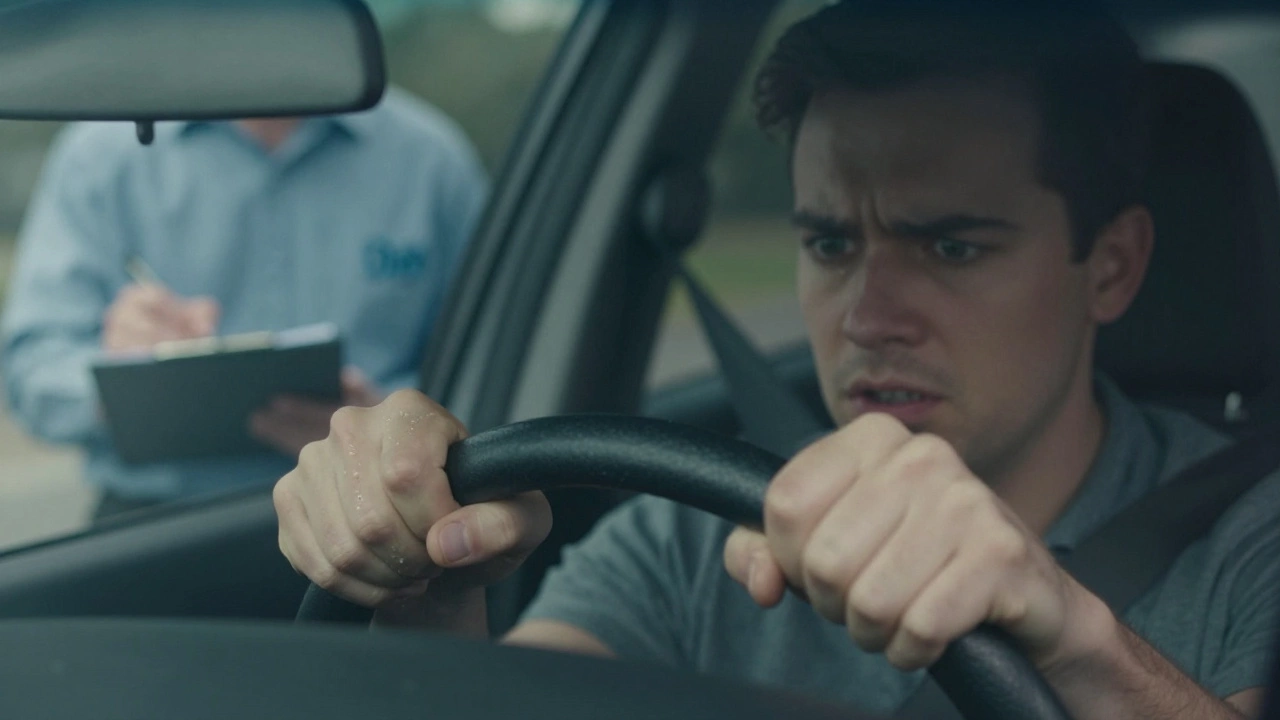
You sit in the driver’s seat. Your palms are sweaty. The examiner taps their pen on the clipboard. You’ve practiced for weeks, maybe months. But when you pull out of the driveway, did you know that roughly one in three people in the United States will fail this exact moment? It sounds harsh, but the numbers don’t lie. If you are preparing for your road test, knowing these odds isn't just about curiosity-it is about strategy.
Most drivers assume they will pass easily because they have driven with family members or friends. That confidence often leads to complacency. When you understand why so many candidates fail, you can stop making the same mistakes. This article breaks down the real failure rates across the US, identifies the specific errors that cost people their licenses, and explains why an intensive driving course might be the smartest investment you make before stepping into that car.
The Real Numbers Behind the Wheel
First, let’s clear up a common misconception. There is no single "national" driving test in the US. Each state’s Department of Motor Vehicles (DMV) or equivalent agency sets its own rules, tests, and passing criteria. Because of this fragmentation, getting an exact nationwide percentage is tricky. However, data from major states like California, New York, and Texas gives us a very clear picture.
In California, historically one of the stricter states, the first-time pass rate hovers around 60% to 70%. That means nearly 30% to 40% of new drivers fail their initial attempt. In New York, the numbers are similarly sobering. Many urban centers report first-attempt failure rates exceeding 50% for novice drivers. Why such high variance? It comes down to traffic density, examiner strictness, and local infrastructure. A test in rural Montana looks nothing like a test in downtown Los Angeles.
| State | Est. First-Time Pass Rate | Primary Challenge Area |
|---|---|---|
| California | ~65% | Highway merging & parking |
| New York | ~50-60% | Urban navigation & signals |
| Texas | ~70% | Speed control & lane changes |
| Florida | ~68% | Intersection management |
These statistics show that failing is not an anomaly; it is a statistical probability. If you treat your preparation as casual, you are gambling with those odds. The goal here is to move yourself from the "fail" column to the "pass" column through targeted practice.
Why Do People Fail? The Top 5 Mistakes
Knowing the failure rate is only half the battle. Understanding *why* people fail is what helps you avoid joining that statistic. Examiners rarely fail someone for minor hesitation. They fail for safety violations. Here are the most common reasons candidates get marked down:
- Failure to Signal: This seems simple, right? Turn left, signal left. Yet, thousands of drivers forget to signal when changing lanes or turning at intersections. In many states, forgetting to signal is an automatic fail because it endangers other road users who cannot predict your movement.
- Parking Errors: Parallel parking and angle parking are nightmare scenarios for beginners. Scraping the curb, taking too many adjustments, or leaving more than a foot of space from the line can result in a failure. Examiners look for precision and efficiency, not just "getting close enough."
- Speed Violations: Going significantly over the speed limit is an instant fail. However, going too slow in fast-moving traffic is also dangerous and can lead to a fail. You must match the flow of traffic while staying within legal limits.
- Intersection Management: Rolling through a stop sign instead of coming to a complete halt is one of the most frequent failures. Examiners watch for the "three-second rule"-a full, visible stop where the vehicle does not creep forward.
- Lack of Scanning: Good drivers check mirrors and blind spots constantly. If you turn your head to check a blind spot but do so too late-or not at all-the examiner notes it as a lack of awareness. This is often called "failure to observe."
Notice a pattern? These aren't complex mechanical skills. They are habits. And habits are hard to build in short, sporadic lessons with parents who might be distracted by their phones or overly critical.
The Problem with Traditional Learning Methods
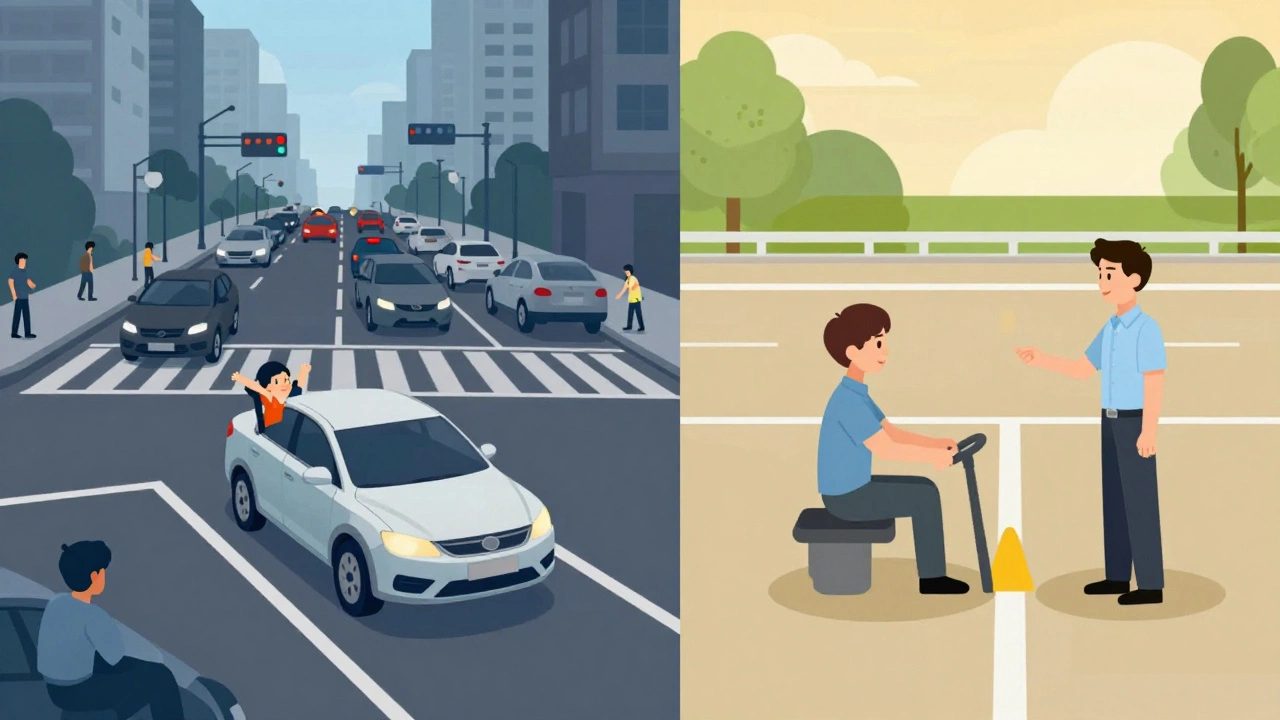
Many learners rely on two methods: practicing with family/friends or taking occasional weekly lessons. Both have significant flaws.
When you learn from parents, the feedback loop is broken. Parents are not trained instructors. They often teach bad habits without realizing it. Worse, the stress dynamic is different. You might feel pressured or defensive, which hinders learning. Plus, parents usually drive familiar routes. The DMV test route is often completely different, featuring unfamiliar roads, roundabouts, or highway entrances you haven't practiced.
Weekly lessons suffer from the "forgetting curve." You learn how to parallel park on Tuesday. By next Tuesday, you've forgotten the nuances. You spend the first ten minutes of every lesson re-learning what you should have mastered. This inefficiency stretches the learning process over months, keeping anxiety levels high.
How Intensive Driving Courses Change the Odds
This is where the concept of an Intensive Driving Course comes into play. Unlike traditional spread-out lessons, an intensive course compresses training into a short period-often one to two weeks. You might drive for four hours a day, five days a week.
Why does this work better for passing the test?
- Muscle Memory Formation: Driving is a physical skill. Just like learning a sport, repetition builds muscle memory. By driving daily, the actions become automatic. Checking mirrors, signaling, and steering inputs happen without conscious thought during the test.
- Consistent Feedback: Professional instructors provide immediate, objective correction. They know exactly what examiners look for. They simulate test conditions, teaching you to drive defensively and precisely from day one.
- Route Familiarization: Many intensive courses include practice on actual DMV test routes. You won't be surprised by a tricky intersection or a steep hill because you've already navigated it multiple times with guidance.
- Confidence Building: Anxiety causes mistakes. By the time you take your test after an intensive course, you have logged dozens of hours recently. You feel capable, calm, and ready. Confidence reduces the likelihood of nervous errors like stalling or forgetting steps.
Data from driving schools offering intensive programs often shows pass rates significantly higher than the national average-sometimes exceeding 80% for first-time attempts among their students. This isn't magic; it's focused, professional preparation.

Preparing for the Mental Game
Even with perfect technical skills, nerves can derail you. The DMV test is not just a driving assessment; it's a psychological hurdle. Here is how to prepare mentally:
Visualize Success. Spend five minutes each night imagining yourself driving smoothly through the test. Visualize stopping fully at signs, signaling early, and parking neatly. Your brain begins to wire these actions as normal behavior.
Know the Rules. Before you even touch the car, pass your written theory test. Knowing the laws inside out frees up mental bandwidth during the road test. You shouldn't be thinking "Do I need to yield here?" You should be executing the yield automatically.
Accept Imperfection. Minor mistakes, like slightly jerky braking or a small delay in reaction, usually don't cause failure. Only major safety violations do. Don't panic if you make a tiny error. Keep driving calmly. Examiners want to see safe drivers, not robots.
Next Steps: Making the Right Choice
If you live in the US and are facing the driving test, look at your current schedule. Are you cramming practice into weekends? Are you still unsure about parallel parking? If so, reconsider your approach.
Research local driving schools that offer intensive packages. Look for reviews specifically mentioning "first-time pass rates" and "professional instruction." Avoid cheap options that cut corners on hour counts. Quality matters more than quantity, but consistency matters most.
Remember, the goal isn't just to pass the test once. It's to become a safe, competent driver for life. An intensive course accelerates that journey, giving you the tools to handle any road condition with confidence. Don't leave your license to chance. Prepare strategically, drive safely, and join the majority who pass on their first try.
What is the average pass rate for the driving test in the US?
There is no single national average, but estimates suggest that between 60% and 70% of first-time applicants pass their road test in major states like California and Texas. This means approximately 30% to 40% of new drivers fail their initial attempt.
Is an intensive driving course worth the extra cost?
For many learners, yes. While intensive courses may have a higher upfront price, they often lead to faster licensing and higher first-time pass rates. This saves money in the long run by reducing the number of failed test fees and the time spent waiting for re-bookings.
What is the most common reason for failing a driving test?
The most common reasons include failure to signal properly, poor parking technique (especially parallel parking), and not coming to a complete stop at stop signs or intersections. Lack of observation, such as failing to check blind spots, is also a frequent cause of failure.
Can I retake my driving test immediately if I fail?
Rules vary by state. Some states allow you to retake the test the next day, while others require a waiting period of 14 to 30 days. Check with your local DMV for specific regulations regarding retesting timelines and fees.
Does having a professional instructor increase my chances of passing?
Yes. Professional instructors are trained to identify bad habits and correct them efficiently. They also know the specific criteria examiners use for grading. Studies and anecdotal evidence consistently show that students with formal instruction have higher pass rates than those who only learn from family members.