
Driving Test Fault Simulator
PASSING
You are currently passing the test.
- No errors selected yet.
You know that feeling? You've spent weeks practicing, maybe even taken a mock test, and you feel ready. Then the examiner gets in the car, and suddenly, your hands are sweating on the wheel. It’s not always about being a bad driver; often, it’s about making the same handful of predictable mistakes that trip up thousands of learners every year. In New Zealand alone, nearly half of all learner license holders fail their first practical test. Why? Because they don't know what the examiners are actually looking for beyond just steering straight.
If you're booking your driving test, understanding these common pitfalls is your best defense. This isn't about memorizing traffic laws (you should have done that for the theory test). This is about behavior, observation, and control under pressure. Let's break down the specific actions that cause instant failures or major deductions, so you can walk into that assessment center with confidence rather than dread.
The Critical Error: Observation and Scanning
If there is one category where most candidates lose points, it's observation. Examiners aren't just checking if you look in your mirrors; they're checking if you process what you see. Many learners treat mirror checks as a ritual-glance left, glance right, move off. But if you don't adjust your speed or position based on what those mirrors tell you, you've failed the task.
Failing to perform adequate observations before maneuvers accounts for roughly 30% of minor faults in many jurisdictions, but repeated failure here leads to a serious fault.
Here’s how to fix it: Make your head movement visible. Don't just move your eyes; turn your head slightly toward the mirror. This signals to the examiner that you are actively scanning. Also, remember the "mirror-signal-maneuver" routine. If you signal without checking the mirror first, you're guessing. And guessing gets you failed.
Mirror Usage: The 'Check' That Isn't Enough
We mentioned observation above, but mirror usage deserves its own spotlight because it’s nuanced. It’s not enough to look at the rear-view mirror when braking. You need to use mirrors continuously throughout the drive. Check them before slowing down, before changing gears, and especially before opening a door (yes, that applies during the test too).
A common mistake is "target fixation." You stare at the car ahead of you, ignoring the mirrors entirely. Or worse, you check your mirrors only when the examiner says "check your mirrors." They want to see self-reliance. If you wait for prompts, you’re showing dependency. Aim for a rhythm: scan front, check mirrors, scan sides, repeat. Every 5-8 seconds, your eyes should be moving away from the windshield.
Control Issues: Steering and Speed Management
Let’s talk about the physical act of driving. Two things kill more tests than anything else: poor steering control and inappropriate speed.
Poor steering control doesn't mean you crash. It means you wobble. It means you cross the center line on a bend because you turned the wheel too early or too late. It means you steer with one hand while trying to change gears, losing precision. Examiners look for smoothness. If you jerk the wheel, you jerk the car. Jerky movements suggest panic or lack of skill.
Then there’s speed. This is tricky because "too fast" is obvious, but "too slow" is equally dangerous. Driving 40 km/h in a 60 zone when the road is clear and dry holds up traffic and frustrates other drivers. Conversely, speeding through a school zone when kids are present is an instant serious fault. The key is adapting to conditions. Rain? Slow down. Fog? Lights on, slower still. Heavy traffic? Match the flow unless it’s unsafe. Use your speedometer less and your sense of context more.
Maneuvers: Parking and Turning Mistakes
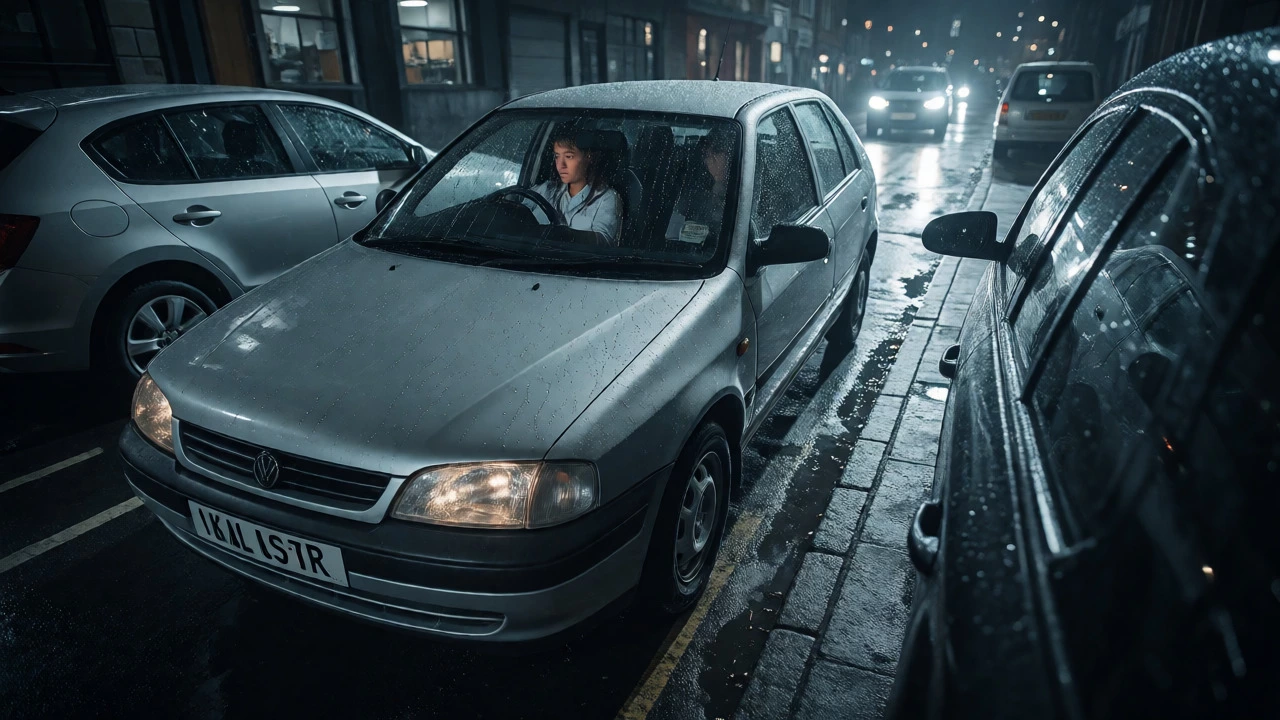
Most tests include a parking maneuver-parallel park, reverse bay park, or pull-up-and-go. These are high-stress moments because they require precise spatial awareness. The biggest fail here? Hitting the curb hard or crossing lines repeatedly.
But the real killer is rushing. Learners often think speed equals competence. It doesn’t. Take your time. If you miss the parallel park by a foot, you might get a minor fault. If you hit the car behind you, you’ve got a serious fault. Adjust your reference points. In Wellington, where hills are steep, ensure you engage the handbrake properly when stopping on gradients. Slipping back even a few centimeters on a hill shows poor clutch control.
Turning also trips people up. Wide turns into narrow streets, or cutting corners into oncoming traffic, are frequent issues. Always plan your exit path before you enter a roundabout. Signal correctly, stay in lane, and don’t cut across multiple lanes without checking.
Safety Awareness: The Examiner’s Hidden Checklist
Beyond mechanics, examiners assess your safety mindset. Do you anticipate hazards? Do you give way correctly? Do you keep a safe following distance?
Following distance is a silent killer. The two-second rule is standard, but in wet conditions, double it. Tailgating creates tension and reduces your reaction time. If you’re too close, you can’t stop safely if the car ahead brakes suddenly.
Giving way is another area of confusion. At roundabouts, yield to traffic coming from your right. At intersections, follow the signs and road markings. But also watch for pedestrians. Even if you have priority, if someone steps out unexpectedly, do you react? Hesitation or aggressive honking both score poorly. Smooth, defensive responses win points.
Common Minor vs. Serious Faults Comparison
To help you prioritize, here’s a breakdown of typical faults. Remember, accumulating too many minor faults can equal a serious fault, depending on local regulations. In NZ, you generally get up to 15 minors before failing, but certain errors are automatic serious faults.
| Fault Type | Example Scenario | Consequence |
|---|---|---|
| Minor Fault | Forgetting to cancel a indicator after a turn. | Adds to fault count; no immediate fail. |
| Serious Fault | Running a red light or stop sign. | Immediate test failure. |
| Dangerous Fault | Causing the examiner to intervene physically. | Immediate test failure + potential ban. |
| Minor Fault | Stalling the engine twice at junctions. | Adds to fault count. |
| Serious Fault | Ignoring a pedestrian waiting to cross. | Immediate test failure. |
Preparation Strategies to Avoid Failure
So, how do you avoid these traps? Practice doesn't make perfect; perfect practice makes perfect. Here are actionable steps:
- Mock Tests: Ask your instructor to simulate a full test environment. No talking, strict marking. Get used to the silence and scrutiny.
- Vary Routes: Don’t just drive around your neighborhood. Drive in busy city centers, quiet suburbs, and multi-lane roads. Unexpected scenarios happen everywhere.
- Review Your Logbook: If you’re keeping one, note down every mistake. Did you forget mirrors? Did you stall? Track patterns.
- Car Familiarity: Ensure you know how to operate the lights, wipers, and demisters before you start. Fumbling with controls distracts you from driving.
Also, manage your nerves. Deep breathing helps. Remember, the examiner wants you to pass. They’re not trying to trick you; they’re assessing readiness. If you make a small error, don’t spiral. Acknowledge it internally, correct it, and move on. Dwelling on past mistakes causes new ones.
Final Thoughts Before You Book
Booking your test is exciting, but it’s also a milestone. Knowing the common fails removes the mystery. It turns anxiety into strategy. Focus on observation, smooth control, and defensive habits. These aren’t just test requirements; they’re lifelong skills that keep you safe on the road long after you’ve passed.
Ready to take the next step? Review this list with your instructor. Identify your weak spots. Then book that slot with confidence, knowing you’ve prepared for the most likely hurdles.
What is the most common reason for failing a driving test?
The most common reason is inadequate observation, particularly failing to check mirrors effectively before changing direction or speed. This includes not performing blind spot checks and relying too heavily on peripheral vision rather than active scanning.
How many minor faults do you need to fail a driving test?
In New Zealand, you typically accumulate up to 15 minor faults before failing. However, certain combinations of minor faults can be deemed serious, leading to an earlier failure. Any single serious or dangerous fault results in an immediate fail regardless of minor counts.
Can I fail for stalling the car?
Stalling once is usually considered a minor fault. Stalling repeatedly, especially if it causes disruption or happens in dangerous situations like busy intersections, can escalate to a serious fault. Control and recovery are key.
Do examiners expect perfect driving?
No. Examiners look for safe, competent driving, not perfection. Small errors are acceptable if corrected quickly and safely. Consistent good judgment matters more than flawless execution.
Is it better to drive slowly or match traffic speed?
Match the flow of traffic when safe and legal. Driving significantly below the limit without cause can be seen as impeding traffic and may result in a fault. Adapt your speed to conditions, but avoid unnecessary hesitation.