
Driving Test Time Optimizer
Enter your proposed test date and time to see if it aligns with the "sweet spots" for lower traffic and stress levels.
Analyzing...
ScoreThe analysis of your selected time is being processed.
- Avoid the 8 AM to 9 AM and 4 PM to 6 PM rush hour windows.
- Aim for mid-morning (10 AM - 11:30 AM) or early afternoon (1 PM - 3 PM).
- Avoid school drop-off and pick-up times (8:30 AM and 3 PM).
- Check the weather forecast; heavy rain or fog can complicate a test.
- Mid-week (Tuesday, Wednesday, Thursday) is usually calmer than Mondays or Fridays.
The Danger of the Rush Hour Slot
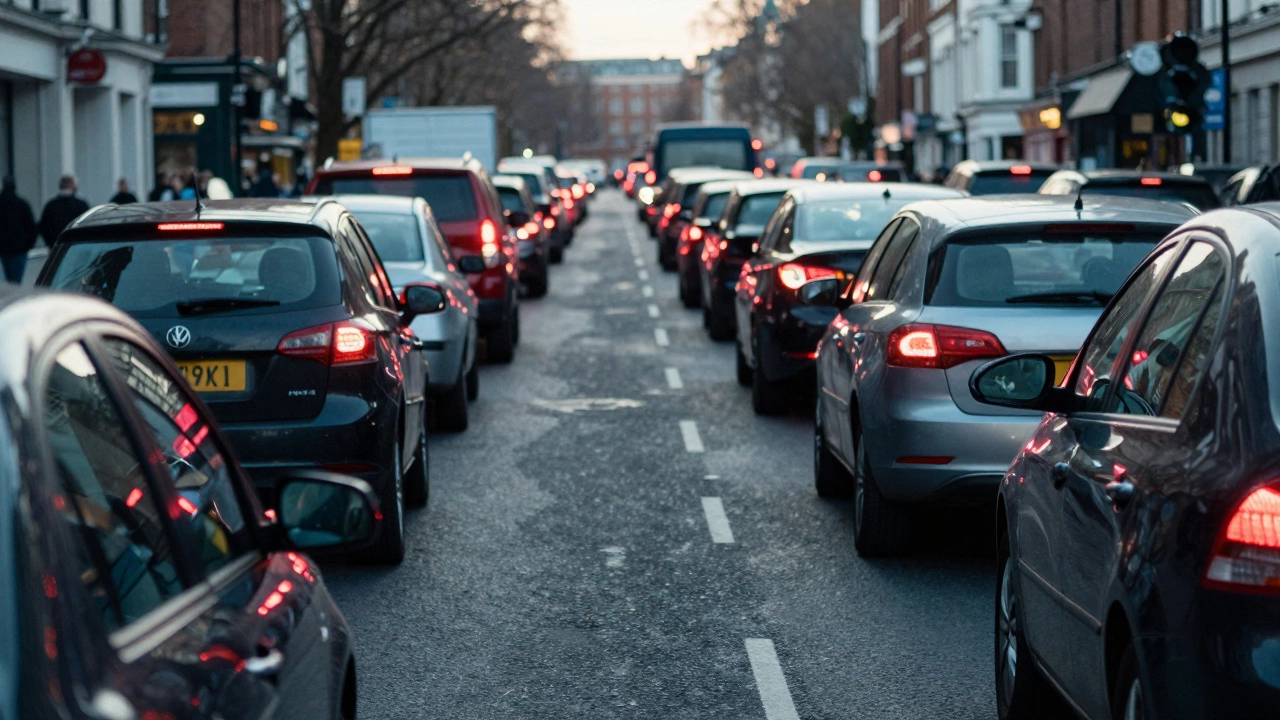
If you book a test at 8:30 AM, you're not just testing your driving skills; you're testing your patience. Traffic Congestion is the state of slower, denser, or stopped vehicular traffic. When roads are packed, you'll encounter more aggressive drivers, more sudden braking, and a lot more pressure to keep up with the flow of traffic. While some might think heavy traffic is "easier" because you drive slower, it's actually a trap. Examiners look for your ability to make decisions. In a jam, you'll deal with more complex scenarios: people cutting you off, tight gaps at junctions, and the stress of being behind a bus. If you're already nervous, a sea of brake lights is the last thing you need. You want a road that is active enough to show you can drive, but not so packed that it becomes a stressful obstacle course.The Mid-Morning Sweet Spot
For most learners, the window between 10 AM and 11:30 AM is the gold mine. By this time, the early commuters have reached their offices, and the school run is over. The roads are usually "fluid," meaning traffic is moving at a steady pace without being overwhelming. Why does this matter? Because your brain has a limited amount of "cognitive load." If you spend all your mental energy worrying about the car honking behind you in rush hour, you're more likely to forget a mirror check or miss a stop sign. In the mid-morning lull, you can focus on the best time for driving test requirements-smooth acceleration, precise steering, and observing all signage-without the external chaos.Avoiding the School Run Chaos
One of the biggest mistakes students make is ignoring the "school run." Between 8:15 AM and 9:00 AM, and again around 3:00 PM to 3:45 PM, residential areas become war zones. You'll find parents double-parking, children darting across streets, and a general sense of urgency that doesn't help a nervous learner. If your test route goes anywhere near a primary school, these times are a nightmare. An examiner will be hyper-aware of pedestrians. If a child steps onto the road and you don't react instantly and perfectly, that's a potential fail. By scheduling your test away from these peaks, you remove a massive layer of unpredictability from your exam.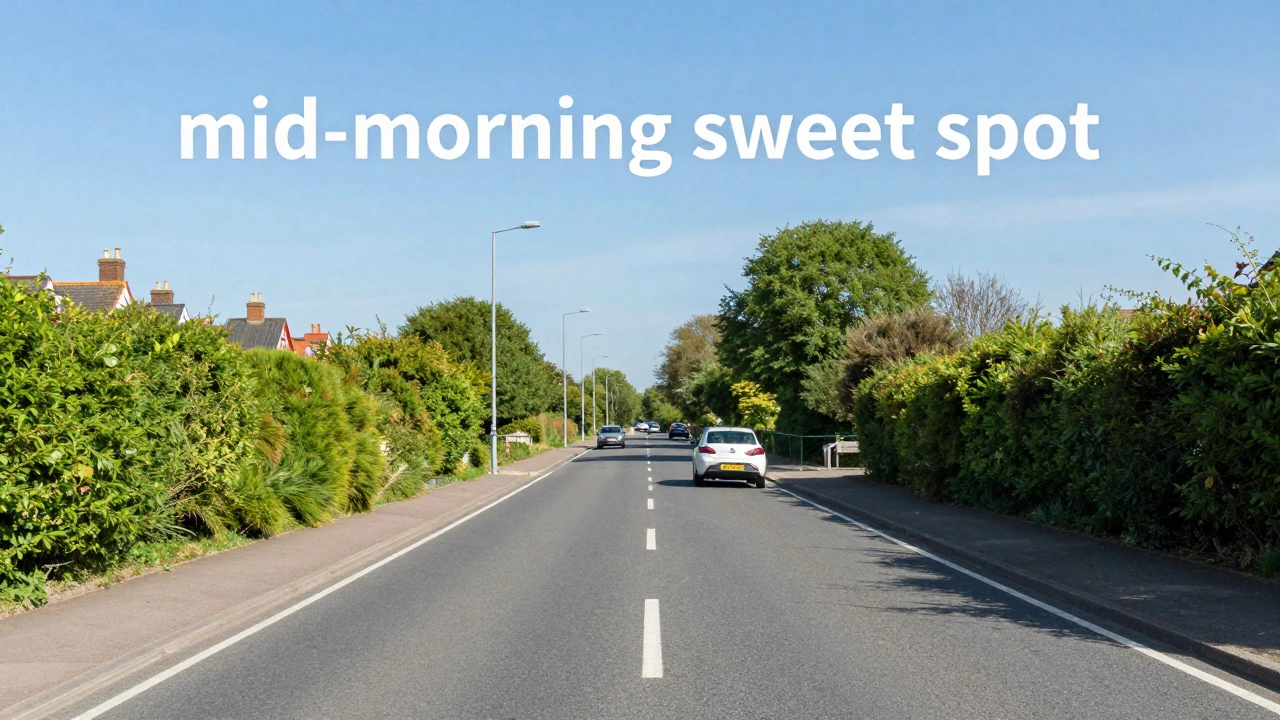
The Afternoon Slump and Late Day Risks
Early afternoon, specifically 1 PM to 3 PM, is another strong option. It's similar to the mid-morning slot in terms of traffic volume. However, there's a psychological element here. Some people hit a "slump" after lunch where their focus dips. If you're someone who gets sleepy or loses concentration after a meal, this might not be your best window. As you move toward 4 PM, you hit the "PM peak." This is often worse than the morning rush because drivers are tired, frustrated, and eager to get home. They are less patient with a learner driver who might take an extra second to execute a three-point turn. The aggression levels on the road rise, which can shake your confidence.| Time Slot | Traffic Level | Stress Level | Verdict |
|---|---|---|---|
| 08:00 - 09:00 | Very High | High | Avoid (Rush Hour) |
| 10:00 - 12:00 | Low/Moderate | Low | Best Choice |
| 12:00 - 13:00 | Moderate | Medium | Okay (Lunch traffic) |
| 13:00 - 15:00 | Low/Moderate | Low | Strong Choice |
| 15:00 - 17:00 | High | High | Avoid (School/Work) |
The Role of Weather and Visibility
It's not just about the clock; it's about the conditions. In many regions, the early morning brings fog or low sun glare, which can be blinding when driving east. If you're taking your test at 8 AM in November, the sun might be exactly at eye level, making it hard to see pedestrians or traffic lights. This isn't your fault, but it can lead to mistakes. Rain also changes the game. While you're expected to drive safely in the rain, a sudden torrential downpour during your test can make you nervous. If you have the flexibility to move your test to a day with clear forecasts, do it. However, don't overthink this-you need to be able to drive in all weather anyway, but choosing a clear day simply removes one more variable that could distract you.
Psychological Readiness: Your Own Internal Clock
Beyond the roads, you have to consider your own biology. Are you a "morning person" who is sharp and alert at 9 AM? Or do you need three coffees before your brain actually starts functioning? There is no point in booking a 9 AM slot if you're still half-asleep. Your Circadian Rhythm is the natural internal process that regulates the sleep-wake cycle. If your peak alertness happens at 2 PM, that's when you'll be most reactive and focused. Pushing yourself into a time slot that clashes with your natural energy levels is a recipe for silly mistakes, like forgetting to signal when pulling away from the curb.Dealing with the Booking System
Here is the reality: getting the "perfect" time is hard. Most Driving Test Centers are official facilities where candidates are assessed on their driving ability to obtain a license and are often overbooked. You might find that the only available slots are the ones I've told you to avoid. If you're stuck with a rush-hour slot, don't panic. Use it as a mental training exercise. Tell yourself, "If I can handle this chaos, the rest of the test will be a breeze." Work with your instructor to practice specifically in those high-traffic windows so the environment feels familiar. The goal is to reduce the "shock factor" when you finally sit in the examiner's seat.Does the examiner care what time it is?
The examiner doesn't have a preference for the time, but the conditions definitely affect their grading. They aren't looking for you to be a race car driver in traffic; they want to see a safe, predictable driver. If the traffic is heavy, they'll be looking closely at how you handle frustration and whether you maintain your safety margins despite the pressure.
Is it better to take the test on a Friday?
Generally, Fridays can be slightly more hectic than mid-week. People are rushing to finish their work week, and weekend travelers start hitting the roads. If you have a choice, Tuesday or Wednesday are often the "quietest" days for general traffic flow.
What if my test is during a public holiday?
Public holidays can be a double-edged sword. Some commercial areas become ghost towns (which is great), but tourist spots or coastal roads become nightmare zones. Check where your test center is located. If it's in a city center, a holiday might actually make the roads easier.
Can I change my test time if I see a bad weather forecast?
Yes, but you usually have to do this through the official booking portal within a specific timeframe (often 3 clear working days). Be careful, as rescheduling can sometimes lead to losing your slot if the center is very busy. Only do this if the weather is extreme, like a severe storm warning.
Does the time of day affect the route the examiner takes?
Not usually. Examiners have a set of routes they use, and they will typically stick to those regardless of the time. However, they might adjust their specific turns or choices based on road closures or major accidents. The route stays largely the same, but the volume of cars on that route changes based on the clock.