
Following Distance Simulator
Driving Scenario
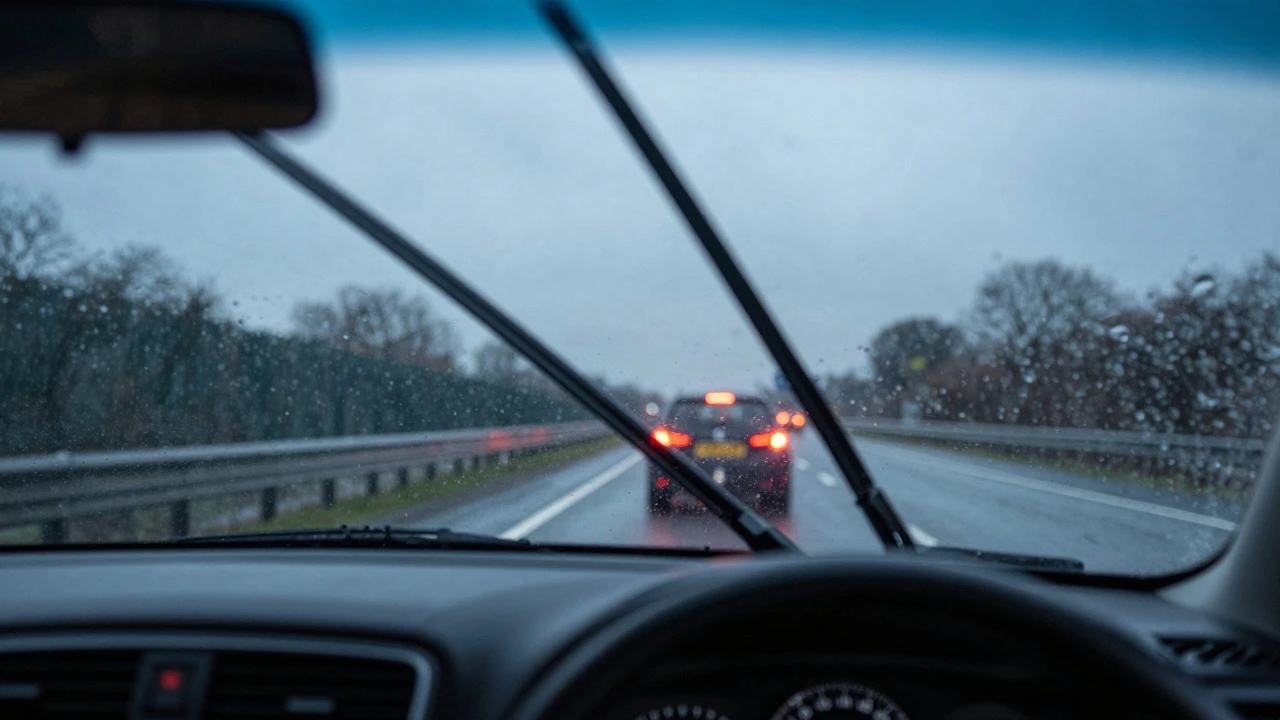
You are cruising down the motorway. The car in front brakes suddenly. You slam on your pedals. Do you stop in time? If you were using the standard two-second rule, maybe. But if it’s raining, or you’re pulling a trailer, or you’re just tired, that two seconds might not be enough. This is why many instructors and safety experts recommend upgrading to the 4 to 5 second rule for driving.
The traditional advice we all learn as beginners is to leave a two-second gap between your vehicle and the one ahead. It works fine on a sunny day with a light car. But real-world driving is rarely that simple. The 4 to 5 second rule is a more robust safety buffer designed to account for human reaction time, varying road conditions, and vehicle weight. It transforms how you judge space, turning panic stops into controlled, smooth decelerations.
Why Two Seconds Is Often Not Enough
To understand the value of the longer gap, we need to look at what happens during an emergency stop. Stopping isn’t just about your brakes; it’s about your brain. When the brake lights ahead flash, there is a delay before your foot even moves to the pedal. This is called reaction time.
The average human reaction time is roughly 0.75 to 1.5 seconds. In that first second, your car continues moving at full speed. If you are doing 60 mph (about 88 feet per second), you travel nearly 90 feet before you even touch the brake. The two-second rule accounts for this basic reaction plus braking distance under ideal conditions. However, it leaves almost no margin for error.
Consider these common factors that extend stopping distances:
- Dry Road Conditions: Ideal grip, but still requires focus.
- Wet Roads: Tires lose significant traction. Stopping distances can double.
- Snow or Ice: Grip is minimal. Stopping distances can increase by ten times or more.
- Tiredness or Distraction: Reaction times slow down significantly when fatigued.
If you stick strictly to two seconds in the rain, you are likely tailgating. The 4 to 5 second rule builds in a safety cushion that absorbs these variables without requiring you to do complex mental math every time the weather changes.
How to Measure the Gap Correctly
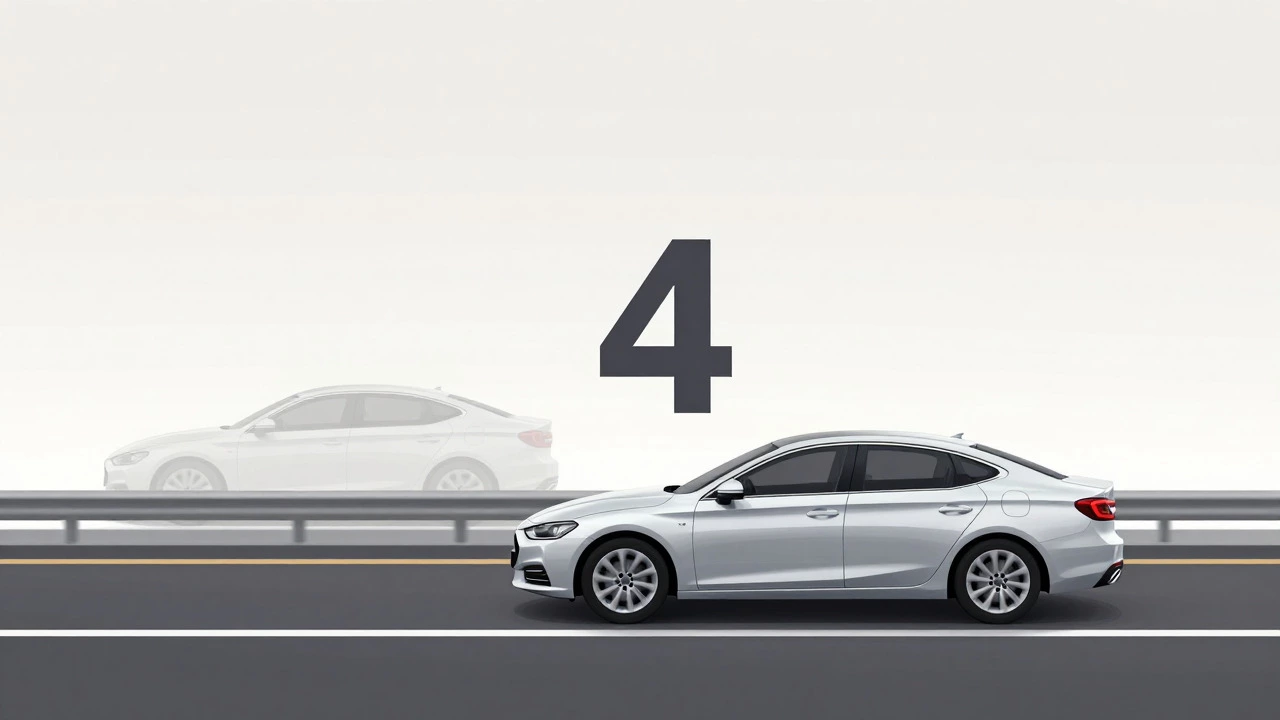
Measuring the gap is simpler than you think, and it doesn’t require a stopwatch. You just need a fixed point on the road or bridge ahead. Here is the step-by-step process:
- Watch the vehicle in front of you pass a stationary object, such as a signpost, a tree, or a bridge abutment.
- As soon as their rear bumper passes that object, start counting: "One thousand one, one thousand two, one thousand three..."
- Continue counting until your own front bumper reaches that same object.
- If you reach the object before saying "four thousand," you are too close. Ease off the accelerator.
This method works at any speed. Whether you are crawling through traffic at 10 mph or speeding along the highway at 70 mph, the time-based measurement adjusts automatically. At higher speeds, the physical distance covered in four seconds is much larger, which is exactly what you need because kinetic energy increases exponentially with speed.
Many new drivers find the two-second count feels natural, while the four-second count feels like they are losing momentum. That feeling is deceptive. Maintaining a steady speed with a larger gap actually improves fuel efficiency because you avoid constant acceleration and braking. You coast more, and the engine works less.
When to Use the 4 to 5 Second Rule
You don’t always need five seconds. In dense urban traffic where cars merge constantly, a five-second gap might mean you never move. Context matters. Here is a guide on when to apply different gaps:
| Scenario | Recommended Gap | Reasoning |
|---|---|---|
| Dry Weather, Light Vehicle | 2-3 Seconds | Standard minimum for good conditions. |
| Rain, Wet Roads | 4 Seconds | Reduced tire grip requires more braking distance. |
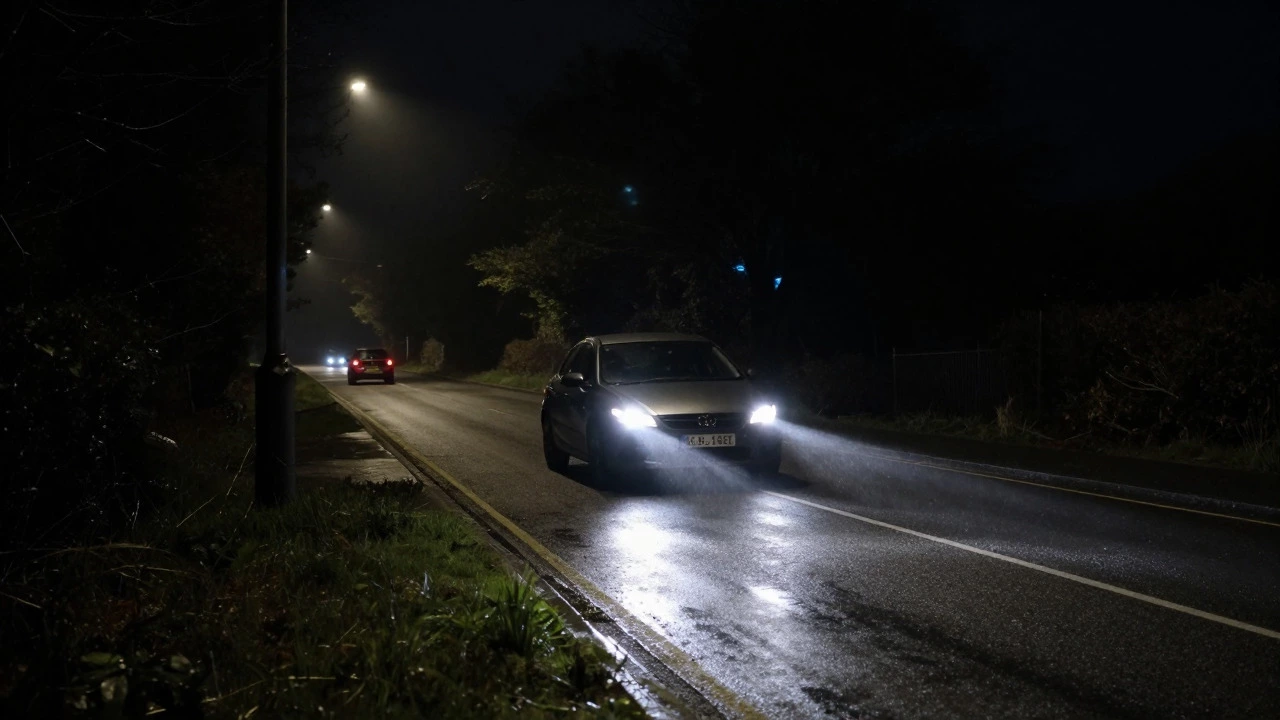
| Nighttime Driving | 4-5 Seconds | Visibility is lower; harder to see hazards early. |
| Heavy Vehicles/Trailers | 5+ Seconds | Increased mass means longer braking distances. |
| Snow/Ice | 10+ Seconds | Minimal friction; extreme caution required. |
For most general driving, especially if you are preparing for a driving test or practicing defensive driving habits, aiming for four seconds is a smart baseline. It covers wet roads and slight distractions. Five seconds is the gold standard for high-speed highways or when you are carrying heavy loads.
Impact on Your Driving Test
If you are taking your driving test, examiners look closely at your observation and control. One of the most common faults-and sometimes reasons for failure-is insufficient following distance. Examiners use the term "gap judgment." Poor gap judgment leads to harsh braking, which indicates you didn't anticipate the hazard early enough.
Using the 4 to 5 second rule demonstrates superior hazard perception. It shows the examiner that you are looking far ahead, not just at the back of the car in front. When you maintain a larger gap, you have options. If the car ahead brakes hard, you can ease off the gas and brake gently. This smoothness is a hallmark of a competent driver.
Conversely, if you are tailgating, any sudden movement by the lead car forces you to react abruptly. This creates a chain reaction. The car behind you has to brake hard because you did. This is known as "shockwave braking" and is a major cause of multi-car pileups. By increasing your gap, you break this chain.
Common Mistakes Drivers Make
Even experienced drivers often miscalculate their following distance. Here are the pitfalls to avoid:
- Speed Illusion: As you go faster, objects appear to move slower relative to you. This makes a short gap feel safe. Trust the count, not your eyes.
- Big Truck Blind Spots: If you are behind a large truck, you can’t see the traffic ahead. If they brake for a hazard you can’t see, you need extra time to react. Increase your gap to five seconds.
- Following Motorcycles: Motorcycles can stop much faster than cars. They also weave. Give them plenty of room-aim for four to five seconds.
- Counting Too Fast: People tend to rush the count when nervous. Practice counting at a steady pace at home. "One-MISSISSIPPI" is a common technique to ensure each second is distinct.
Another mistake is assuming the car in front is reacting as fast as you. If the driver ahead is distracted or inexperienced, their braking might be delayed. Your extra seconds allow you to compensate for their poor driving.
Defensive Driving Beyond the Gap
The 4 to 5 second rule is part of a broader strategy called defensive driving. This approach assumes that other drivers will make mistakes, and you must be prepared to handle them. Space is your best defense. Time is your second-best defense.
Along with maintaining a proper gap, scan the road 12 to 15 seconds ahead. Look past the car in front to see brake lights further up the line. If you see traffic slowing down three cars ahead, lift off the accelerator now. You will save fuel, reduce wear on your brakes, and keep the flow of traffic smooth.
Also, check your mirrors regularly. Knowing what is behind you helps you decide if you can change lanes to avoid a hazard. If your gap is large, you have the option to move over if the car ahead pulls out unexpectedly. This lateral awareness complements the longitudinal space you maintain with the 4 to 5 second rule.
Practical Tips for Habit Formation
Changing from a two-second habit to a four-second one takes practice. Here is how to make it stick:
- Start in Low Traffic: Practice on quiet roads where you won’t hold people up. Focus on the counting rhythm.
- Use Cruise Control Wisely: On highways, cruise control helps maintain a steady speed, making the gap easier to judge. However, stay alert and ready to disengage.
- Adjust for Conditions Immediately: Make a mental checklist: Rain? Add two seconds. Night? Add two seconds. Heavy load? Add two seconds.
- Teach Others: Explaining the rule to a passenger reinforces your own understanding. Ask them to watch the gap and call out if you get too close.
Remember, the goal isn’t to be rude or aggressive by holding up traffic. It’s to create a bubble of safety around your vehicle. Most drivers will appreciate that you aren’t tailgating them, even if they don’t realize it consciously. Smooth, predictable driving makes everyone’s journey safer.
Is the 4 to 5 second rule legal?
While specific laws vary by jurisdiction, failing to maintain a safe following distance is generally considered careless or dangerous driving. The 4 to 5 second rule is a recommended safety guideline rather than a strict legal statute, but adhering to it helps you comply with the legal requirement to drive safely.
Should I use the 4 to 5 second rule in city traffic?
In dense city traffic, a full 4 to 5 second gap may be impractical due to frequent merging and intersections. Aim for 2 to 3 seconds in heavy urban traffic, but increase to 4 seconds whenever possible, especially at higher speeds or in bad weather.
Does the rule change for electric vehicles?
Electric vehicles often have instant torque and regenerative braking, which can improve stopping performance. However, their heavier battery packs add weight, which can increase braking distance. The 4 to 5 second rule remains a safe benchmark for EVs, particularly in adverse conditions.
What if the car in front accelerates away?
If the car in front accelerates, allowing your gap to exceed 5 seconds, you can gently accelerate to return to the speed limit and re-establish a 4-second gap. Avoid rapid acceleration to close the gap quickly, as this reduces your safety buffer.
How does fatigue affect following distance?
Fatigue significantly slows reaction times. A tired driver might take 2 seconds or more to react instead of the average 0.75 seconds. If you are tired, increase your following distance to 5 seconds or more to compensate for delayed responses.