
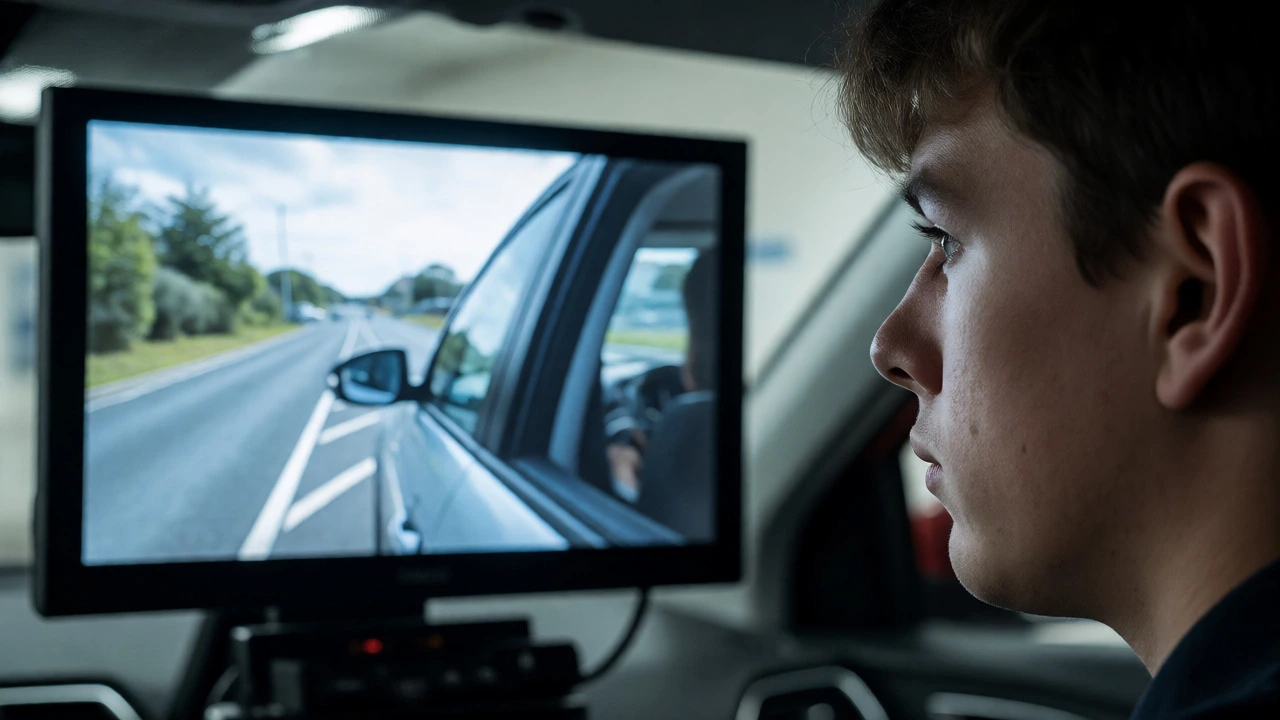
Driving Theory Test Simulator
Test your knowledge on the most frequently failed topics. Choose the correct answer for each scenario.
Loading question...
Test Complete!
Your final score:
0%
Review Your Mistakes
You’ve studied the Highway Code. You’ve done practice tests until your eyes blurred. But there’s a specific subset of driving theory test questions that trip up more than half of all candidates every year. It’s not always the hardest ones-it’s the tricky ones. The ones where you think you know the answer, but the wording catches you out, or you confuse two similar road signs.
If you’re prepping for your exam in New Zealand, Australia, or the UK, knowing which questions fail most often is your secret weapon. We’re not just talking about memorizing facts; we’re talking about understanding the logic behind the rules. Let’s break down the top offenders and how to beat them.
The Hazard Perception Trap
Before we even get to multiple-choice, let’s address the elephant in the room: Hazard Perception is the section where candidates click on developing hazards in video clips. While technically not a "question," it causes more failures than any single written question. Why? Because people click too early or too late.
The most common mistake here isn’t missing the hazard-it’s clicking at the wrong time. If you see a parked car with a driver inside, do you click immediately? No. That’s a potential hazard, not a developing one. You only click when the situation changes-when the door opens, or the wheels turn. Practice waiting for that change. Clicking too early gets you zero points for that clip. Clicking too late means you miss the window for maximum score.
Road Signs That Look Alike
Visual confusion is a massive failure point. Candidates often mix up signs that share shapes or colors but have different meanings. For instance, distinguishing between a No Entry sign (red circle with white horizontal bar) and a Give Way sign is basic, yet under pressure, brains glitch.
| Sign Type | Visual Cue | Action Required |
|---|---|---|
| No Overtaking | Red circle, black car on left, red car on right | Do not pass any vehicle ahead |
| End of No Overtaking | White circle, grey cars, diagonal black lines | Overtaking permitted if safe |
| Priority Over Oncoming Traffic | Blue circle, white arrow towards you | You go first; oncoming traffic waits |
| Give Priority To Oncoming Traffic | Red circle, red arrow towards you | You wait; oncoming traffic goes first |
Notice the pattern? Blue usually means mandatory action or priority for you. Red usually means restriction or giving way. If you see a blue circle with an arrow pointing at you, you have priority. If it’s red, you don’t. Simple color coding can save you when panic sets in.
Right-of-Way at Roundabouts
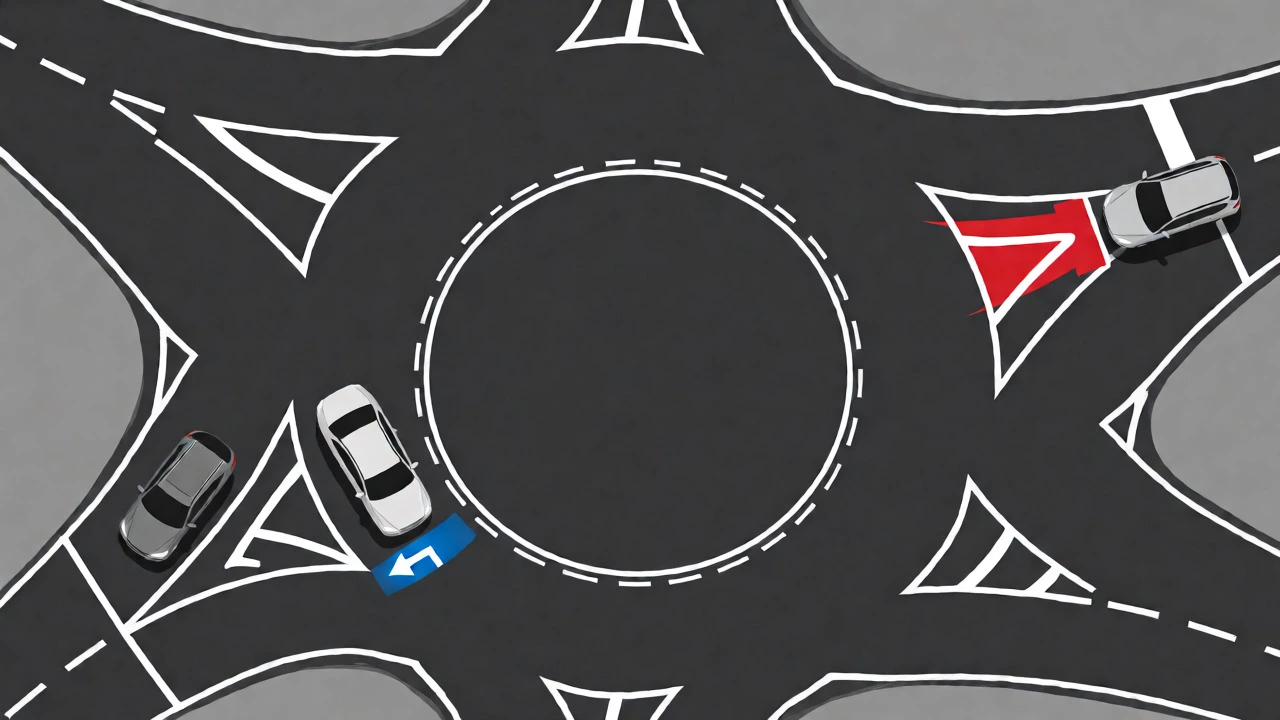
This is arguably the most debated topic among learners. The rule seems simple: give way to traffic from the right. But what happens when you’re already on the roundabout? Many candidates fail questions asking who has priority when exiting versus entering.
Here’s the concrete rule: Vehicles already on the roundabout have priority over vehicles trying to enter. However, you must signal correctly when leaving. If you’re taking the second exit (straight on), you generally don’t need to signal until after passing the first exit. If you take the third exit (right), signal right as you approach, then left after passing the previous exit. Getting the signaling timing wrong is a frequent cause of failure in scenario-based questions.
Speed Limits and Stopping Distances
Math questions seem easy, but they catch people off guard because they rely on memory under stress. The most failed calculation involves stopping distances. You aren’t just asked for thinking distance; you’re asked for total stopping distance.
- Thinking Distance: How far you travel while reacting (e.g., 3 meters at 30 km/h).
- Braking Distance: How far the car travels once brakes are applied.
- Total Stopping Distance: Thinking + Braking.
A common trick question asks: "What is the braking distance at 50 km/h?" Candidates calculate the total distance and pick that answer. Always re-read the question. Are they asking for thinking, braking, or total? Also, remember that wet conditions double these distances. Ice multiplies them by ten. If the question mentions rain, multiply your standard answer by two before selecting an option.
Motorway Rules: Lane Discipline and Hard Shoulder
New Zealand and Australian motorways have strict lane discipline rules that differ slightly from older driving habits. The most failed questions here involve overtaking and emergency stops.
Rule of thumb: Keep to the left unless overtaking. Once you’ve passed the slower vehicle, move back to the left lane. Staying in the middle lane for no reason is called "middle-lane hogging" and is a ticketable offense in many jurisdictions. Questions often present a scenario where you’re cruising at the speed limit in the middle lane with no one behind you. The correct answer is almost always: Move to the left lane.
Another trap: Using the hard shoulder. It’s not a passing lane. It’s for emergencies only. If a question suggests using it to bypass a traffic jam, that’s wrong. Only use it if directed by electronic signs or in a genuine emergency like a breakdown.

Alcohol and Drug Limits
Zero tolerance vs. low limits. This is critical. In New Zealand, if you hold a restricted license, your alcohol limit is zero. If you’re a full license holder, it’s 25mcg per liter of breath. Many candidates mix these up.
Questions often ask: "Can you drive after drinking one standard drink?" The answer depends on your license type and weight. For a restricted license holder, the answer is strictly no. For a full license holder, it might be yes, but it’s risky. The safest answer in a test context is always the most conservative one unless specific numbers are given. Don’t assume; read the license status in the question stem carefully.
How to Study These Specific Areas
Don’t just grind through random mock tests. Target your weak spots. If you keep failing roundabout questions, watch videos specifically on roundabout exits. If stopping distances are your nemesis, make flashcards. Write the speed on one side and the three distances (thinking, braking, total) on the other. Drill them until they’re automatic.
Use official apps provided by your local transport authority (like Waka Kotahi NZTA in NZ or DVSA in the UK). They contain the exact database of questions used in the real test. Third-party apps sometimes have outdated or incorrectly phrased questions that can mislead you.
How many questions are on the driving theory test?
It varies by country. In New Zealand, the Learner License Theory Test consists of 35 multiple-choice questions. In the UK, it’s 50 questions plus a hazard perception test. Always check your local transport authority for the current format.
What is the pass mark for the theory test?
In New Zealand, you need to get at least 28 out of 35 questions correct (80%). In the UK, you need 43 out of 50 (86%) plus a minimum hazard perception score of 44 out of 75.
Can I retake the theory test if I fail?
Yes, but there’s usually a waiting period. In NZ, you must wait 7 days before retaking. In the UK, you must wait 3 working days. Use this time to review the specific areas where you lost marks.
Are the theory test questions randomized?
Yes. Each test draws randomly from a large bank of questions. This prevents cheating and ensures everyone gets a unique set. However, certain high-priority topics like right-of-way and speed limits appear frequently across all versions.
What is the most difficult part of the theory test?
For many, it’s the Hazard Perception section because it requires split-second judgment rather than rote memorization. However, written questions involving complex intersection rules or ambiguous road signs also cause significant failures.