
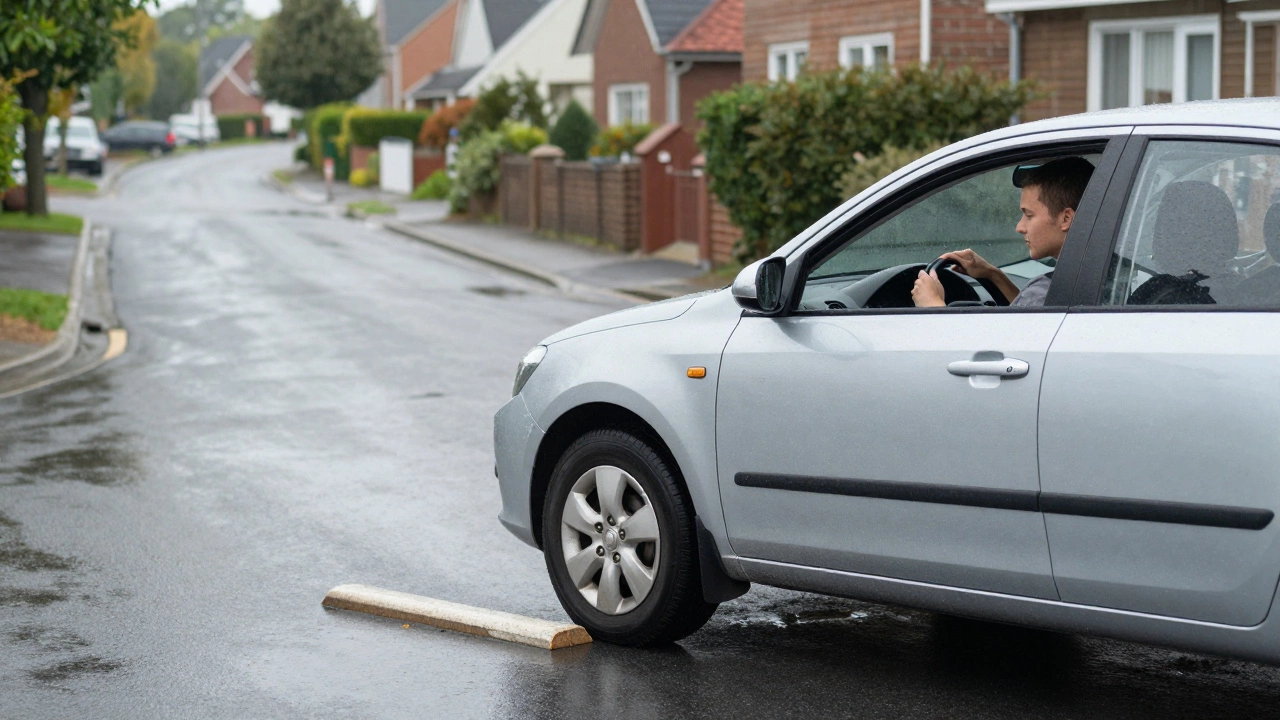
Driving Test Curb Contact Calculator
Curb Contact Assessment
This tool helps determine if a curb contact during your driving test would likely result in a pass or fail based on New Zealand's Driver Competency Framework.
Assessment Result
Based on Waka Kotahi's Driver Competency Framework
Information from NZ Transport Agency's 2023 testing guidelines
You’re three minutes from the end of your driving test. The examiner says, "Turn right into the side street." You turn. The front tire brushes the curb. Your stomach drops. Did you just fail? You’ve heard rumors: hitting the curb means an automatic fail. But is that true?
It’s not always an automatic fail
Hitting the curb doesn’t automatically mean you’ve failed your driving test. That’s a myth. What matters is how you hit it, why you hit it, and whether it showed poor control, lack of awareness, or danger.In New Zealand, the driving test follows the Driver Competency Framework set by the NZ Transport Agency (Waka Kotahi). Examiners don’t check off a list of "instant fail" actions. Instead, they judge your overall competence across seven key areas: observation, speed management, positioning, signaling, decision-making, vehicle control, and interaction with others.
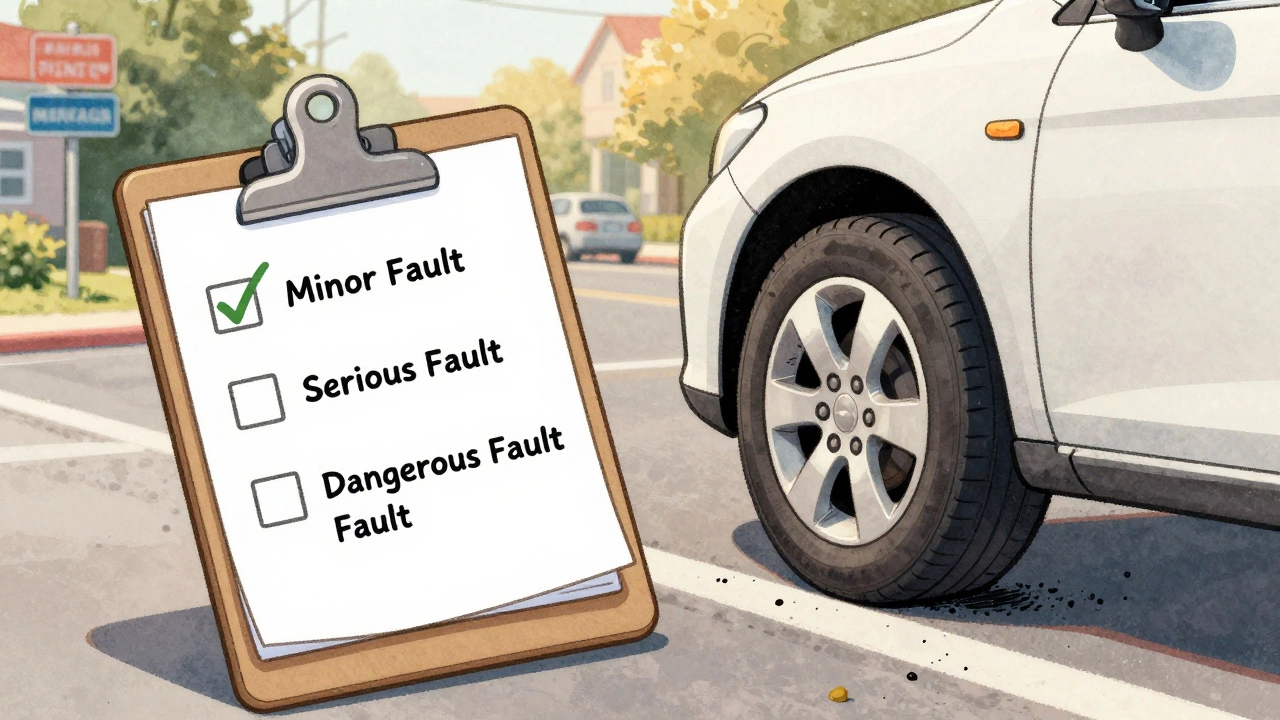
A light touch on the curb during a tight turn, where you corrected immediately and didn’t compromise safety? That’s a minor fault. It might get marked as a "driving fault," but it won’t sink your test.
When hitting the curb becomes a fail
There are clear situations where curb contact turns into a serious fault - and yes, that can mean a fail.- Driving over the curb forcefully - like when you barrel into it during a turn, lifting a wheel or scraping the tire hard enough to damage the rim. This shows poor control and misjudgment.
- Hitting the curb while parking - especially if you do it repeatedly, or if you force the car into a space and clip the curb multiple times before getting it right. Examiners expect smooth, confident parking without constant corrections.
- Hitting the curb while turning into a side road - if you swing wide and smash the front or rear wheel into the curb, it suggests you didn’t check your mirrors, didn’t judge the turn angle, or didn’t slow down enough.
- Hitting the curb while reversing - if you back up and clip the curb without checking blind spots or adjusting your steering, it shows poor spatial awareness.
- Multiple curb contacts - even if each one is small, doing it three or four times in one test signals inconsistency and lack of confidence. That’s a pattern, not a mistake.
One study by Waka Kotahi in 2023 found that 12% of test failures involved curb contact - but only 3% of those were due to a single, minor bump. The rest involved repeated errors, loss of control, or dangerous positioning.
Why people panic about the curb
Most learners hear horror stories: "My cousin hit the curb and failed." Or, "My instructor said any curb touch = fail." These aren’t facts. They’re fear-based myths passed down like urban legends.Why do they spread? Because instructors want you to be careful. And they’re right - you should avoid the curb. But the goal isn’t perfection. It’s control.
Think of it this way: if you’re driving on a busy street and swerve to avoid a dog, you might briefly touch the curb. That’s not a fail - it’s good judgment. But if you’re turning into a quiet side street and miss the angle because you didn’t look, then hit the curb? That’s a fail.
How to avoid hitting the curb - for real
You don’t need to drive like a robot. You need to drive with awareness. Here’s what works:- Slow down before turns - if you’re going too fast, you can’t steer precisely. Reduce speed before you start turning, not during.
- Use reference points - for right turns, line up the curb with your side mirror. For left turns, watch how the front of your hood lines up with the edge of the road. These aren’t magic tricks - they’re tools.
- Check your mirrors before and during turns - many curb hits happen because you’re focused only on the front. Glance in your side mirror as you turn to see how close you are.
- Don’t overcorrect - if you start to drift toward the curb, a small steering adjustment is fine. Jerking the wheel back and forth makes things worse. Smooth is safe.
- Practice parallel parking with a visible marker - place a cone or bucket where the curb should be. Practice until you can stop within 30cm of it, every time. That’s the standard examiners expect.
What examiners really notice
Examiners aren’t looking for you to be perfect. They’re looking for you to be safe, predictable, and in control.They notice if you:
- Look where you’re going, not just at the curb
- Adjust your speed based on the situation
- Use signals correctly and early
- Recover calmly from small mistakes
If you hit the curb once, then calmly correct, check your mirrors, and continue smoothly? You’ll likely pass. If you hit it, panic, stare at the wheel, and then swerve into oncoming traffic? That’s a fail - not because of the curb, but because of the chain reaction.
Real-life example: A pass despite a curb touch
Last year, a student in Wellington took her test in the rain. She was turning into a narrow street near Thorndon. The road was wet, and her front tire brushed the curb slightly. She didn’t stop. She didn’t jerk the wheel. She slowed, checked her left mirror, and continued into the street without cutting the corner or blocking traffic.The examiner marked it as a "minor driving fault" - one of three in total. She passed.
Why? Because she didn’t turn a small mistake into a big one.
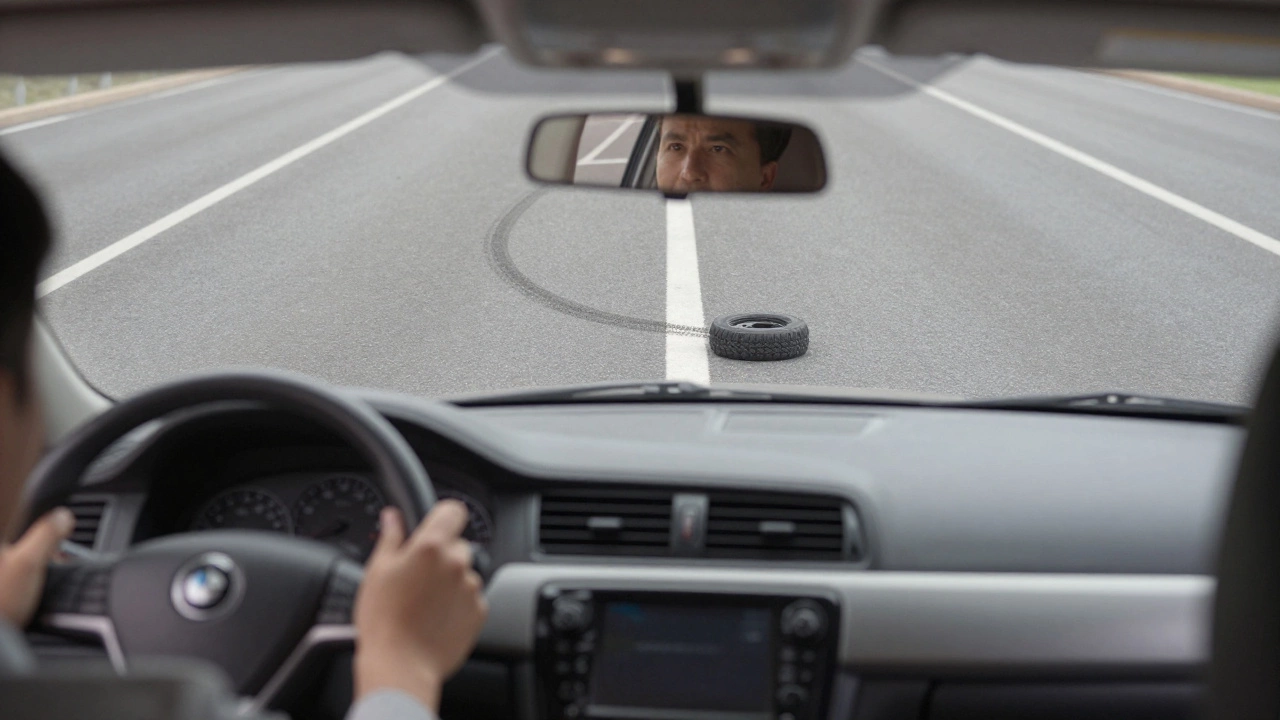
What to do if you hit the curb during your test
If it happens, stay calm. Don’t freeze. Don’t overcorrect. Don’t apologize to the examiner. Just:- Keep your hands on the wheel
- Check your mirrors
- Adjust your speed if needed
- Continue driving as planned
Examiners respect composure more than perfection. They’ve seen hundreds of candidates. They know mistakes happen. What they want to see is how you respond.
Final thought: It’s not about the curb - it’s about control
The curb isn’t your enemy. It’s a boundary marker. Your job isn’t to avoid it at all costs. Your job is to know where your car is, how it moves, and how to guide it safely through every situation.Practice until you can turn, park, and reverse without thinking about the curb. That’s when you’ll stop worrying about it - and start passing your test.
Is hitting the curb always an automatic fail on a driving test?
No, hitting the curb is not always an automatic fail. It depends on how it happened. A light, controlled touch with no loss of control or danger is usually marked as a minor fault. A forceful impact, repeated contact, or one that shows poor judgment or risk to safety will likely result in a fail.
How many driving faults can I have and still pass?
In New Zealand, you can have up to 15 minor driving faults and still pass. You cannot have any serious or dangerous faults. Hitting the curb once, lightly, counts as a minor fault. If you have three or more curb-related faults, it may be flagged as a pattern - which could push you into a serious fault category.
Do examiners care if I hit the curb while parking?
Yes, parking is a key part of the test. If you hit the curb while parallel parking or bay parking, it’s judged based on control and accuracy. One slight bump is acceptable. Repeated contact, forcing the car in, or ending up too far from the curb will be marked as a serious fault. Examiners expect you to park within 30cm of the curb without multiple corrections.
What’s the best way to practice avoiding the curb?
Use cones or buckets as curb markers during practice. Focus on slow, smooth turns and parking. Learn your car’s reference points - like where the curb appears in your side mirror during a right turn. Practice in different conditions: dry, wet, and at night. Repetition builds muscle memory, not fear.
Should I apologize to the examiner if I hit the curb?
No. Apologizing doesn’t change the result and can distract you from staying focused. Examiners are trained to assess your driving, not your emotions. Just keep driving calmly and confidently. Your actions after the mistake matter more than the mistake itself.
Can I still pass if I hit the curb and then go into the opposite lane?
No. If hitting the curb causes you to cross into oncoming traffic or leave your lane, that’s a dangerous fault - and it’s an automatic fail. The curb itself isn’t the issue. The loss of control and the risk to others is. Always prioritize safety over avoiding a bump.
Do different driving test centers have different rules about curb contact?
No. All driving tests in New Zealand follow the same national standards set by Waka Kotahi. Whether you’re in Wellington, Auckland, or Invercargill, the rules are identical. Examiners are trained to the same criteria. What varies is the road layout - not the scoring.
Next steps if you’re preparing for your test
If you’re nervous about curb contact:- Book a few extra lessons focused on parking and tight turns
- Record yourself practicing - you’ll see where you’re drifting
- Practice with a friend who can give you feedback on your mirror checks
- Watch official Waka Kotahi driving test videos online - they show real examples of what passes and what doesn’t
Remember: your goal isn’t to drive perfectly. It’s to drive safely. And if you can do that - even after a small bump - you’ll pass.