
Adult Driving Learning Path Estimator
Your Profile
Estimated Outcome
There is a persistent myth that if you haven't learned to drive by your mid-twenties, you have missed the boat. You hear it from well-meaning relatives who say, "Oh, you should have done it when you were younger." You feel it in the back of your mind when you see teenagers casually maneuvering cars while you are still figuring out how to merge onto a highway without sweating through your shirt.
Let’s get one thing straight right now: thirty is not too old. In fact, thirty might be the perfect age to learn. While teenagers bring energy and adaptability, adults bring focus, financial stability, and a level of responsibility that makes them exceptional drivers. The question isn't whether you can learn; it's about managing expectations, overcoming specific adult hurdles, and choosing the right approach for your lifestyle.
The Teenager vs. Adult Driver Myth
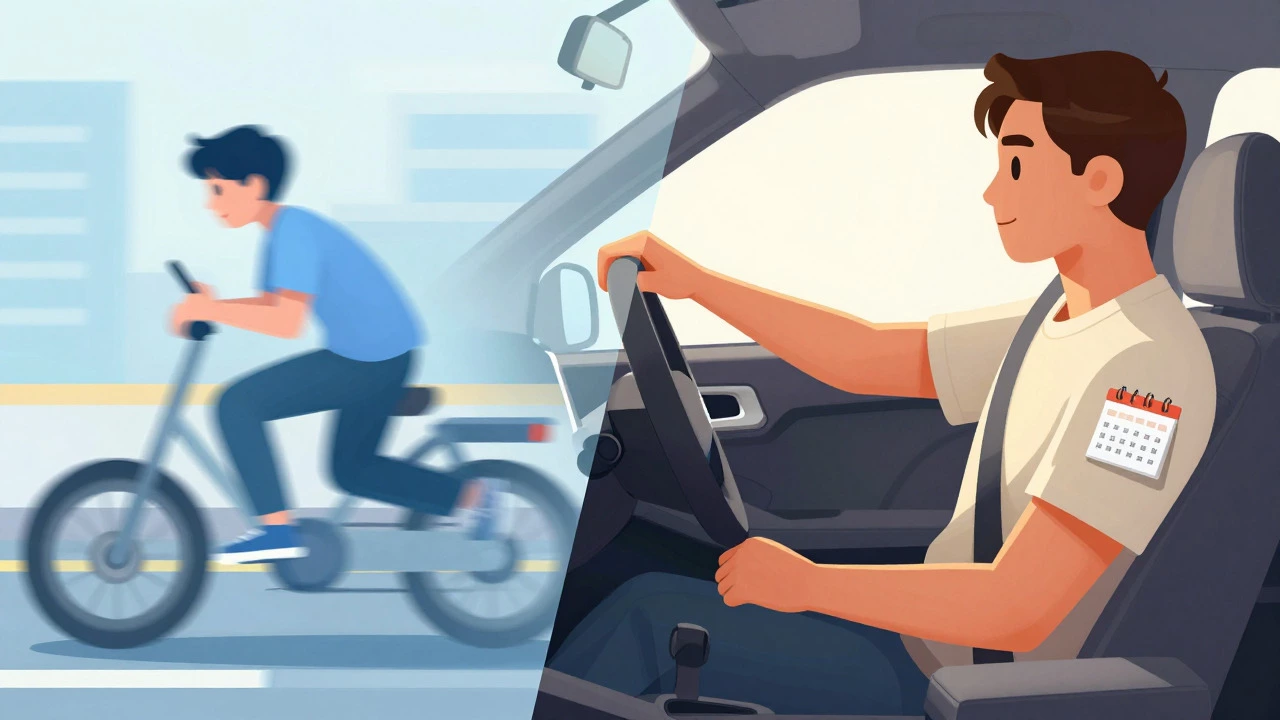
Society treats learning to drive like a rite of passage that must happen at sixteen or seventeen. But look at the statistics. Young drivers aged 17 to 24 are statistically overrepresented in accident reports. Why? Because their brains are still developing, specifically the prefrontal cortex responsible for impulse control and risk assessment. They often drive fast, text behind the wheel, and underestimate dangers.
Mature students, on the other hand, tend to be more cautious. When you are thirty, you likely have a job, bills to pay, and perhaps even dependents. You have something to lose. This mindset translates directly to safer driving habits. You aren't driving to impress friends; you are driving to get to work safely. Instructors often report that adult learners pick up the mechanics of driving quickly because they listen better and retain information longer than distracted teens.
However, there is a trade-off. Adults often struggle more with the "feel" of the car initially because they are overthinking every action. A teenager might just mash the gas and brake until it feels right. An adult tries to analyze the physics of the clutch engagement. This analysis paralysis can slow down early progress, but it pays off later when you become a disciplined driver.
Why Thirty Is Actually an Advantage
Learning to drive at thirty comes with distinct advantages that teenagers simply don't have yet. These aren't just nice-to-haves; they are critical factors that can speed up your journey to passing your test.
- Financial Independence: Driving lessons cost money. At thirty, you are more likely to have a steady income to cover lesson fees, vehicle rental, and insurance without begging parents for cash. This reduces stress and allows you to book lessons consistently.
- Cognitive Maturity: You understand cause and effect. If you check your blind spot, you avoid hitting another car. It’s logical. Teens often need this explained repeatedly; adults grasp the logic immediately.
- Time Management: You know how to prioritize. You will treat driving lessons as an important appointment rather than a casual hangout. This consistency is key to retaining muscle memory.
- Emotional Regulation: Road rage and panic are less common in adults who have developed coping mechanisms for stress. You are less likely to crumble under pressure during the driving test.
Consider the concept of Risk perception. Studies show that older learners perceive hazards earlier than younger ones. You scan the road differently. You anticipate that the ball rolling into the street means a child might follow. This defensive instinct is hard to teach to a teenager but comes naturally to many adults.
The Real Hurdles: Anxiety and Ego
If thirty is so great, why do people hesitate? The biggest barrier isn't physical ability; it's psychological. Two main enemies stand in your way: anxiety and ego.
Anxiety is real. Many adults develop a fear of driving after a bad experience, watching a crash, or simply feeling overwhelmed by traffic. This is known as Amaxophobia in severe cases, but even mild anxiety can freeze you up. You might find yourself gripping the steering wheel so hard your knuckles turn white. Your heart races before you even start the engine. This is normal, but it needs addressing. Ignoring it leads to poor performance.
Ego is the silent killer of progress. At thirty, you are competent in your career, relationships, and daily life. Suddenly, you are sitting in a dual-control car being told by a twenty-year-old instructor how to park. It feels humbling. Some adults resist correction because it clashes with their self-image. "I'm smart, why am I failing this parallel park?" This frustration causes tension, which ruins coordination. Relaxation is crucial for smooth gear changes and gentle braking.
To overcome these, you need to reframe the learning process. You aren't failing; you are calibrating. Every mistake is data. And regarding anxiety, exposure therapy works. Start small. Drive around empty parking lots. Gradually increase complexity. Don't jump onto the motorway on day two unless you are ready.
Structuring Your Learning Journey
Adults don't have the luxury of time that students do. You can't spend six months taking one lesson a week and expecting rapid progress. Consistency beats intensity, but frequency matters. Here is a realistic roadmap for learning to drive at thirty.
- Phase 1: The Basics (Weeks 1-4): Focus on controls, starting, stopping, and basic maneuvers. Aim for one to two lessons per week. Practice in quiet residential areas. Goal: Comfort with the vehicle.
- Phase 2: Road Awareness (Weeks 5-8): Introduce busier roads, junctions, and roundabouts. This is where hazard perception kicks in. Increase to two lessons per week if possible. Goal: Navigating local traffic confidently.
- Phase 3: Complex Scenarios (Weeks 9-12): Dual carriageways, motorways (if applicable), night driving, and adverse weather simulation. Goal: Handling high-speed and low-visibility conditions.
- Phase 4: Test Preparation (Weeks 13+): Mock tests, focusing on independent driving sections. Refine minor errors. Goal: Passing the practical test.
Note that this timeline assumes regular practice. If you only take lessons once a month, you will forget what you learned each time. Muscle memory requires repetition within short intervals. For busy professionals, consider Intensive driving courses. These pack weeks of training into days. While intense, they keep skills fresh and can be more efficient for adults with fixed schedules.
| Feature | Traditional Lessons | Intensive Course | Self-Taught (with family) |
|---|---|---|---|
| Cost | High (long duration) | Medium-High (bulk discount) | Low (fuel costs only) |
| Time Commitment | Flexible, spread over months | Intense, 1-3 weeks | Dependent on family availability |
| Professional Feedback | Consistent | Continuous | Inconsistent, potentially biased |
| Best For | Those with flexible schedules | Busy professionals needing quick results | Budget-conscious learners with patient partners |
Choosing the Right Instructor
Your instructor is your coach. At thirty, you need someone who respects your intelligence but doesn't assume prior knowledge. Avoid instructors who rely heavily on humor at the expense of clarity or those who seem impatient with questions.
Look for Approved Driving Instructors (ADIs) or equivalent certified professionals in your region. Check reviews specifically from other adult learners. Did the instructor help them overcome anxiety? Were they clear on technical details?
Don't be afraid to switch instructors if the chemistry isn't right. You are paying for a service. If you feel judged or rushed, you won't learn effectively. A good instructor will tailor their teaching style to your pace. They should encourage you to speak up if you are confused. Silence is the enemy of learning.
Practical Tips for Faster Progress
Accelerate your learning curve with these actionable strategies:
- Practice Theory Daily: Use apps to practice hazard perception and theory tests during commutes or breaks. Understanding rules reduces cognitive load while driving.
- Visualize Success: Before getting in the car, visualize the maneuvers. Mental rehearsal activates similar neural pathways as physical practice.
- Manage Stress Physically: Deep breathing exercises before starting the engine lower cortisol levels. Keep your shoulders relaxed. Tension transfers to the steering wheel.
- Record Your Lessons: With permission, record audio or video of your lessons. Reviewing mistakes objectively helps identify patterns you miss in the moment.
- Drive Alone (Safely): Once comfortable, rent a car or use a friend's vehicle to practice in low-stakes environments. Independence builds confidence.
Remember, the goal isn't perfection; it's competence. No driver is perfect. Even professional racers make errors. The difference is awareness and correction. Embrace the learning process as a skill acquisition, similar to learning a new software tool or language at work.
Overcoming Specific Fears
Many adults cite specific scenarios as terrifying. Let's address the big three:
Merging onto Highways: This feels dangerous because of speed differentials. The key is momentum. Don't creep along the slip road. Accelerate to match traffic speed before merging. Check mirrors, signal, and move decisively. Hesitation causes accidents more than speed.
Parking: Parallel parking seems impossible until you understand the geometry. It's about angles and reference points. Practice in empty lots. Mark spots with cones if needed. Repetition builds the spatial awareness required.
Night Driving: Reduced visibility increases anxiety. Start with dusk drives. Ensure your headlights are clean. Slow down slightly. Focus on the edge of the road rather than staring into oncoming headlights. Confidence grows with exposure.
How long does it take to learn to drive at 30?
On average, adult learners require 40-50 hours of professional instruction plus 20-30 hours of private practice. However, this varies widely based on prior experience, aptitude, and consistency. Some pass in 3 months; others may take 6-9 months. There is no shame in taking longer; safety and competence matter more than speed.
Are automatic cars easier for beginners?
Yes, automatic cars remove the complexity of clutch control and gear shifting, allowing you to focus entirely on steering, observation, and speed management. This reduces cognitive load and anxiety, especially for adults struggling with coordination. However, you will be restricted to driving automatic vehicles only upon passing the test.
Is it expensive to learn to drive as an adult?
Costs vary by location but typically range from $50 to $80 per hour for lessons. Additional costs include theory test fees, practical test fees, and potential intensive course packages. While significant, it is an investment in independence and mobility. Compare prices among local schools, but beware of unusually cheap rates which may indicate inexperienced instructors.
Can I learn to drive if I have never been in a car before?
Absolutely. Many adults start with zero experience. The lack of bad habits can actually be an advantage, as you learn correct techniques from day one. Be prepared for a steeper initial learning curve regarding basic controls, but patience and consistent practice will lead to success.
What if I fail my driving test?
Failing is common and not a reflection of your worth or intelligence. Most candidates fail at least once. Analyze the feedback from the examiner, identify specific areas for improvement, and resume lessons. Use the failure as constructive data to refine your skills. Retake the test when you feel confident, not rushed.