
Driving Test Fault Calculator
Calculate Your Result
Based on UK driving test rules: 1 major fault = automatic fail. Up to 15 minor faults allowed.
Enter your faults to see if you passed or failed
Most people think the driving test is about perfection. You don’t need to drive like a professional racer. You don’t need to never make a single mistake. But you do need to know exactly how many major mistakes you can get away with-and the truth is, you can’t afford even one.
One Major Mistake Is All It Takes
The driving test in the UK, and most places in the US, Canada, Australia, and Europe, operates on a simple rule: one major mistake = automatic fail. There’s no second chance. No leniency. No ‘you were almost there’.
A major mistake isn’t just a clumsy turn or forgetting to check a mirror once. It’s something that puts you, another person, or property at real risk. Examples include:
- Failing to stop at a red light or stop sign
- Not checking blind spots before changing lanes
- Incorrect positioning on a roundabout that forces another driver to brake suddenly
- Driving too slowly in a way that causes danger or confusion
- Not yielding to pedestrians at a crossing
- Loss of vehicle control during a maneuver
These aren’t minor slip-ups. They’re decisions that could have caused an accident. Examiners are trained to spot them instantly-and they’re required to fail you if they happen.
What Counts as a Minor Mistake?
Minor mistakes are different. They’re small errors that don’t affect safety. You might forget to signal for a second, or glance at your mirror a little late. These are called ‘driving faults’.
You can accumulate up to 15 minor mistakes and still pass-if you don’t make a single major one. But here’s the catch: if you make three of the same minor mistake in a row, it can be upgraded to a major fault. For example:
- Not checking your right mirror three times before turning right? That’s now a major fault.
- Repeatedly creeping forward at a junction without proper observation? That’s a major fault.
It’s not about the total number of mistakes. It’s about the pattern. Examiners are watching for consistency, not just isolated errors.
Why the Zero-Tolerance Policy?
Driving isn’t a video game where you get three lives. On the road, mistakes have real consequences. In 2024, over 1,800 people died in the UK in crashes involving newly qualified drivers. Many of those crashes were linked to avoidable errors-like failing to check mirrors or misjudging gaps in traffic.
The driving test is designed to filter out drivers who haven’t learned to prioritize safety over convenience. That’s why even a single major mistake is unacceptable. It’s not about being perfect. It’s about proving you understand that driving is a responsibility, not a privilege.
Common Major Mistakes That Trip People Up
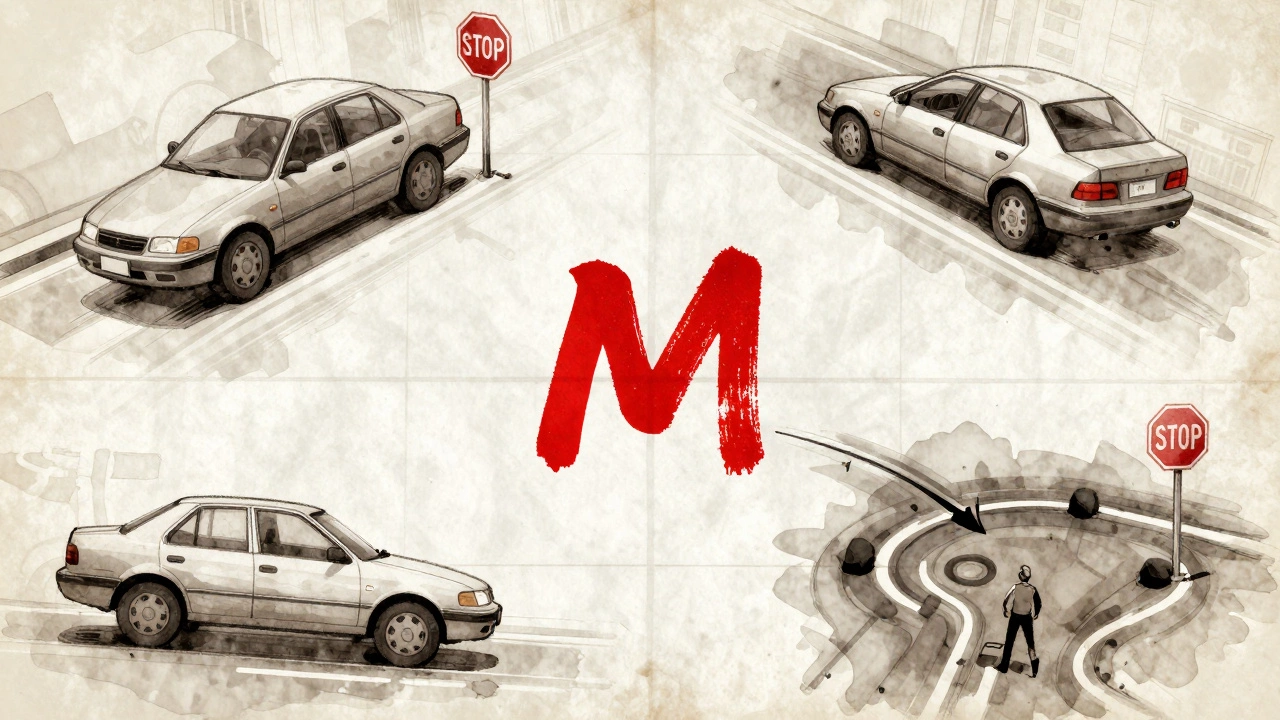
Most people fail because they don’t realize how easily a small habit turns into a major fault. Here are the top five major mistakes examiners see most often:
- Not stopping completely at stop signs - Even if you slow down, you must come to a full stop. Rolling through is a fail.
- Improper mirror checks before maneuvers - If you don’t check the right mirror before pulling out from a parked position, it’s a major fault.
- Incorrect positioning on roundabouts - Cutting across lanes, taking the wrong exit, or not signaling properly can force other drivers to react suddenly.
- Driving too slowly without reason - If you’re going 15 mph on a 40 mph road with no traffic or hazards, you’re creating a hazard yourself.
- Failing to yield to pedestrians - Even if they’re not on the crossing yet, if they’re clearly about to step off the curb, you must stop.
These aren’t obscure rules. They’re basic safety practices. But under pressure, even experienced learners forget them.
What Happens If You Make a Major Mistake?
If you make a major mistake, the examiner will end the test immediately. They’ll say something like, ‘I’m afraid we have to stop here,’ or ‘I’m going to have to fail you on that.’ There’s no debate. No appeal. No ‘let’s try again’.
You won’t get a detailed breakdown of what went wrong on the spot. But after the test, you’ll receive a form that lists your faults. Major faults are clearly marked with an ‘M’. Minor faults are marked with an ‘F’.
Most people don’t realize they can request a review of their test results. If you believe the examiner made an error, you can ask for a formal review through your local driving authority. But this isn’t a chance to re-take the test-it’s just to check if the fault was recorded correctly.
How to Avoid Major Mistakes
The best way to pass is to train your brain to think like a safe driver, not just a test-taker.
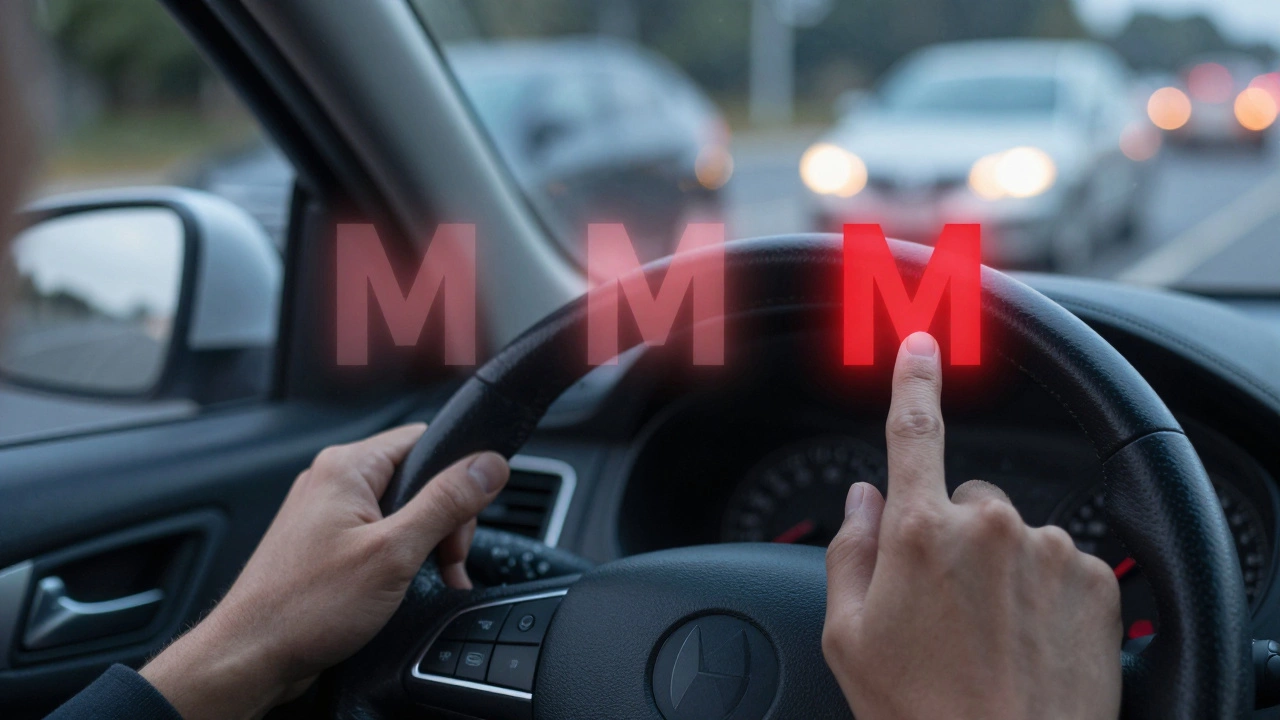
- Practice mirror checks like breathing - Before every turn, lane change, or stop, make the mirror-check-signal-manoeuvre sequence automatic.
- Slow down mentally before junctions - The biggest cause of major faults is rushing. Give yourself time to look, think, and act.
- Know your car’s blind spots - Don’t rely on mirrors alone. Turn your head. Examiners watch for this.
- Simulate test conditions - Practice driving with a friend acting as an examiner. Have them call out maneuvers randomly.
- Don’t overthink the test - The examiner isn’t trying to trick you. They’re watching to see if you’re safe. Drive like you’re on a normal road.
Most people who fail don’t lack skill. They lack awareness. They’re focused on getting the steering right, not on what’s happening around them.
What If You’ve Failed Before?
If you’ve failed once, you’re not broken. You’re human. And you’re not alone. Over 40% of first-time test takers fail. Many of them pass on the second try.
Here’s what works:
- Review your test report. What was marked as a major fault? Focus on that one thing.
- Book at least 5-7 extra lessons with your instructor. Don’t just practice the same route-practice dealing with distractions, heavy traffic, and unfamiliar roads.
- Drive more outside of lessons. The more time you spend behind the wheel, the less nervous you’ll be.
- Don’t rush your next test. Wait until you feel calm and confident-not just ‘ready’.
Many people book their next test too soon. They think they’ve fixed the problem. But unless you’ve truly changed your habits, you’ll repeat the same mistake.
Final Thought: It’s Not About Perfection
You don’t need to drive flawlessly. You just need to drive safely. One major mistake means you’re not ready. But if you’ve never made one, you’re probably already qualified.
The test isn’t designed to catch you out. It’s designed to protect you-and everyone else on the road.
Can you pass a driving test with minor mistakes?
Yes, you can pass with up to 15 minor mistakes (called driving faults), as long as you don’t make a single major fault. But if you repeat the same minor mistake three times, it can be upgraded to a major fault, which means an automatic fail.
What are examples of major driving faults?
Major faults include failing to stop at red lights or stop signs, not checking blind spots before changing lanes, improper roundabout positioning, driving too slowly without reason, and not yielding to pedestrians. These are actions that could lead to an accident.
How many major mistakes can you make and still pass?
You can’t make any. Even one major mistake results in an automatic fail. The driving test uses a zero-tolerance policy for actions that endanger safety.
Do examiners tell you if you made a major mistake during the test?
Yes, if you make a major fault, the examiner will usually stop the test and say something like, ‘I’m afraid we have to fail you on that.’ They don’t give detailed feedback on the spot, but your test report will clearly mark major faults with an ‘M’.
Can you appeal a driving test fail?
You can request a review of your test results to check if the faults were recorded correctly, but you cannot appeal the decision itself. The review doesn’t give you a retest-it only confirms whether the examiner followed procedure. If you believe you were treated unfairly, contact your local driving authority for guidance.
Is it easier to pass on the second attempt?
Many people do pass on their second try, but only if they address the specific reason they failed. If you just rebook without fixing the underlying habits-like poor mirror checks or rushing junctions-you’re likely to fail again. Focus on the fault that caused your first fail, not just practicing the same route.