
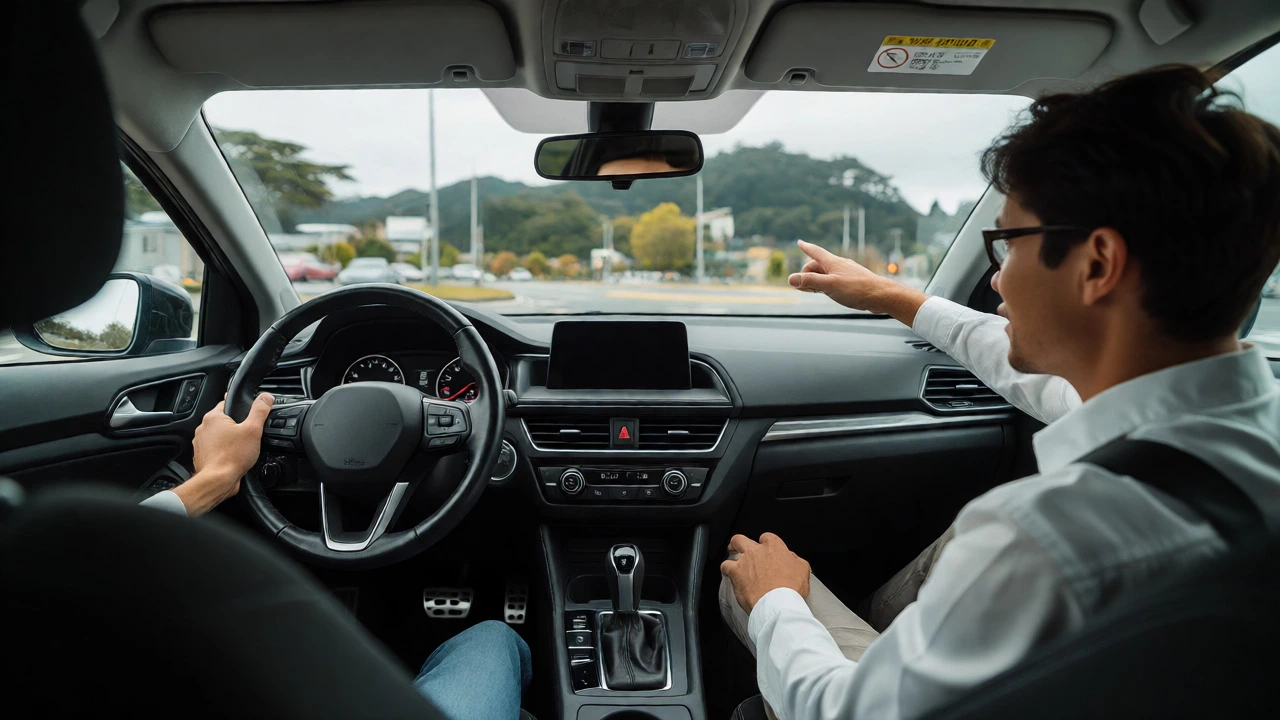
Driving Lesson Cost & Time Estimator
Based on NZ Transport Agency data and typical instructor rates in New Zealand.
Professional Lessons
0
hours recommendedTotal Estimated Cost
$0
for professional instructionBreakdown:
- Base hours adjusted for .
Test Readiness Check:
Don't just book by the clock. Ensure you can handle unexpected situations calmly, score >80% on mock tests, and navigate unfamiliar areas before booking your test.
Here’s the uncomfortable truth: there is no magic number. If you ask ten different instructors in Wellington how long it takes to pass a driving test, you’ll get ten different answers. Some say 20 hours. Others swear by 45. The official stats from the NZ Transport Agency (NZTA) suggest the average learner needs about 30-40 hours of professional instruction plus private practice to pass their first time. But averages are misleading. They hide the fact that some people pick up clutch control in an afternoon, while others need weeks just to feel comfortable merging onto the motorway.
So, why does this question matter? Because getting it wrong costs you money and time. Book too few hours, and you fail your test, paying for another booking and more lessons. Book too many without structure, and you burn cash on repetitive drills you’ve already mastered. The goal isn’t just to hit a target number; it’s to reach competence efficiently. Let’s break down what actually determines your timeline and how to plan your budget accordingly.
The Official Numbers vs. Reality
Let’s look at the data before we get into the anecdotes. In New Zealand, the recommended minimum for a standard learner licence holder moving to a restricted licence is often cited as 120 hours of supervised driving. That sounds massive, right? But here’s the catch: that 120-hour figure includes all private practice with family or friends. It doesn’t mean you need 120 hours of paid lessons.
Most reputable driving schools recommend between 20 and 40 hours of professional instruction. Why such a wide gap? It depends entirely on your prior experience, your ability to process information quickly, and the complexity of the routes you’re learning. A student who has never sat behind a wheel needs more foundational time than someone who has driven farm vehicles or played racing sims for years.
| Experience Level | Professional Lessons | Private Practice | Total Time to Test Ready |
|---|---|---|---|
| Absolute Beginner | 30-45 hours | 50+ hours | High |
| Some Experience | 20-30 hours | 30-50 hours | Medium |
| Refresher/Confident | 10-20 hours | 10-20 hours | Low |
Notice the trend? As your baseline confidence goes up, the need for paid instruction drops sharply. Professional lessons are expensive because they provide safety nets-dual controls-and expert feedback. Private practice builds muscle memory but can reinforce bad habits if your supervisor isn’t trained to spot them. This is where the balance matters most.
Factors That Change Your Timeline
You might be wondering, "Am I a fast learner or a slow one?" It’s rarely about intelligence. It’s about cognitive load management. Driving requires multitasking: checking mirrors, managing speed, watching pedestrians, and navigating signs simultaneously. For some brains, this feels natural quickly. For others, it’s overwhelming.
Prior Vehicle Experience: Have you ever ridden a motorcycle or driven a tractor? If yes, you likely understand spatial awareness and vehicle dynamics better than someone who hasn’t. You might cut your lesson count by 10-15%.
Anxiety Levels: This is the silent killer of progress. High anxiety slows down learning because your brain is stuck in 'fight or flight' mode rather than 'learning' mode. If you’re nervous, you need more time in low-stress environments before tackling busy intersections. Rushing an anxious driver usually results in plateaus or regressions.
Frequency of Lessons: This is critical. Taking one hour lesson every two weeks is inefficient. You spend half the lesson remembering what you did last time. Ideally, aim for at least two lessons per week. Consistency beats intensity. Daily short drives with a parent are great, but weekly professional check-ins ensure you aren’t cementing errors.
Location Complexity: Learning to drive in rural Taranaki is different from navigating Wellington’s windy hills and roundabouts. Urban environments require more time to master complex junctions, multi-lane merges, and unpredictable pedestrian behavior. If you live in a city, expect to need more hours than someone in a quiet town.
Standard Lessons vs. Intensive Courses
Should you drip-feed your lessons over six months or crush them in two weeks? Both approaches have pros and cons, and the "best" choice depends on your personality.
Intensive courses (often called crash courses) typically involve 20-30 hours of driving packed into 5-10 days. The benefit? Immersion. You don’t forget between sessions. You build momentum rapidly. Many students love this because they want to get it over with. However, it’s mentally exhausting. If you struggle with stress or have a full-time job that drains you, an intensive course might lead to burnout before you even take the test.
Standard lessons spread over months allow for reflection and gradual skill building. You have time to process feedback and practice privately. This suits learners who prefer steady progress and have flexible schedules. The downside is the risk of forgetting skills between lessons if you don’t practice enough on your own.
- Choose Intensive if: You have free time, learn quickly under pressure, and want to pass ASAP.
- Choose Standard if: You work full-time, get overwhelmed easily, or want to truly enjoy the learning process.
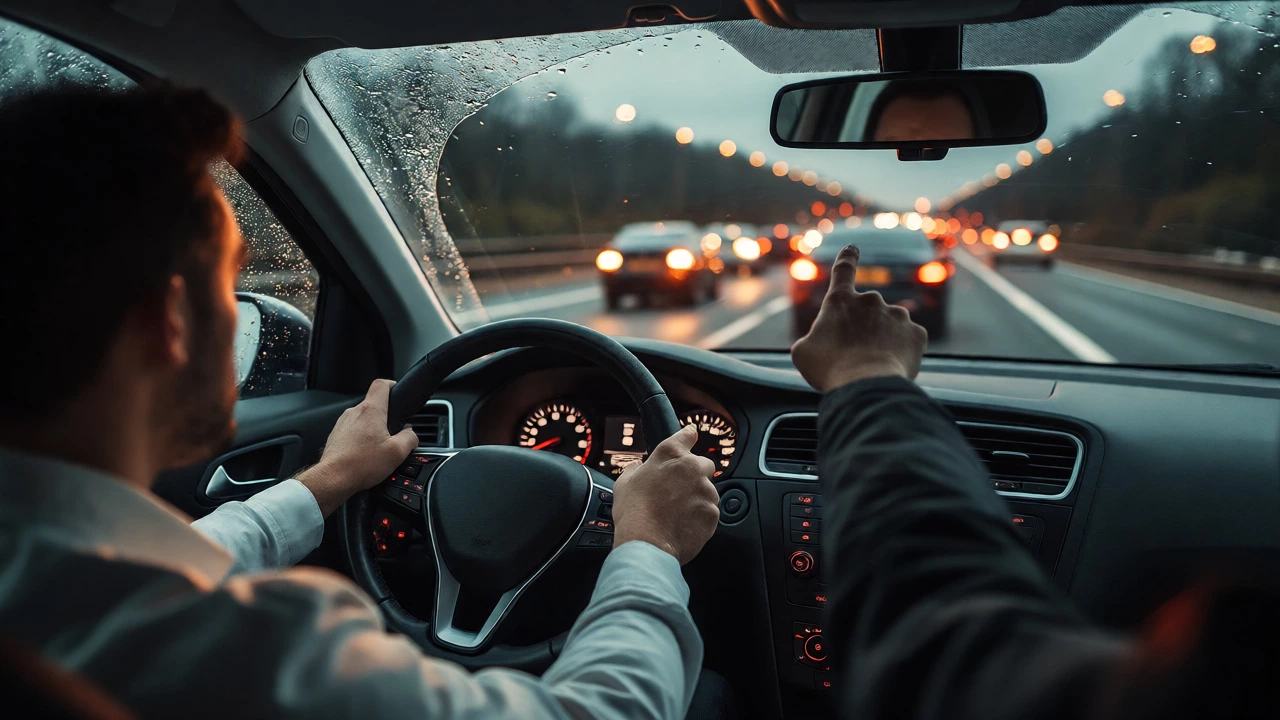
Signs You Are Ready for the Test
Don’t book your test based on the clock. Book it when you’re competent. How do you know? Here are three concrete indicators that you’re ready, regardless of whether you’ve had 20 or 50 hours of lessons.
First, you can handle unexpected situations calmly. An instructor will throw curveballs-a car pulls out suddenly, a pedestrian steps off the curb. If you panic, you’re not ready. If you brake smoothly and adjust your path without hesitation, you’re good.
Second, you consistently perform well in mock tests. Ask your instructor for a full-length mock test in a new area. If you score above 80% with only minor faults, you’re likely test-ready. If you make major faults (like failing to give way), you need more hours.
Third, you can drive independently in unfamiliar areas. The test won’t be on your home turf. You need to demonstrate that you can navigate new roads using signs and road markings alone. If you rely on memorizing turns rather than reading the road, keep practicing.
Budgeting for Success
Money talks. In 2026, driving lessons in New Zealand range from $70 to $90 per hour depending on the region and school. Automatic cars sometimes cost slightly less due to lower maintenance, but manual lessons prepare you for a wider range of jobs later.
If you estimate 30 hours of lessons, that’s roughly $2,100 to $2,700. Add the cost of the test ($150-$200) and any license fees. Now, consider the hidden cost of failure. Failing your test means losing the test fee and potentially needing 5-10 more hours of remedial lessons. That’s an extra $500+. Therefore, investing in those extra 2-3 hours *before* the test to polish weak spots is often cheaper than failing.
Pro Tip: Ask your instructor for a "test readiness assessment." Most schools offer this for a small fee or as part of a package. It gives you an honest opinion on whether you should book now or wait.
Frequently Asked Questions
Is 20 hours enough to pass a driving test?
For absolute beginners, 20 hours is rarely enough to pass safely. While some quick learners manage it, the NZTA suggests an average of 30-40 hours of professional instruction combined with private practice. 20 hours might suffice for a refresher course if you already have significant driving experience.
Do automatic cars require fewer lessons?
Yes, typically 5-10% fewer hours. Without the need to coordinate gears and clutch, learners can focus entirely on steering, observation, and road positioning. This reduces cognitive load, allowing faster progression through basic maneuvers.
What happens if I fail my driving test?
You receive a report detailing your faults. You must wait at least one week before retaking the test. Most instructors recommend 3-5 additional lessons focused specifically on the areas where you lost marks before rebooking.
Can I practice with family instead of taking lessons?
You must combine both. Family practice builds confidence and mileage, but professional lessons teach correct technique and test standards. Relying solely on family can lead to ingrained bad habits that are hard to fix later and may cause test failures.
How long is an intensive driving course?
Intensive courses usually last 5 to 10 days, involving 4-6 hours of driving per day. They include a final driving test at the end of the period. These are ideal for learners who can dedicate full days to training.
Next Steps for Learners
So, where do you start? Don’t guess. Book a trial lesson. Most driving schools offer a discounted first hour. Use this session to gauge your instructor’s teaching style and ask for an honest assessment of your current level. Bring your logbook if you have one, or just be prepared to show what you can do.
If you’re starting from zero, aim for a package of 10 hours initially. Review your progress after five. If you’re grasping concepts quickly, extend the package. If you’re struggling, consider adding private practice hours with a patient supervisor to supplement the professional guidance.
Remember, the goal is a safe, confident driver-not just a piece of plastic license card. Take the time you need. Your future self on the highway will thank you for it.