
Test Drive Inspection Checklist
Tap each item as you complete it during your drive. The tool will track your progress and highlight critical issues.
Drive Score
Complete phases to evaluate the vehicle
Imagine this: you’ve found the perfect car online. The photos are crisp, the description is promising, and the price feels just right. You meet the seller at a quiet parking lot on a Saturday afternoon. You hop in, start the engine, and drive around the block once. It feels fine. You buy it. Two days later, the transmission slips when accelerating uphill, or you realize the steering pulls hard to the left on any highway stretch. That quick loop didn’t tell you enough.
The question isn’t just about minutes; it’s about mileage and conditions. A proper test drive needs to reveal the true character of a vehicle. Most experts agree that a meaningful evaluation takes between 20 and 45 minutes. Anything less is a courtesy call; anything more might mean you’re falling in love with a car that has hidden flaws. Here is exactly how to structure that time so you don’t miss critical details.
The Minimum Viable Loop: Why 10 Minutes Isn’t Enough
If you only have ten minutes, you aren’t really testing the car; you’re checking if it starts. In that short window, you can verify basic functionality: do the lights work? Does the air conditioning blow cold? Is the radio on? But you cannot assess comfort, handling, or mechanical health in such a brief span.
A ten-minute drive usually consists of low-speed urban maneuvering-stop-and-go traffic, tight turns, and gentle acceleration. This hides major issues. A worn suspension might not rattle at 30 mph (48 km/h). A failing turbocharger might not whistle until you push past 60 mph (97 km/h). If you stick to the neighborhood streets, you’re blind to the car’s behavior under load.
To get value from a short drive, you must maximize variety. Even in 15 minutes, try to include:
- City driving: Check brake responsiveness and visibility.
- Moderate speed: Find a straight road to check for vibration or pulling.
- Highway entry: Merge onto a faster road to test acceleration and noise levels.
If the seller refuses to let you leave the immediate area, take that as a red flag. They may be hiding something specific to longer distances or higher speeds.
The Sweet Spot: 20 to 45 Minutes
This is the ideal window for most buyers. It gives you enough time to cover different terrains without exhausting your attention span. After 45 minutes, fatigue sets in, and you might stop noticing subtle cues like a faint knocking sound or a stiff gear shift. Your goal is to stay alert and objective throughout the entire drive.
In this timeframe, you should aim to cover at least 10 to 15 miles (16 to 24 kilometers). Distance matters because heat builds up in components. Brakes, engines, and transmissions behave differently when they are warm compared to when they are cold. A car might run smoothly for the first five minutes, then overheat or lose power as the engine reaches operating temperature. Only a drive of sufficient length allows these thermal cycles to occur.
Use this time to simulate your daily routine. Do you commute on highways? Spend half the drive there. Do you navigate narrow city streets with kids in the back? Take those routes. The best test drive mirrors your actual usage patterns. If you plan to tow a trailer, ask if you can do a light pull-test, though this requires specific preparation and safety checks beyond a standard drive.
Route Planning: Mixing Conditions for Full Disclosure
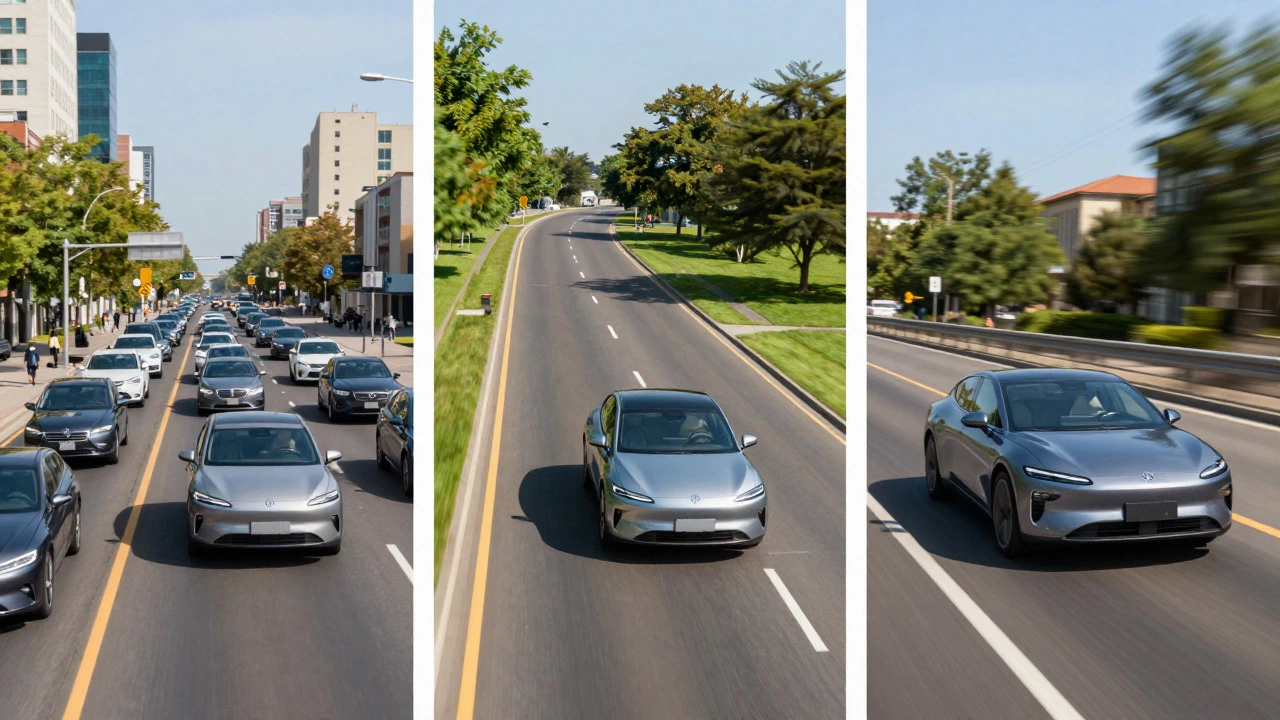
A random route often misses key stress tests. Plan your path before you arrive. A comprehensive test drive should include three distinct phases:
- Urban Maneuvering: Start in a busy area. Check blind spots, reverse parking sensors, and low-speed steering effort. Listen for squeaks in the interior when going over bumps. Note how heavy the brakes feel during frequent stops.
- Suburban/Cruising Speed: Move to wider roads where you can maintain 45-55 mph (72-88 km/h). This is where you detect alignment issues. Does the wheel wobble? Does the car drift to one side if you relax your grip? Listen for wind noise or rattles in the panels.
- Highway Acceleration: Find an on-ramp or open stretch. Accelerate firmly from 30 to 60 mph. Feel for hesitation in the transmission. In automatic cars, shifts should be smooth. In manuals, the clutch should engage cleanly without slipping. Listen for unusual engine noises under load.
If possible, include a hill climb. Gravity exposes weak engines and struggling transmissions. Notice if the car downshifts appropriately or struggles to maintain speed. Also, try braking from highway speeds to a complete stop. The pedal should feel firm, not spongy, and the car should stop in a straight line without pulling.
What to Listen For: Beyond the Engine Hum
Your ears are powerful diagnostic tools. During the drive, turn off the radio and roll up the windows initially, then roll them down to compare external vs. internal noise. Pay attention to these specific sounds:
- Creaks and Squeaks: These indicate worn bushings, loose trim, or aging suspension components. While not always urgent, they signal neglect.
- Clunking: A thud when hitting a bump suggests broken suspension parts or loose exhaust mounts. This is a serious safety concern.
- Whining or Howling: Often points to failing wheel bearings or differential issues. The sound usually changes pitch with speed.
- Hissing: Could be an air conditioning leak or a vacuum leak in the engine bay. Both affect performance and efficiency.
Don’t ignore vibrations. If you feel shuddering through the steering wheel, it could be unbalanced tires or warped brake rotors. If the vibration is in the seat, it might be related to the drivetrain or engine mounts. Write these observations down immediately after the drive while they are fresh.
Red Flags During the Drive
Some issues are deal-breakers. If you encounter any of the following, end the drive safely and reconsider the purchase:
| Symptom | Possible Cause | Risk Level |
|---|---|---|
| Smoke from exhaust | Burning oil, coolant leak, or electrical issue | High |
| Brake pedal goes to floor | Fluid leak or master cylinder failure | Critical |
| Transmission slipping | Worn clutch or low fluid | High |
| Steering wheel shaking | Warped rotors or bad alignment | Medium |
| Check Engine Light stays on | Stored fault code, potentially minor or major | Variable |
If the Check Engine Light is on, ask the seller for the OBDII code. Sometimes it’s a loose gas cap; other times, it’s a failing catalytic converter. Never ignore it. Similarly, if the ABS light illuminates, the anti-lock braking system is compromised, which is dangerous in wet conditions.
Post-Drive Inspection: The Final Check
Once you park, don’t rush inside. Walk around the car again. Look underneath for fresh leaks. Oil stains should be dry and old; wet drips indicate active problems. Smell the interior. A sweet smell suggests antifreeze leakage. A burnt odor points to overheating electronics or clutch slippage.
Check the tire treads. Uneven wear indicates alignment or suspension issues. If the inner edges are worn, the toe alignment is off. If the center is bald, the tires are consistently underinflated. These details matter for safety and future costs.
Finally, review your notes. Did the car meet your expectations? Were there any compromises you made? Remember, a test drive is your last chance to inspect the vehicle before committing funds. Take your time, trust your instincts, and don’t be pressured into a quick decision. The right car will wait for you to make an informed choice.
Can I test drive a car without owning insurance?
In many places, the dealer or private seller’s insurance covers the test drive. However, always confirm this explicitly before getting behind the wheel. If you are buying privately, ensure their policy includes permissive use for test drivers. If you are unsure, bring proof of your own insurance, but note that your policy may not cover a vehicle you don’t own unless specified.
Is it safe to test drive a car alone?
It is generally safer to have a friend accompany you. They can help observe things you might miss, such as exterior noises or dashboard warnings, and provide a second opinion. Additionally, having another person present adds a layer of security, especially when meeting private sellers in isolated locations. Always choose well-lit, public areas for meetings.
Should I test drive at night?
Yes, if you plan to drive at night regularly. Night driving reveals issues with headlights, taillights, and interior lighting. It also shows how visible the car is to others and whether glare affects your vision. However, never rely solely on a night drive. Combine it with a daytime drive to check for paint condition, rust, and mechanical clarity under better visibility.
What documents should I bring to a test drive?
Always bring your valid driver’s license. Dealerships will require this to verify your identity and driving record. Private sellers may also ask to see your license for liability reasons. Some sellers might request proof of insurance, even if their policy covers the drive. Having these ready speeds up the process and shows you are a serious buyer.
How many cars should I test drive before deciding?
Aim to test drive at least three similar models. Comparing vehicles back-to-back highlights differences in comfort, noise, and handling that you might overlook with a single car. If you are choosing between two brands, drive both. This comparison helps you understand what features truly matter to you and prevents buyer’s remorse later.