
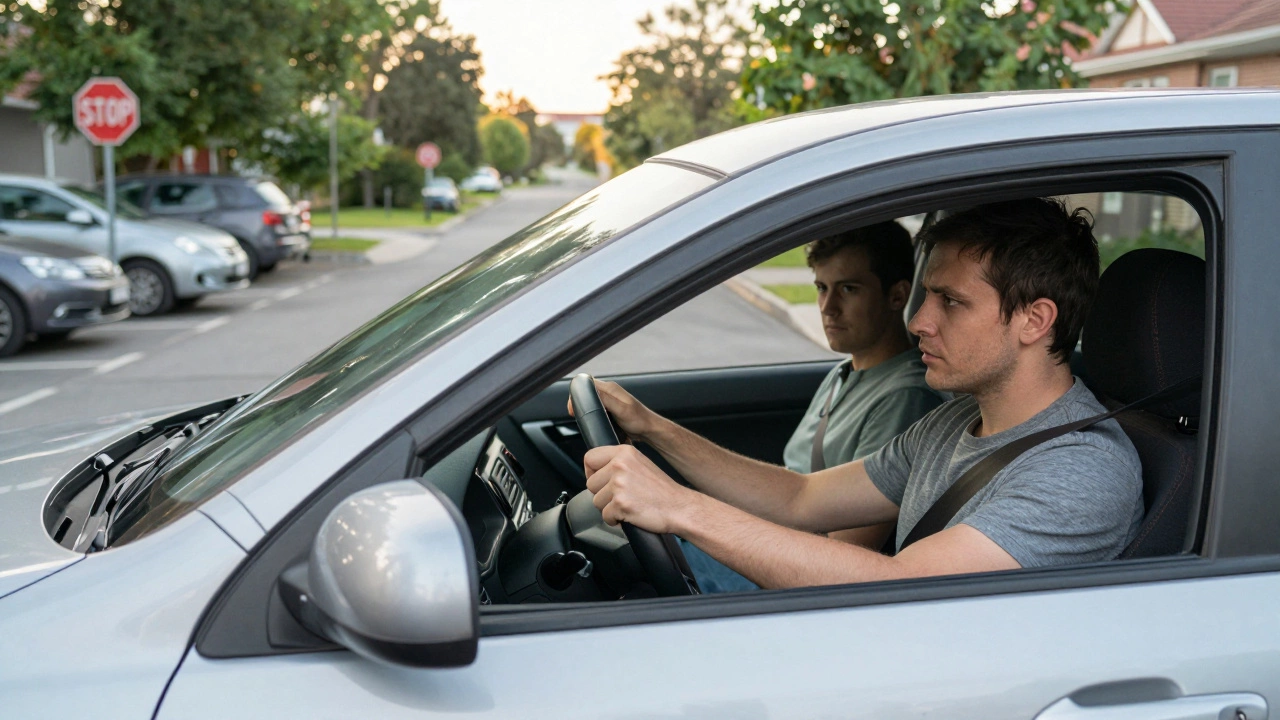
When you sit behind the wheel for the first time, the question isn’t just how far you can drive-it’s whether you’re ready to drive at all. There’s no magic number of kilometers, no official checklist that says, "At 5 km, you’re合格." But there are clear signs that tell you when you’re making real progress-and when you’re still just learning to hold the wheel without panicking.
What Happens in the First Driving Lesson?
Most beginners start with a 60- to 90-minute session. You’ll likely spend the first 10 minutes just getting used to the car: adjusting the seat, mirrors, and steering wheel. Then you’ll practice starting and stopping, using the clutch (if manual), and steering in a quiet, empty area-usually a car park or closed-off street. At this stage, you’re not even thinking about traffic. You’re learning how to move without crashing into a parked car.By the end of that first lesson, you might have driven 200 meters. And that’s normal. Really.
Don’t compare yourself to someone who’s been driving for years. You’re not supposed to be driving down the highway on day one. You’re supposed to be learning how to stop smoothly, how to check your mirrors without looking away from the road, and how to stay calm when someone honks behind you.
How Far Should You Be Able to Drive After 5 Lessons?
After five lessons-roughly five hours of instruction-you should be able to drive confidently in low-traffic residential streets. That means:- Starting and stopping without jerking
- Using mirrors before turning or changing lanes
- Steering smoothly around corners
- Staying in your lane without weaving
- Handling basic intersections with traffic lights
You might not be ready for highways yet, but you should be able to drive 5 to 10 kilometers in familiar neighborhoods without needing constant coaching. That’s not about distance-it’s about control. If you’re still gripping the wheel like it’s a life raft, or if you freeze at every pedestrian crossing, you’re not behind. You’re just not there yet.
What About After 10 Lessons?
By lesson 10, most learners can handle:- Driving on quiet country roads
- Navigating roundabouts without hesitation
- Driving during daylight hours in light traffic
- Parallel parking with minimal bumps
- Driving for 20 to 30 kilometers without needing a break
That’s about the distance from Wellington’s city center to Miramar or Lower Hutt’s main shopping areas. If you can do that without your instructor saying "ease off the accelerator" or "check your blind spot" every 30 seconds, you’re on track.
Some people hit this point after 8 lessons. Others take 12. That’s normal. Driving isn’t a race. It’s a skill built through repetition, not mileage.
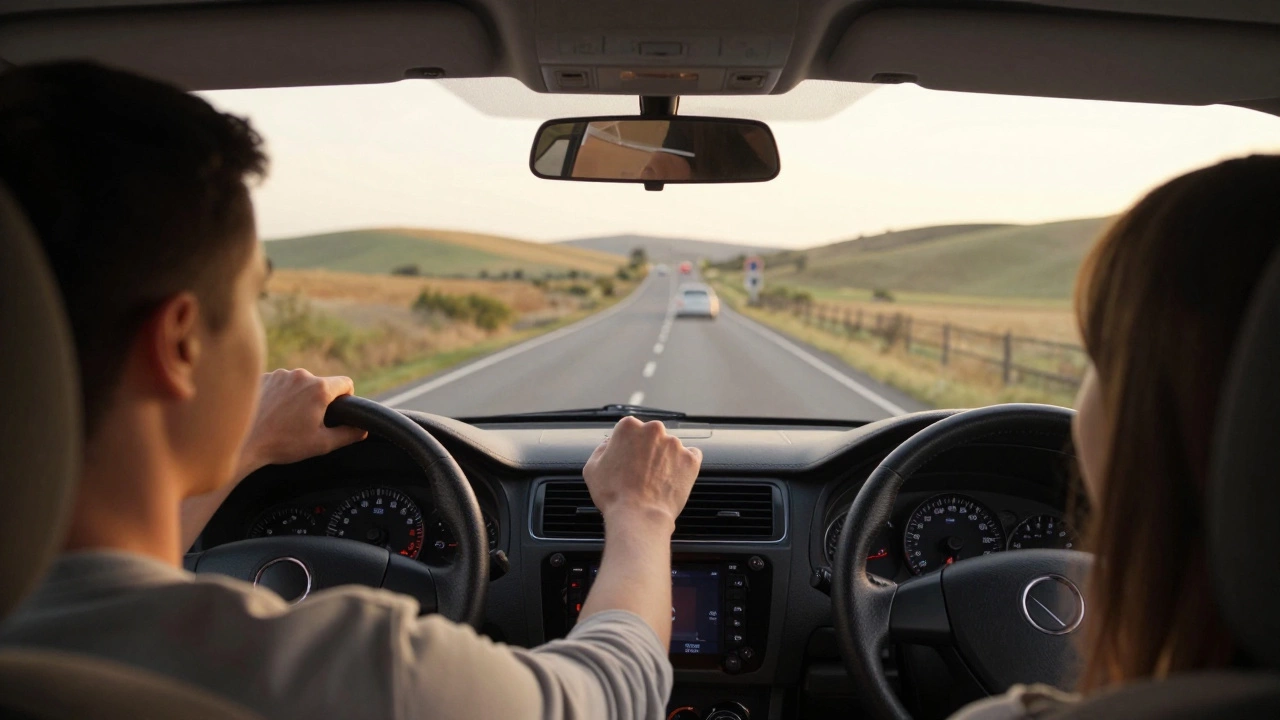
What’s the Real Goal? Confidence, Not Distance
The question isn’t "How far can you drive?" It’s "Can you drive safely without constant help?" A beginner who drives 2 kilometers confidently is further along than someone who drives 15 kilometers but keeps looking over their shoulder for help. That’s why instructors focus on behavior, not distance.Here’s what real progress looks like:
- You don’t need your instructor to say "turn left here"-you see the sign and act on it.
- You check your mirrors before braking, not after.
- You adjust your speed for conditions, not just the speed limit.
- You stay calm when a car cuts in front of you.
These are the signs you’re ready for the test-not because you’ve driven 50 kilometers, but because you’ve learned to think like a driver.
Common Mistakes Beginners Make
Many learners think they need to drive far to prove they’re improving. So they push for longer trips too soon. That’s a mistake.Here’s what goes wrong:
- Driving on busy roads before mastering basic control → panic, oversteering, missed signals
- Focusing on distance instead of consistency → you drive 10 km one day, then stall at a light the next
- Skipping practice in different conditions → rain, dusk, heavy traffic
- Waiting until "I feel ready" to practice → readiness comes from doing, not feeling
Driving is a habit. You don’t become good by going far. You become good by doing the right things, over and over.
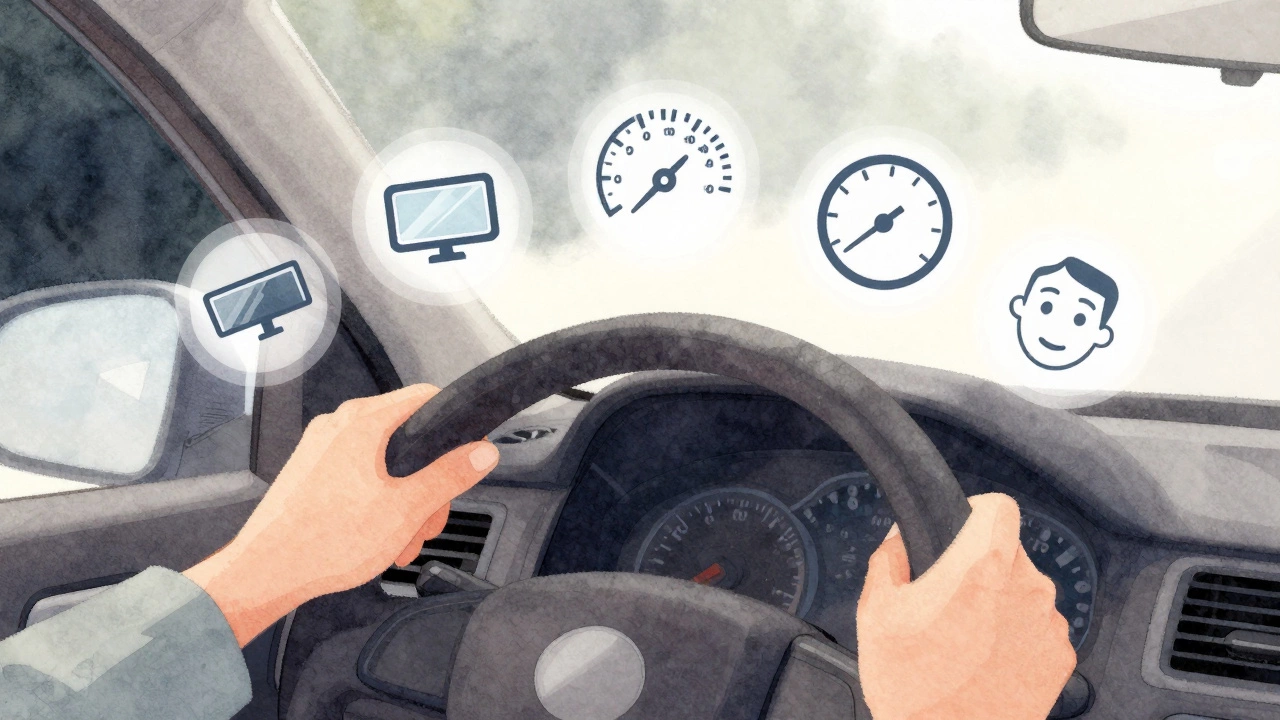
What Should You Be Practicing Outside Lessons?
If you’re learning with a licensed supervisor, use those extra hours wisely:- Practice in different neighborhoods-not just the same street
- Drive at different times: morning, afternoon, early evening
- Try parking in tight spots-even if you don’t need to
- Practice looking ahead, not just at the car in front
- Don’t just drive-observe: how do other drivers signal? When do they slow down?
One learner I worked with in Wellington practiced parking in a narrow alley behind a supermarket every weekend. After three weeks, she could parallel park blindfolded. Not literally. But she didn’t need to think about it anymore. That’s the goal.
When Should You Book Your Driving Test?
Most learners book their test after 20 to 25 hours of professional lessons. But that’s not a rule-it’s a guideline.Ask yourself:
- Do I feel in control, even when traffic is heavy?
- Do I check mirrors and blind spots without being reminded?
- Can I handle a roundabout without hesitation?
- Do I still get nervous every time I start the car?
If you answered "yes" to the first three, you’re ready. If you answered "yes" to the last one-that’s okay. Nervousness doesn’t mean you’re not ready. It means you care.
Don’t wait until you’re "100% confident." That day never comes. You’ll always have a little doubt. That’s normal. The test isn’t about perfection. It’s about consistency.
Final Thought: It’s Not About the Kilometers
You don’t need to drive 50 kilometers to pass your test. You need to drive 5 kilometers without a single mistake in mirror use, signaling, or speed control.One learner in Porirua passed her test after just 18 hours of lessons. She’d spent every extra hour practicing in quiet streets, parking, and roundabouts-not trying to drive to the other side of the city. She didn’t need distance. She needed control.
So if you’re asking how far you should be able to drive? The answer isn’t in kilometers. It’s in confidence. Can you drive safely, calmly, and consistently? Then you’re ready-not because of how far you’ve gone, but because of how well you’ve learned to drive.
Can I drive on highways after my first lesson?
No. Highways are not suitable for beginners. Most driving schools wait until after 10 to 15 lessons before introducing highway driving. You need to master lane discipline, speed matching, and merging before handling high-speed traffic. Trying too soon increases risk and builds bad habits.
How many driving lessons does the average beginner need?
In New Zealand, most learners need between 20 and 30 hours of professional instruction before passing their test. That’s roughly 10 to 15 lessons. Some need more, especially if they’re nervous or have limited practice time. The key isn’t the number of lessons-it’s how much you practice between them.
Is it normal to feel scared during my first driving lesson?
Yes. Almost everyone feels nervous the first time. The car is heavy, the controls are unfamiliar, and the consequences of a mistake feel huge. That fear doesn’t mean you can’t learn-it means you’re paying attention. With practice, the fear turns into focus.
Should I practice with a family member after lessons?
Yes-but only if they’re calm, patient, and licensed. Practice with someone who gives clear, calm feedback. Avoid people who yell, criticize, or take over the wheel. Quality practice matters more than quantity. Even 15 minutes of focused driving with a good supervisor is better than an hour of stress.
How do I know if I’m ready for my driving test?
You’re ready if you can drive without your instructor needing to say "check your mirror," "slow down," or "look ahead" more than once or twice per drive. You should be able to handle intersections, roundabouts, and parking without hesitation. If you’re still relying on constant verbal cues, you’re not ready yet. Don’t rush-it’s better to wait and pass than to rush and fail.