

HGV Driver Health & Longevity Estimator
Estimated Life Expectancy Adjustment:
Relative to the negative average (-5 to -7 years) for typical HGV drivers.
Key Recommendations:
Here’s a stat that might ruin your appetite for the next few hours: studies consistently show that HGV drivers live, on average, five to seven years less than the general population. It is not because they drive fast cars. It is not because they lack safety training. It is because the job itself is a slow-motion assault on the human body and mind.
If you are considering a career in heavy goods transport, or if you have been behind the wheel of an articulated lorry for twenty years, this number should worry you. But it shouldn’t scare you into quitting tomorrow. The key word here is "average." Some drivers retire at 60 in perfect health. Others struggle with chronic pain by 45. The difference isn’t luck-it’s strategy.
Why Do HGV Drivers Die Younger?
You might think the biggest risk is a crash. Statistically, it isn’t. While road accidents are fatal, they are rare compared to the silent killers associated with long-haul trucking. The primary culprits are cardiovascular disease, type 2 diabetes, and musculoskeletal disorders.
Think about what happens when you sit in a cab for ten hours a day. Your blood flow slows down. Your metabolism stalls. You’re stressed by tight delivery windows and traffic jams, which spikes cortisol levels. Then, you grab a high-sugar energy drink or a greasy meal from a service station because healthy options are scarce. Repeat this daily for thirty years, and your heart takes a beating.
| Risk Factor | Impact on HGV Drivers | Primary Cause |
|---|---|---|
| Cardiovascular Disease | 30-50% higher incidence | Sedentary behavior + Stress |
| Type 2 Diabetes | Significantly elevated risk | Poor diet + Irregular eating times |
| Musculoskeletal Issues | Chronic back/neck pain | Vibration + Poor posture |
| Sleep Apnea | Common among obese drivers | Weight gain + Fatigue |
The Sedentary Trap
Sitting is the new smoking-that’s a cliché for a reason. For office workers, sitting eight hours is bad. For HGV drivers, sitting ten to fourteen hours (including loading/unloading downtime) is brutal. When you sit, your leg muscles stop contracting. These contractions help pump blood back to your heart. Without them, blood pools in your legs, increasing the risk of deep vein thrombosis (DVT) and putting extra strain on your cardiovascular system.
It’s not just about weight gain, though that’s a factor. It’s about how your body processes insulin. When you don’t move, your cells become resistant to insulin, leading to higher blood sugar levels. Over time, this leads to pre-diabetes and eventually full-blown Type 2 diabetes. And let’s be honest: finding a gym in a layby at 2 AM is nearly impossible.
Dietary Disasters on the Road
Let’s talk about food. If you’ve ever tried to eat a balanced meal while navigating a roundabout, you know the struggle. Service stations are designed for speed and profit, not nutrition. You’re surrounded by pies, pastries, sugary coffees, and sandwiches that look like they were made last Tuesday.
The problem isn’t just what you eat; it’s when you eat. Shift work disrupts your circadian rhythm-the internal clock that tells your body when to digest food. Eating a heavy meal at midnight confuses your metabolism. Your body expects sleep, not digestion. This mismatch leads to weight gain around the midsection, which is the most dangerous place for fat to accumulate because it surrounds your vital organs.
Hydration is another sneaky issue. Many drivers limit water intake to avoid frequent bathroom breaks. Dehydration thickens your blood, making clots more likely. It also causes fatigue and headaches, which are already common in this profession.
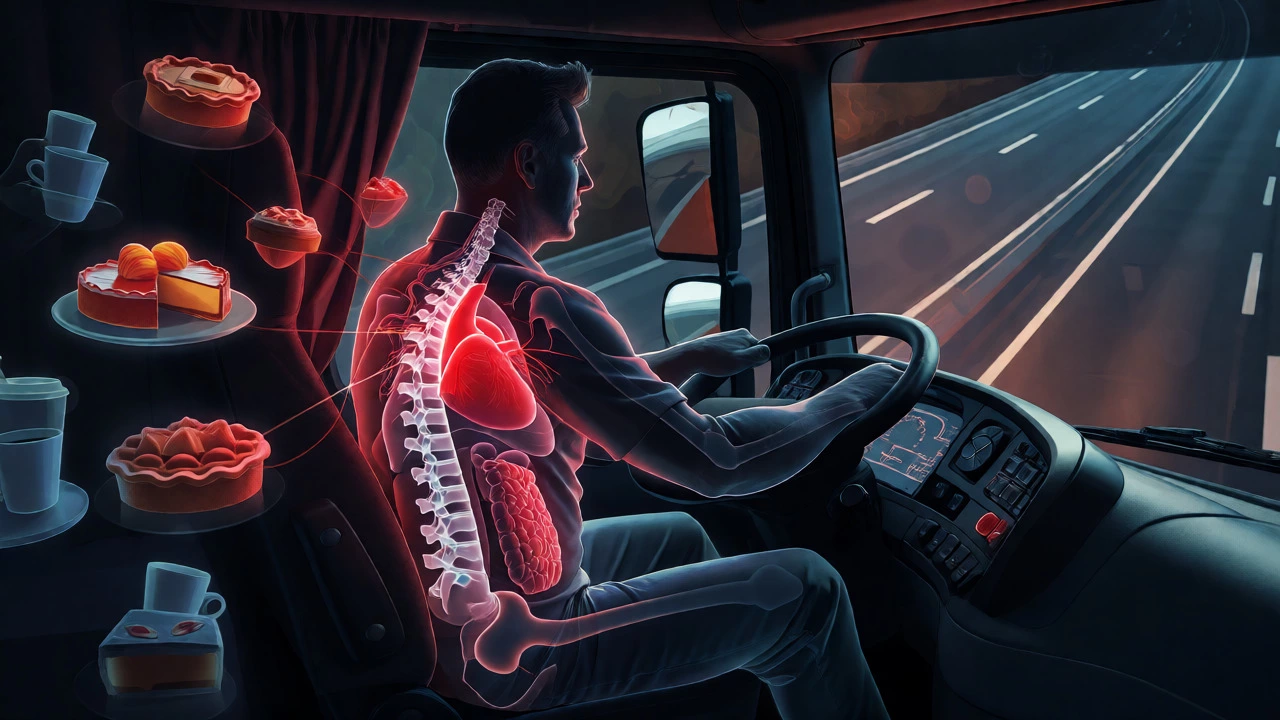
The Physical Toll of Vibration and Posture
Have you ever felt numbness in your hands after a long shift? That’s not just tiredness. That’s vibration white finger or early signs of nerve damage. Heavy goods vehicles produce constant low-frequency vibrations that travel up through the seat into your spine. Over years, this degrades the discs in your lower back, leading to herniated discs and chronic sciatica.
Add poor ergonomics to the mix. Most truck seats are adjustable, but do drivers actually adjust them correctly? Often, no. A seat that’s too far forward forces you to hunch. One that’s too reclined strains your neck. The result is a cascade of musculoskeletal issues that make retirement painful-or worse, end careers prematurely due to disability.
Mental Health and Isolation
We often ignore the brain when we talk about physical health, but stress is a killer. HGV drivers face unique psychological pressures. Tight deadlines, aggressive drivers, parking shortages, and long periods away from family create a perfect storm for anxiety and depression.
Isolation is real. Spending weeks on the road without meaningful social interaction can lead to loneliness, which has been linked to increased mortality rates comparable to smoking fifteen cigarettes a day. Sleep deprivation compounds this. Trying to sleep in a cab while someone parks next to you, or dealing with irregular sleep patterns due to night shifts, reduces cognitive function and emotional resilience.

How to Add Years to Your Driving Career
So, is the fate sealed? Absolutely not. The statistics are averages, not destinies. You can change the trajectory by making small, consistent changes. Here is what works:
- Move Every Two Hours: Use rest breaks aggressively. Get out of the cab. Walk around the truck. Do squats. Even five minutes of movement helps restart blood flow.
- Pack Your Lunch: Bring a cooler bag. Fill it with nuts, fruit, boiled eggs, and whole-grain sandwiches. Avoid the service station trap whenever possible.
- Hydrate Strategically: Drink water throughout the day, not all at once. Reduce caffeine after noon to improve sleep quality.
- Optimize Your Seat: Spend time adjusting lumbar support and height. Consider investing in a high-quality cushion designed for spinal alignment.
- Schedule Health Checks: Don’t wait for symptoms. Monitor your blood pressure, cholesterol, and blood sugar annually. Early detection saves lives.
What Does the Future Hold?
The industry is changing. Electric trucks are quieter and produce less vibration. Automated features reduce some physical strain. However, the core challenge remains: managing a sedentary lifestyle within a high-stress environment. As regulations tighten on driving hours and emissions, the focus may shift toward driver well-being as a productivity metric. Companies that invest in their drivers’ health will see fewer sick days and lower insurance premiums.
If you are entering HGV training now, you have an advantage. You can start habits early. You can choose employers who prioritize wellness programs. You can view health maintenance as part of your professional toolkit, just like checking your brakes or logging your tachograph.
Do all HGV drivers have shorter life expectancies?
No, it is an average statistic. Individual outcomes vary widely based on genetics, lifestyle choices, access to healthcare, and employer support. Drivers who actively manage their diet, exercise, and mental health can achieve normal or above-average life expectancy.
Is the danger mainly from road accidents?
While accidents are a visible risk, long-term health issues like heart disease, stroke, and diabetes cause more premature deaths among HGV drivers than collisions do. Occupational hazards related to sedentary behavior and stress are the bigger threats to longevity.
How does sleep affect HGV driver longevity?
Poor sleep increases the risk of obesity, hypertension, and impaired judgment. Chronic sleep deprivation is linked to higher mortality rates. Drivers who maintain regular sleep schedules and treat conditions like sleep apnea significantly improve their health outlook.
Can ergonomic seats prevent back problems?
Ergonomic seats help, but they are not a cure-all. Proper adjustment, regular breaks, and core-strengthening exercises are equally important. Vibration dampening technology in modern trucks also reduces spinal wear over time.
What is the best exercise for HGV drivers?
Low-impact activities that counteract sitting are best. Walking, stretching, resistance band exercises, and yoga can be done in limited spaces. Consistency matters more than intensity-short, frequent movements are more effective than one long workout per week.