
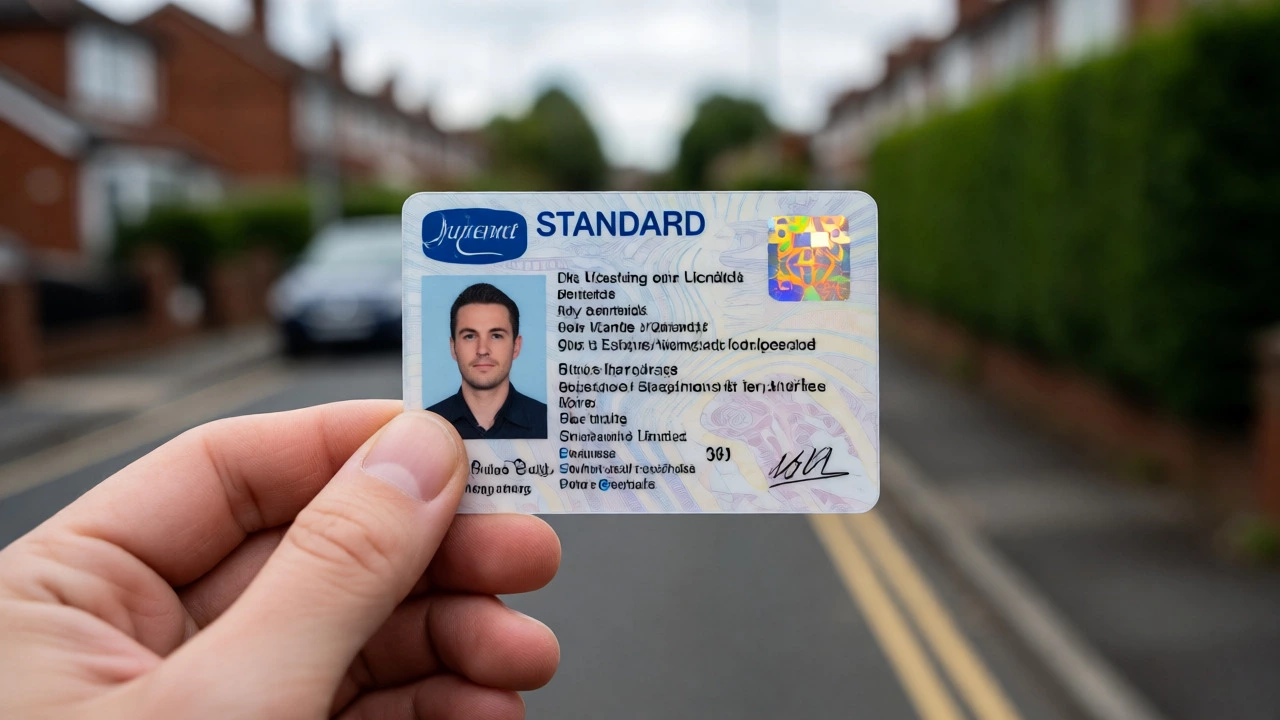
Enhanced Driver's Licence (EDL) Eligibility & Cost Checker
Use this tool to check if you are eligible for an Enhanced Driver's Licence (EDL) and whether it might be worth the extra cost compared to a standard photocard.
Answer these questions to see if the £20 premium is worth it for your lifestyle.
Your Assessment
PendingStandard Licence Cost
£14
Renewal fee (Online)
Enhanced Licence Cost
£34
Initial Application Fee
You’ve just passed your test, got your plastic card in the post, and you’re ready to hit the road. But then a friend mentions they need an Enhanced Driver’s Licence (EDL) for work, or maybe you’re planning a trip that involves more than just crossing into France. Suddenly, your standard photocard doesn’t seem enough. If you’re scratching your head wondering what this "enhanced" version actually is, you’re not alone. Most people go through their entire driving lives without ever needing one.
Here’s the deal: an Enhanced Driver’s Licence isn’t about being a better driver. It’s not a badge of honor for completing a Pass Plus course or having ten years of no-claims bonuses. It’s a specific legal document designed for two very particular groups of people: professional drivers who cross borders frequently, and travelers who want a simpler way to enter certain countries. For everyone else, it’s just extra paperwork and cost.
The Core Difference: Standard vs. Enhanced
To understand why the EDL exists, you have to look at what a standard UK driving licence actually proves. A regular photocard confirms three things: your identity, your address, and your competence to drive specific categories of vehicles. That’s it. It’s a domestic document issued by the Driver and Vehicle Licensing Agency (DVLA).
An Enhanced Driver’s Licence adds a fourth layer: citizenship. Because it includes proof that you are a British citizen, it serves as a valid travel document. This makes it function similarly to a passport for specific international journeys. The key distinction is legal status. You can hold a standard licence regardless of whether you’re a citizen, resident, or on a visa. An EDL is strictly reserved for those with full British citizenship, which is why many long-term residents find themselves ineligible even if they’ve lived here for decades.
Who Actually Needs One?
If you’re asking this question, you likely fall into one of two buckets. Let’s break them down so you don’t waste £34 applying for something you won’t use.
Professional Drivers
This is the biggest market for EDLs. If you drive a Heavy Goods Vehicle (HGV), a bus, or a coach across international borders, you probably need one. Why? Because under EU regulations (which still heavily influence current travel protocols), professional drivers often require a document that proves both their right to drive commercially and their right to cross borders quickly without queuing at passport control for every single delivery run. While many companies now accept passports, some logistics firms prefer EDLs because they reduce the risk of losing a passport during high-frequency travel. If your employer mandates it, get one. If they don’t mention it, ask before you spend the money.
Travelers to Specific Destinations
The second group is holidaymakers. There’s a common misconception that an EDL lets you skip the queue at any European airport. It doesn’t. It only works for travel within the Common Travel Area (CTA). This includes:
- The Republic of Ireland
- Northern Ireland
- The Isle of Man
- The Channel Islands (Jersey and Guernsey)
If you’re flying from London to Dublin, you can technically use an EDL instead of a passport. However, airlines often advise against it because staff training varies, and if there’s a delay or a reroute outside the CTA, you’re stuck without a passport. For most tourists, carrying a passport is safer and less stressful.
Eligibility: Are You Qualified?
This is where applications usually stall. You cannot upgrade your existing licence to an EDL if you aren’t a British citizen. Period. Even if you’re a naturalized citizen, you qualify. But if you hold Indefinite Leave to Remain (ILR) or settled status, you do not. Your nationality must be British, British Overseas Territories Citizen, British National (Overseas), British Overseas Citizen, British Subject, or British Protected Person.
Additionally, you must already hold a full UK driving licence. You can’t apply for an EDL as a provisional driver. If you’re currently doing your Pass Plus course or finishing your practical test, wait until you have your full photocard in hand. The application process replaces your old licence; you’ll surrender your current card and receive the enhanced version. Note that the photo on your new licence will be taken fresh during the application process if you apply online, or submitted via paper form if you choose that route.
How to Apply: The Step-by-Step Process
Applying for an EDL is straightforward, but it’s slower than renewing a standard licence. Here’s how it works.
- Choose your method: You can apply online via the GOV.UK website or fill out a D1 form (for car/motorcycle) or D2 form (for lorry/bus) at a Post Office.
- Gather documents: You’ll need your current driving licence, proof of identity (usually a birth certificate or naturalization certificate if your name has changed), and a passport-style photo if applying by post. Online applications use your existing digital photo data.
- Pay the fee: As of late 2026, the fee remains £34. This is higher than the standard renewal fee (£14 online) because of the additional security features and citizenship verification.
- Submit and wait: Processing times vary. Allow up to three weeks. During this time, you cannot drive if you applied by post and sent away your physical licence, unless you have a temporary paper certificate. Online applicants can usually continue driving while waiting for the new card.
Pro tip: Check your current licence expiration date first. If your standard licence expires in six months, it might make sense to renew normally and then apply for the EDL later, or vice versa, depending on your travel schedule. Don’t let your licence lapse while waiting for the enhanced version.
Cost and Validity: Is It Worth It?
Let’s talk numbers. A standard driving licence costs £14 to renew online. An EDL costs £34. That’s a £20 premium for the privilege of having citizenship embedded in your wallet. Is that worth it?
| Feature | Standard Photocard | Enhanced Driver’s Licence |
|---|---|---|
| Cost (Online) | £14 | £34 |
| Validity | 10 Years | 10 Years |
| Travel Use | Domestic only (plus some EU ID checks) | Common Travel Area (Ireland, NI, Isles) |
| Eligibility | All licensed drivers | British Citizens only |
| Processing Time | Up to 3 weeks | Up to 3 weeks |
For a casual driver who rarely leaves the country, spending £20 extra every decade is negligible, but the hassle of getting a new photo taken and dealing with potential postal delays might not be worth it. For HGV drivers making weekly trips to Calais or Dublin, saving time at border checks can justify the cost quickly. Remember, the EDL does not replace a passport for air travel to non-CTA countries like Spain, Italy, or the USA. You still need your passport for those.
Common Myths and Pitfalls
One major myth is that an EDL helps with insurance. Some drivers think that because it’s "enhanced," insurers view them as lower risk. They don’t. Insurance premiums are calculated based on age, vehicle type, claims history, and location-not the type of licence card you carry. Completing a Pass Plus course might get you a discount, but upgrading your licence won’t.
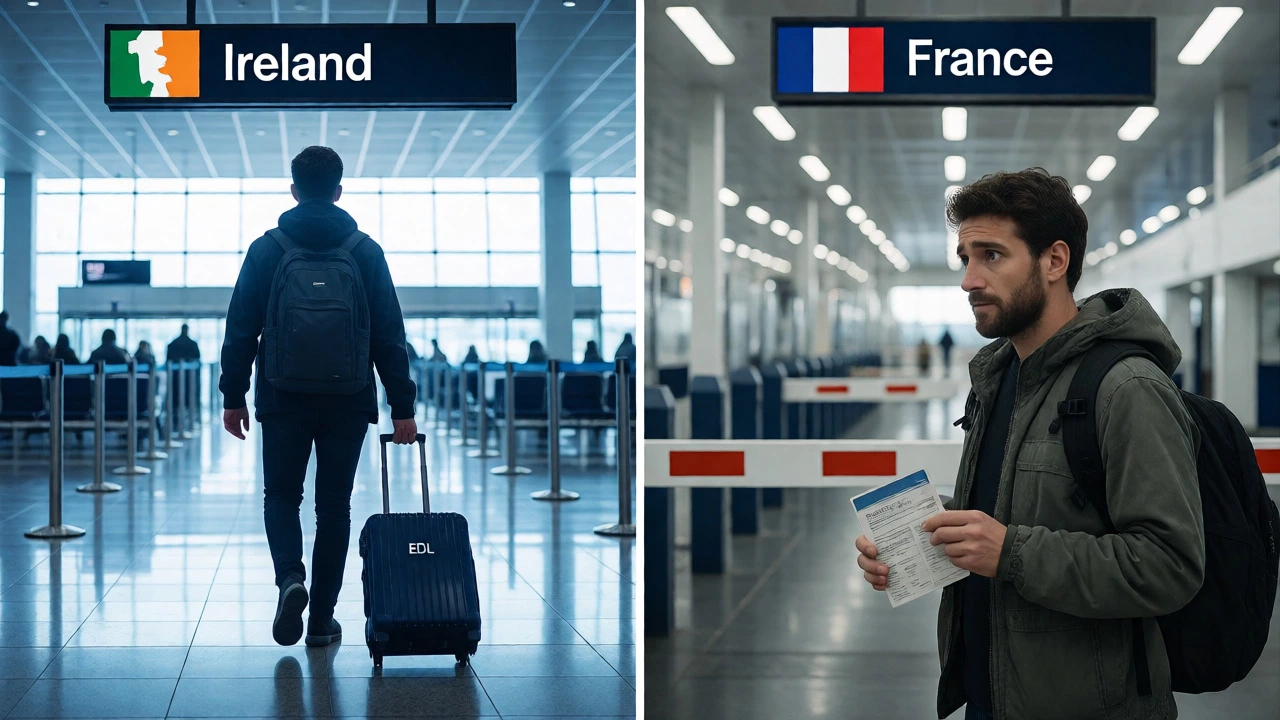
Another pitfall is assuming the EDL works everywhere in Europe. Post-Brexit rules have tightened. While the Common Travel Area arrangements remain robust, using an EDL for land crossings into France via ferry is risky. Ferries operate between the UK and mainland Europe (France, Belgium, Netherlands). These are not part of the CTA. You absolutely need a passport for these routes. Do not rely on anecdotal evidence from friends who "got away with it" once. Border agents have discretion, and they can turn you back if your documentation doesn’t meet the strict entry requirements for that specific port.
What Happens When You Move Abroad?
If you move to another country, your EDL doesn’t magically become a super-document. In fact, if you move to a country outside the UK, you may need to exchange your licence eventually. The "enhanced" status becomes irrelevant once you’re no longer resident in the UK. Keep it as a souvenir or a backup ID, but don’t expect foreign authorities to recognize its special citizenship status. They see a driving licence, period.
Also, consider your address. If you move house, you must update your licence details within 14 days. This applies to EDLs too. Failing to do so can result in a fine of up to £1,000. Since the EDL contains more personal data linked to citizenship records, keeping it accurate is crucial for administrative purposes.
Final Verdict: Should You Get One?
Ask yourself these three questions:
- Do I cross the Irish Sea or travel to Northern Ireland regularly without wanting to carry a passport?
- Does my employer require an EDL for commercial border crossings?
- Am I a British citizen who wants a convenient backup ID that doubles as a travel doc for short hops?
If you answered yes to any of these, go ahead and apply. It’s a low-risk investment for convenience. If you answered no to all three, stick with your standard photocard. Save the £20, avoid the admin, and keep your passport safely in a drawer until you actually need it. Driving should be fun, not bogged down by unnecessary bureaucracy.
Can I convert my existing driving licence to an Enhanced Driver’s Licence?
Yes, provided you are a British citizen and hold a full UK driving licence. You cannot convert a provisional licence. You must submit a new application (D1 or D2 form) or apply online, paying the full fee of £34. Your old licence will be cancelled when the new one is issued.
Is an Enhanced Driver’s Licence accepted as a passport substitute in all of Europe?
No. It is only accepted for travel within the Common Travel Area (Ireland, Northern Ireland, Isle of Man, Jersey, and Guernsey). For travel to France, Spain, Germany, or other Schengen/EU countries, you must carry a valid passport.
How long does it take to get an Enhanced Driver’s Licence?
The DVLA states that processing can take up to three weeks. However, during busy periods, it may take longer. It is advisable to apply well in advance of any planned travel dates to avoid being left without a valid driving document.
Do I lose my No Claims Bonus if I switch to an EDL?
No. Changing the physical format of your licence does not affect your insurance history or No Claims Bonus. Your driving record remains attached to your personal details and licence number, not the card itself.
Can non-British citizens apply for an Enhanced Driver’s Licence?
Generally, no. The EDL is specifically designed to prove British citizenship alongside driving entitlement. Residents with Indefinite Leave to Remain or Settled Status typically cannot apply for an EDL and must use their passport for international travel.