
Driving Lesson Cost & Strategy Calculator
Estimate your total expenses based on the article's insights about hidden costs, insurance premiums, and test failures.
| Strategy | Total Cost |
|---|
Note: This calculator estimates financial costs only. It does not account for time value or safety risks associated with bad habits formed during unstructured private practice, as highlighted in the article.
You’re staring at the steering wheel, wondering if you really need an instructor sitting next to you, charging by the hour, just to teach you how to turn left. It’s a common thought. Driving looks simple from the passenger seat. You see the road, you move your hands, the car goes where you want it to go. But here is the hard truth: learning to drive alone is possible, but it comes with significant legal and safety hurdles that vary wildly depending on where you live.
In New Zealand, where I’m writing this from Wellington, the rules are strict. You cannot legally drive on public roads without a qualified supervisor or an approved driving school vehicle. In other places, like parts of the US or UK under specific conditions, you might have more freedom. This article breaks down exactly what "learning alone" means, why most people fail when they try it, and how you can actually make independent practice work for you-without getting fined or crashing.
The Legal Reality: Who Can Actually Sit in the Passenger Seat?
Before you even touch the ignition, you need to know who counts as a supervisor. If you think your mate Dave is qualified because he has had his license for ten years, you might be wrong. The law usually cares about two things: age and experience.
In many jurisdictions, including New Zealand, a supervisor must hold a full license for a minimum period (often two years) and meet certain behavioral standards (no recent disqualifications). They aren't just there to watch; they are legally responsible for your actions. If you hit a parked car, their insurance might not cover it if they weren't properly supervising.
| Jurisdiction | Min. Supervisor Experience | Insurance Requirement | Learner Plate Display |
|---|---|---|---|
| New Zealand | 2+ Years Full License | Comprehensive Cover Recommended | Mandatory (L Plates) |
| United Kingdom | 3+ Years Full License | Must Cover Learner Driver | Mandatory (L Plates) |
| USA (Varies by State) | Usually 1-4 Years | Owner's Policy Must Allow Learners | State Dependent |
Notice that "alone" rarely means "solo." It means "without a paid professional." You still need a human chaperone. True solo driving-where no one else is in the car-is usually illegal until you pass your test. So, when we talk about learning alone, we mean practicing privately with friends or family instead of paying for lessons.
Why Most People Fail at Private Practice
I’ve seen plenty of learners try this route. They save money upfront, only to fail their test three times later. Why does this happen? It’s not because they lack talent. It’s because bad habits stick faster than good ones.
When you learn from a friend, they often don’t know what to correct. They might say, "You're going too fast," but not explain *why* or *how* to fix it. You end up memorizing the sensation of being wrong. Your muscle memory builds around inefficient techniques. By the time you get to a professional assessment, unlearning those habits takes longer than learning them correctly from scratch would have.
Another major issue is hazard perception. An experienced driver spots danger before it becomes critical. A novice sees the event after it happens. Without an instructor pointing out subtle cues-a pedestrian looking at their phone, a car drifting slightly in its lane-you develop a reactive style rather than a proactive one. Reactive driving is dangerous at high speeds.
How to Structure Effective Solo Sessions
If you are determined to cut costs and rely on private practice, you need a plan. Random driving won’t work. You need structure. Treat every session like a lesson with a clear objective.
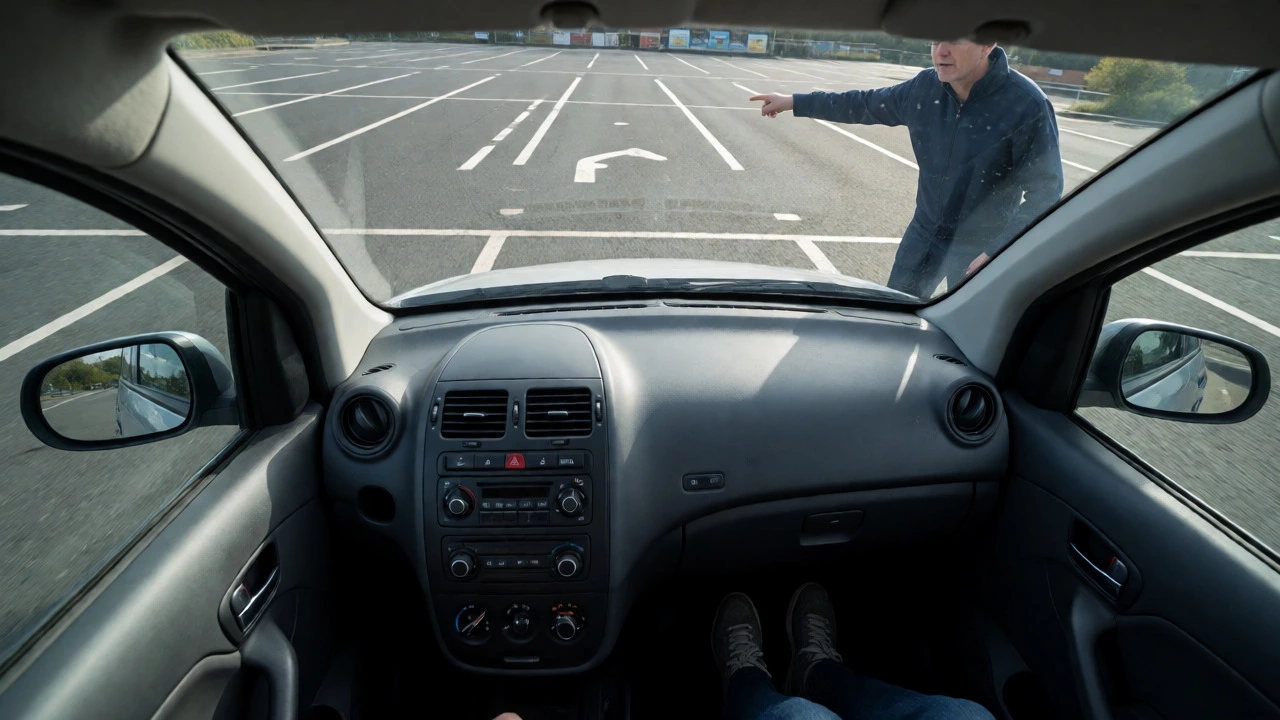
- Start in low-risk zones: Empty supermarket car parks are great for mastering clutch control and parking maneuvers without traffic stress. Do not start on busy main roads.
- Focus on one skill per session: Don’t try to learn roundabouts, hill starts, and motorway merging all in one afternoon. Pick one. Maybe today is just about mirror checks and blind spot awareness.
- Use video feedback: Have your supervisor record short clips of your driving. Watch them back together. You will see mistakes you didn’t feel, like drifting across the center line or checking mirrors too late.
- Review the theory first: Before you drive, read the section of the highway code relevant to your planned route. Knowing the rule makes spotting the violation easier.
This approach turns passive riding into active learning. It forces your brain to engage with the mechanics of driving rather than just reacting to stimuli.
The Hidden Costs of Skipping Professional Lessons
Saving $50 on a lesson feels good in the moment. But consider the long-term math. If you fail your practical test because you didn’t learn proper observation routines, you pay for a re-test fee. Plus, you lose weeks of progress. Many insurance companies also charge higher premiums for drivers who have fewer recorded hours of supervised training, viewing them as higher risk.
There is also the wear and tear factor. Learning to drive puts immense strain on a vehicle. Riding the clutch, grinding gears, and harsh braking cost money in repairs. Professional instructors use dual-control cars designed for this abuse. Your family sedan might not be so forgiving. A broken clutch from poor technique can cost more than ten lessons.
Hybrid Approach: The Best of Both Worlds
Here is the strategy that works best for most people I advise. Don’t choose between "all professional" and "all private." Mix them.
Take 5-10 hours of professional instruction initially. Use this time to build the foundation: correct seating position, mirror adjustment, basic gear changes, and understanding priority rules. Get the basics right from someone who knows what "right" looks like.
Then, switch to private practice for repetition. Once you know how to change gears smoothly, you don’t need an instructor watching you do it 50 times. You need miles. That’s where private sessions shine. They provide volume. You can practice night driving, rain conditions, or complex intersections repeatedly without breaking the bank.
Finally, book 2-3 intensive pre-test lessons. These should focus entirely on test routes, examiner expectations, and refining any lingering errors. This hybrid model balances cost efficiency with quality assurance.
Tips for Your Supervisor
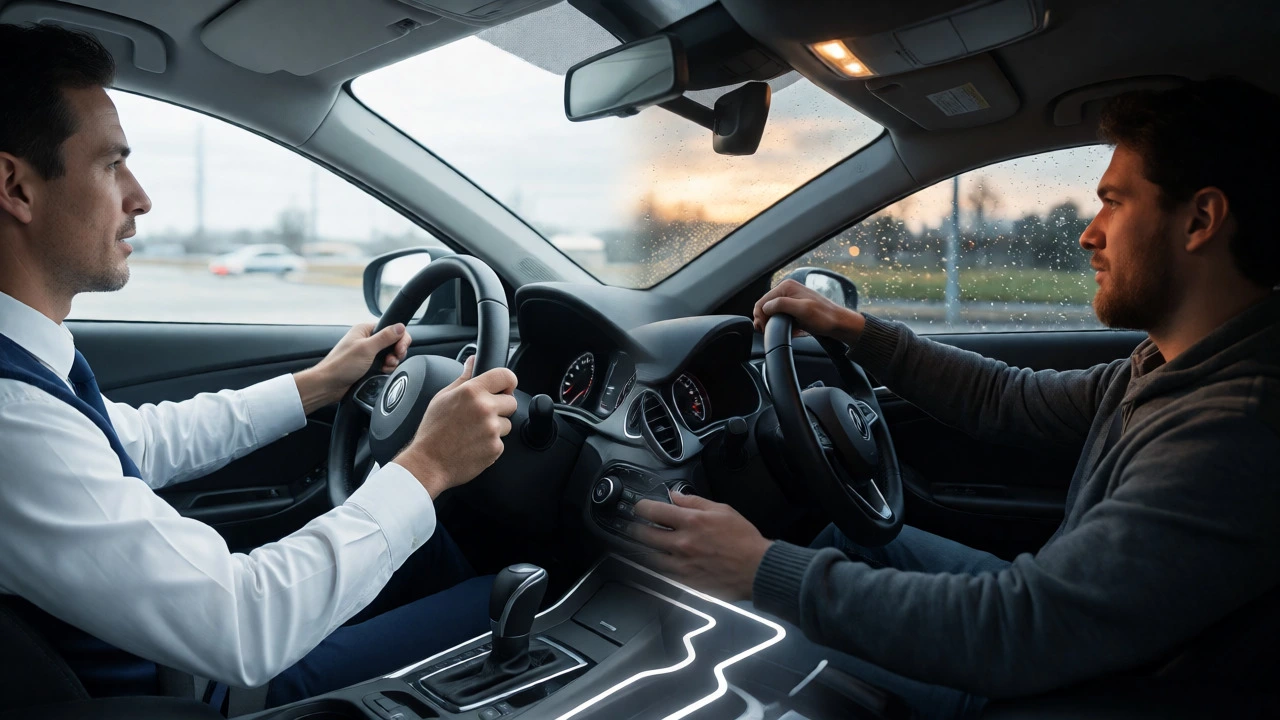
Your supervisor needs guidance too. Most passengers are nervous. They grip the handle, shout "Look out!" unnecessarily, or freeze up. Brief them beforehand.
Ask them to stay calm. Their anxiety transfers to you. Tell them to point out hazards quietly using a neutral tone. Instead of screaming, they should say, "Pedestrian ahead, check your speed." Encourage them to ask questions rather than giving commands. "What do you think is happening over there?" engages your brain better than "Brake now!"
Also, ensure they understand the limits. If you are struggling, stop. Pushing through panic leads to accidents. There is no prize for driving while terrified.
Final Verdict: Is It Worth It?
Yes, but only if you treat it seriously. Learning to drive alone-or rather, privately-is viable if you have a disciplined approach, a knowledgeable supervisor, and realistic expectations about the risks. It requires more self-reflection and planning than taking structured lessons.
If you skip the professional foundation entirely, you are gambling with your safety and your wallet. If you use private practice to reinforce skills taught by a pro, you accelerate your learning curve significantly. The key is honesty: admit when you don’t know something, and seek help before bad habits set in.
Can I learn to drive completely alone without anyone in the car?
In most countries, including New Zealand and the UK, you cannot legally drive on public roads with a learner permit unless a qualified supervisor is present in the front passenger seat. Driving completely alone typically applies only to private land (like a farm or large private estate) where traffic laws may not apply, but this does not count toward your official driving hours.
Do private practice hours count towards my driving logbook?
It depends on your local licensing authority. In some regions, private hours must be logged but do not replace mandatory professional lessons. In others, they count fully toward the total required supervised hours. Always check with your local transport agency to ensure your practice time is recognized for your test eligibility.
What happens if my supervisor doesn't have the right insurance?
If you have an accident and the car owner's insurance policy does not cover learner drivers, you could be personally liable for damages. This can amount to thousands of dollars. Always verify that the vehicle's comprehensive insurance explicitly covers named or unnamed learner drivers before starting private practice.
Is it cheaper to learn with a friend than a driving school?
Initially, yes. Private practice avoids hourly fees. However, hidden costs include potential vehicle wear, increased insurance premiums due to lack of certified training history, and the possibility of failing tests multiple times due to ingrained bad habits. For many, the hybrid approach ends up being the most cost-effective balance.
How many private lessons do I need before I'm ready for my test?
There is no fixed number. The average learner needs between 40-60 hours of total practice. If you take 10 hours of professional lessons, you might need 30-50 hours of private practice. Readiness is determined by consistent performance, not just hours logged. An instructor can assess if you are test-ready.