
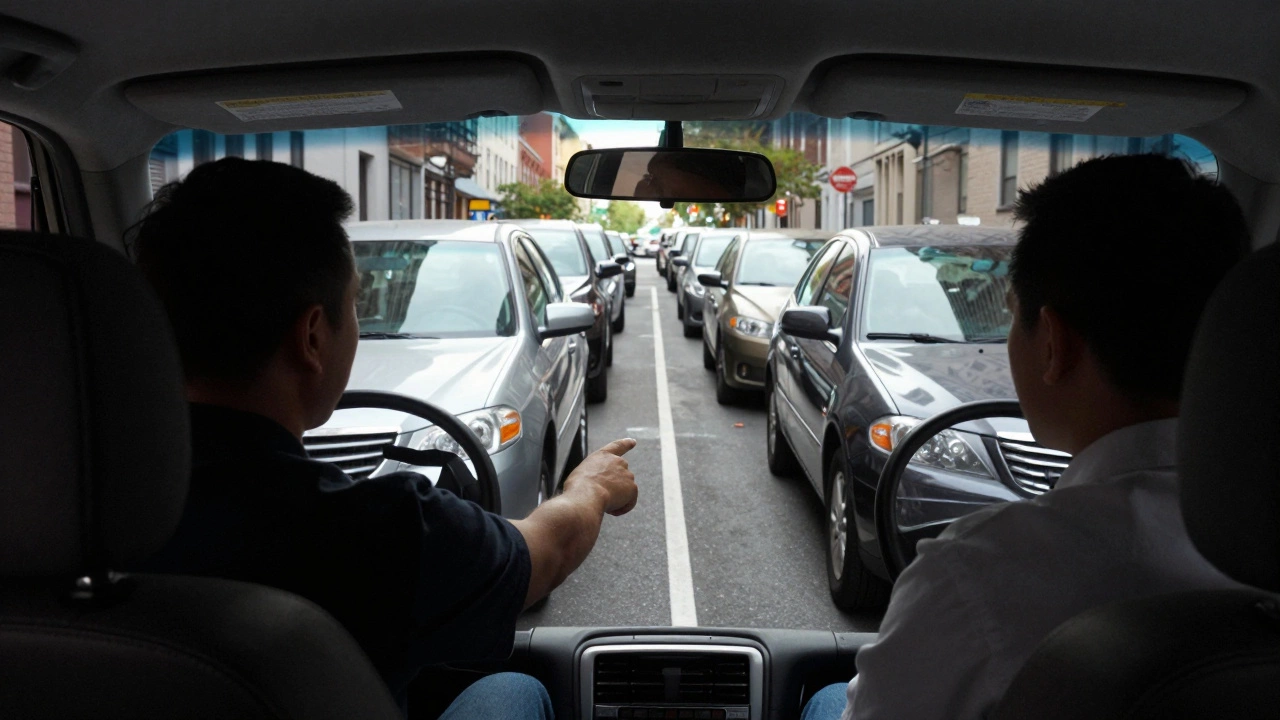
You pull up to the curb in your test car. The examiner points to a spot between two parked vehicles. Your heart skips a beat. You reverse, turn the wheel, maybe hit the cone, or perhaps you just take too long. Panic sets in. Did you just blow your NY driving test? It is a terrifying thought for anyone sitting behind the wheel in New York City or its suburbs. But here is the good news: failing one specific maneuver does not automatically mean you fail the entire exam.
The New York State Department of Motor Vehicles (DMV) uses a standardized scoring system that separates minor mistakes from major safety violations. Understanding this distinction is the difference between walking away with your license and having to wait weeks for another appointment. Let’s break down exactly how the scoring works, what counts as an automatic fail, and why parallel parking is usually less dangerous than you think.
How the NY Road Test Scoring System Works
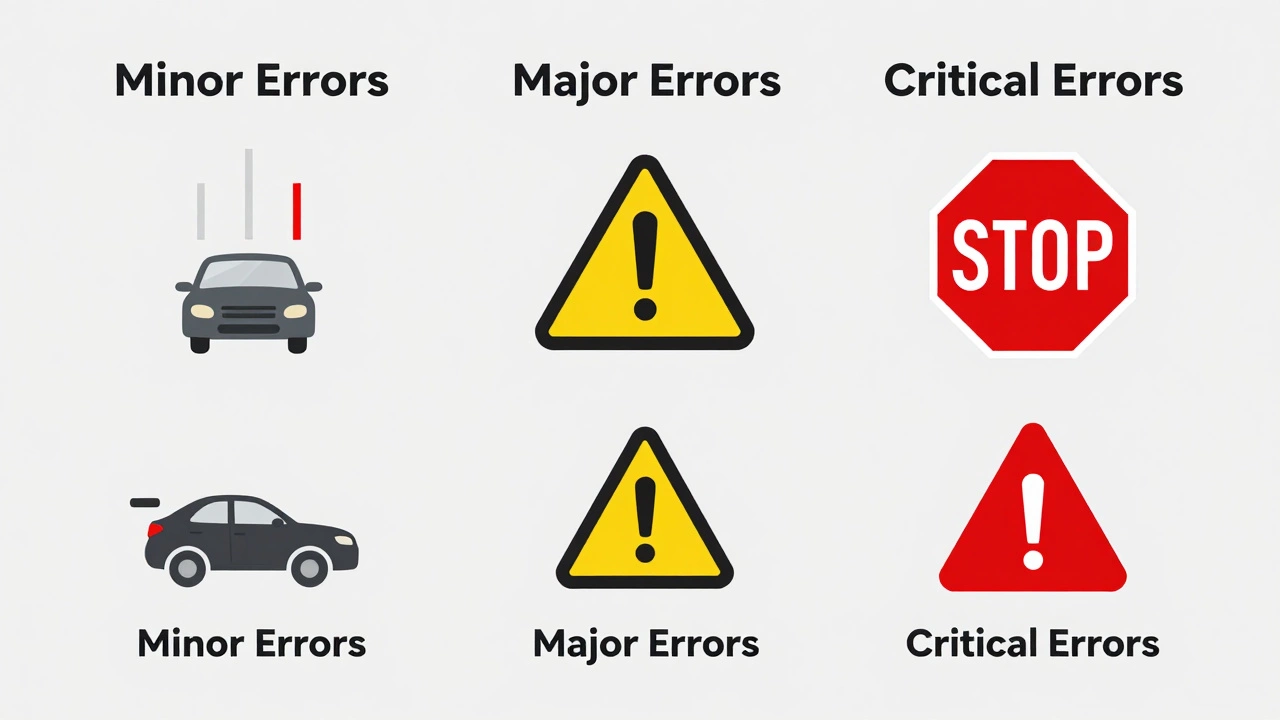
To understand if you can pass after a bad parallel park, you first need to know how the DMV grades you. The test is not a simple pass/fail on every single action. Instead, it is a point-based system. Examiners carry a score sheet where they mark errors. These errors are categorized into three main groups: Minor Errors, Major Errors, and Critical Errors.
Minor Errors are small mistakes that do not pose an immediate danger. Examples include rolling stops instead of complete stops, checking mirrors a second late, or slightly drifting over a lane line. You can accumulate several minor errors and still pass, provided they do not add up to a total failure threshold. Usually, three or more minor errors in the same category might trigger a discussion, but rarely an instant fail.
Major Errors are significant lapses in judgment or control. This could be running a stop sign without stopping, failing to yield to pedestrians, or stalling the car repeatedly. A single major error often leads to failure, depending on the examiner's discretion and the severity of the mistake.
Critical Errors, also known as "automatic fails," are actions that endanger life or property. Hitting a pedestrian, running a red light, or causing a collision results in an immediate end to the test. There is no debate here. If you commit a critical error, you fail.
Is Parallel Parking a Critical Error?
This is the core question. In most cases, messing up your parallel parking is classified as a minor or major error, not a critical one. Unless you actually hit another car, a pole, or a person during the maneuver, you have likely survived the worst-case scenario.
If you scrape the curb lightly, miss the space entirely, or take more than three attempts to get straight, the examiner will mark it down. They might give you a warning. They might deduct points. But they will usually let you continue with the rest of the drive. The logic is simple: parallel parking is a skill, but it is not a life-or-death safety issue like braking for a child crossing the street.
However, there are exceptions. If you spend an excessive amount of time trying to park-say, more than five minutes-the examiner may call off the test due to impatience or inability to perform basic tasks efficiently. Also, if you ignore the examiner's instructions completely (for example, they tell you to stop, and you keep reversing), that becomes a major safety violation regarding compliance, which can lead to failure.
When Does a Parking Mistake Become a Fail?
While hitting a cone is usually fine, certain behaviors around parking can sink your chances. Here is when your parallel parking attempt crosses the line from "oops" to "failed":
- Hitting Property: If you strike another vehicle, a mailbox, or a fire hydrant, that is property damage. This is often treated as a critical error because it shows a lack of spatial awareness that could hurt someone.
- Blocking Traffic: If you stall in the middle of the road while trying to position yourself, or if you block the flow of traffic for an extended period, the examiner may view this as a hazard to other drivers.
- Ignoring Instructions: The examiner might say, "Just move forward and try again." If you argue or refuse, you fail for insubordination, not for bad parking.
- Multiple Major Errors: If you already had a rolling stop earlier in the test, and then you mess up the parking significantly, the combination of errors might push you over the limit. Examiners look at the "total picture" of your driving ability.
The Examiner's Perspective: What Are They Really Looking For?
Examiners in New York see hundreds of nervous students. They know that people shake. They know that clutch control is hard. When you are parallel parking, they are watching three things:
- Safety Checks: Did you check your mirrors? Did you look over your shoulder? Did you signal? If you did all these things correctly but still missed the spot, you have demonstrated safe habits. That is worth more than perfect alignment.
- Control: Could you control the speed of the car? Did you jerk the steering wheel wildly? Smoothness matters, but safety matters more.
- Recovery: How did you react when you realized you were going to miss the spot? Did you panic and slam the brakes? Or did you calmly pull out, assess the situation, and try again? Showing calm recovery is a huge plus.
If you treat the parking spot like a puzzle rather than a test of perfection, you will do better. The examiner wants to know if you can live safely in traffic, not if you can park like a valet in Monaco.
Comparison: Minor vs. Major vs. Critical Errors
| Error Type | Examples | Impact on Test |
|---|---|---|
| Minor | Rolling stop, slight drift, late mirror check | Deducts points; multiple may cause failure |
| Major | Running stop sign, stalling, poor parallel park (no contact) | Often results in failure if combined with other errors |
| Critical | Hitting a car/person, running red light, DUI suspicion | Automatic immediate failure |
Tips to Save Your Test After a Bad Park
If you feel you messed up the parallel parking, do not give up. The test is not over until the examiner says so. Here is how to salvage your grade:
1. Stay Calm and Reset. Take a deep breath. Do not apologize profusely or make excuses. Just say, "I'll try again," and focus. Nervous energy is contagious; if you panic, the examiner gets tense, and they might scrutinize your next moves harder.
2. Excel in the Remaining Sections. The rest of the test includes highway merging, turns, and intersections. Drive these sections flawlessly. Show them you are a safe driver in moving traffic. Good performance later can offset a mediocre parking job.
3. Ask for Clarification. If you are unsure about the spacing, ask, "Should I be closer to the curb?" It shows you are thinking about precision, even if your execution was off.
4. Don't Rush the Next Maneuver. After parking, you might be asked to pull out into traffic. Take your time to check blind spots thoroughly. A perfect exit from a bad park demonstrates that you prioritize safety above all else.
Why Intensive Courses Help With Parking Anxiety
Many students who struggle with parallel parking benefit from an Intensive Driving Course. Unlike weekly lessons, these courses compress learning into a few days or weeks. This repetition builds muscle memory faster. By the time you take your test, you have practiced parking dozens of times in different conditions, making the actual test feel routine rather than novel.
Instructors in intensive courses also simulate test conditions. They teach you how to handle pressure. If you know that missing the spot by six inches is acceptable, you won't stress over millimeters. This mental shift is crucial for passing in high-pressure environments like New York.
Common Myths About NY Driving Tests
Myth: One mistake means you fail. Fact: You can make several minor mistakes and still pass. Only critical errors guarantee failure.
Myth: You must park perfectly within two tries. Fact: There is no strict rule on the number of attempts, as long as you don't waste excessive time or endanger others. Three or four careful tries are usually fine.
Myth: Examiners are out to get you. Fact: Most examiners want you to pass. Their job is to ensure public safety. If you are safe, they are happy. They are not judging your style; they are judging your risk management.
What To Do If You Actually Fail
If the examiner tells you that you failed, accept it gracefully. Ask for feedback. "Was it the parking, or something else?" Knowing why you failed helps you improve. In New York, you can rebook your test relatively quickly compared to some other states. Use that time to practice specifically on your weak points. Hire an instructor for a refresher lesson focused solely on parking and low-speed control. Return to the test with confidence, knowing that a bad park is a recoverable error, not a career-ender.
Does hitting the curb fail you in NY?
Generally, no. Lightly scraping the curb is considered a minor error. However, if you hit it hard enough to damage the car or the curb, or if you lose control of the vehicle, it could be marked as a major or critical error. Context matters.
How many mistakes can you make on the NY driving test?
There is no fixed number. You can make several minor mistakes. However, accumulating too many minor errors in one category (like observation) or committing any major/critical error will result in failure. It depends on the severity and frequency.
Can you pass if you stall the car during parallel parking?
Yes, unless you stall repeatedly or roll backward into traffic. Stalling once is a minor error. Restarting the car calmly and continuing shows you can handle mechanical issues safely.
What is the most common reason for failing the NY road test?
The most common reasons are rolling stops at stop signs, failing to check blind spots, and improper lane positioning. Parallel parking is less frequently the sole cause of failure compared to intersection safety errors.
Do NY examiners care about perfect parking alignment?
No. They care about safety and efficiency. As long as your car is within the space, not blocking traffic, and close enough to the curb (usually within 18 inches), you are fine. Perfect centering is not required.