
UK HGV Lane & Speed Checker
Check if an HGV driver is complying with the Highway Code regarding lane usage and speed limits.
Compliance Verdict
Max Legal Speed
-- mph
Lane Eligibility
--
Highway Code Guidance
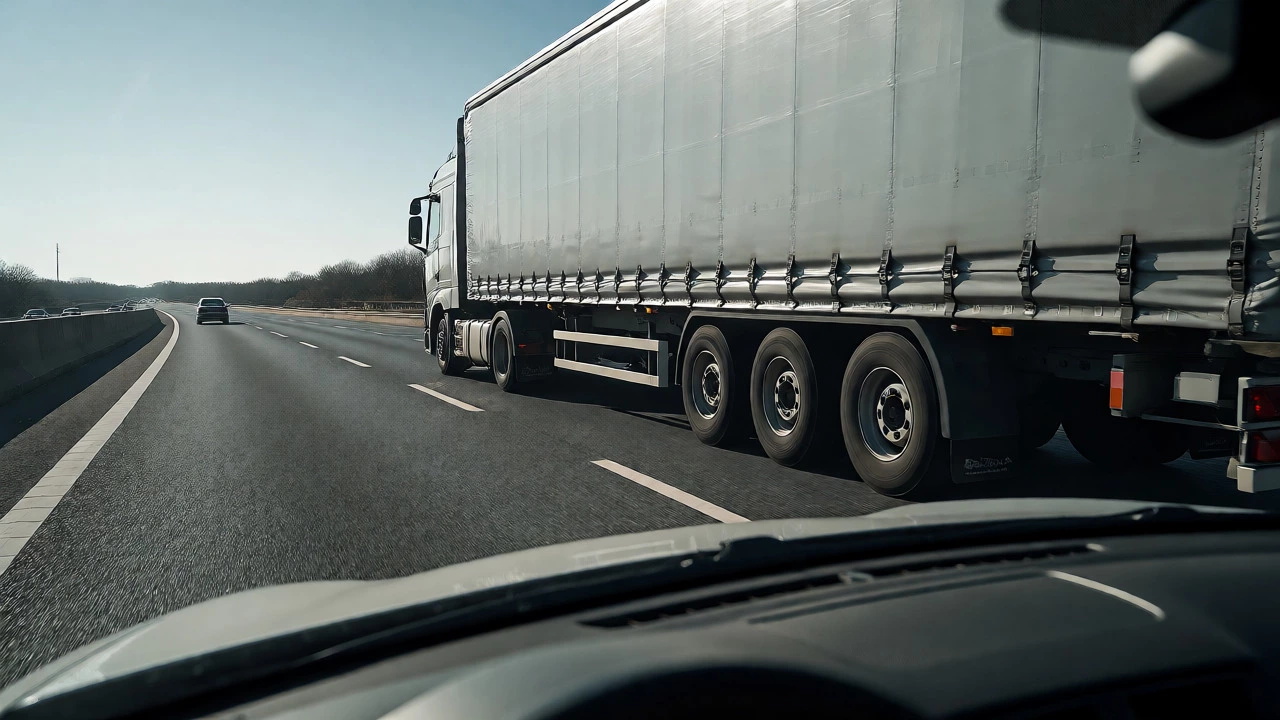
You’re cruising down the M1 in a car doing 70 mph, and suddenly a massive HGV is stuck in the middle of the road, blocking your view. You want to pass it, but you hesitate. Is it legal for them to be there? Can they use the outside lane? The answer isn’t just about etiquette; it’s a matter of strict UK traffic law designed to keep everyone alive.
If you are training to drive Heavy Goods Vehicles (HGVs) or simply want to understand why those big trucks seem to crawl across every lane, you need to know the specific rules governing lorry lane usage. It’s not as simple as "stay left." There are exceptions, speed limits that change based on vehicle weight, and specific scenarios where being in the fast lane is actually required by law.
The Golden Rule: Keep Left Unless Overtaking
For most drivers, the rule is intuitive: stay in the left-hand lane unless you are passing someone. For Heavy Goods Vehicles, this is codified in the Highway Code, specifically Rule 243. This rule states that vehicles over 7.5 tonnes maximum laden weight must not travel in the right-hand lane of a three-lane motorway unless all lanes are moving at similar speeds or they are overtaking.
Why does this exist? Think about the physics. An HGV can weigh up to 44 tonnes when fully loaded. Stopping distances are significantly longer than a passenger car. If a truck is weaving between lanes or sitting in the outside lane at 50 mph while cars fly past at 70 mph, it creates a dangerous speed differential. The goal is to maintain a smooth flow of traffic and reduce the risk of rear-end collisions.
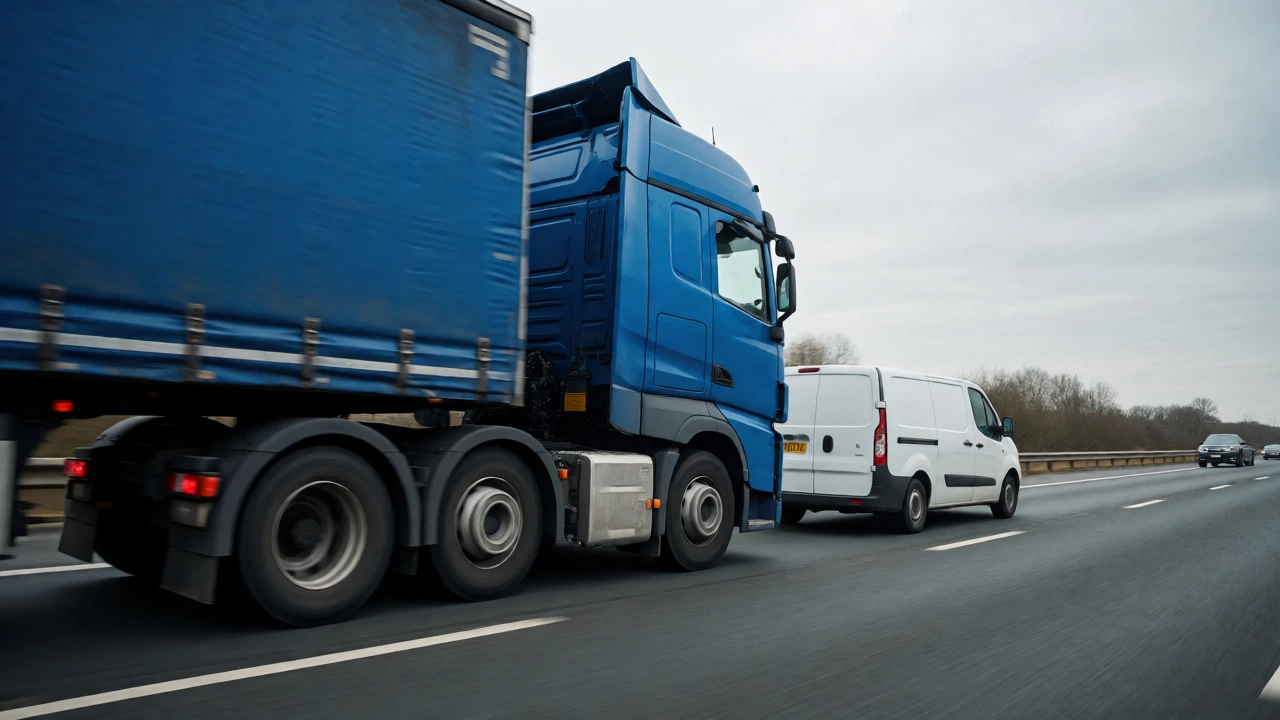
However, "unless overtaking" is the key phrase here. If an HGV driver needs to pass a slower vehicle-perhaps a van doing 45 mph-they are legally permitted to move into the middle or even the outer lane to complete the maneuver. Once they have passed the slower vehicle, they should return to the leftmost available lane. Failing to do so can result in a Fixed Penalty Notice and points on their licence.
Speed Limits Define Your Lane Rights
One of the biggest sources of confusion comes from speed limits. In the UK, the national speed limit for cars on motorways is 70 mph. But for HGVs, the rules are different based on their weight class. Understanding these limits helps explain why you see trucks in certain lanes.
| Vehicle Type | Weight Class | Motorway Speed Limit | Fast Lane Eligibility |
|---|---|---|---|
| Cars & Motorcycles | < 3.5t | 70 mph | Yes |
| Vans / Light Trucks | 3.5t - 7.5t | 60 mph | Restricted |
| Large HGVs | > 7.5t | 60 mph | Overtaking Only |
| Articulated Lorries | > 7.5t | 60 mph | Overtaking Only |
Notice the drop from 70 mph to 60 mph for anything over 3.5 tonnes. Because large trucks are capped at 60 mph, they are inherently slower than the flow of traffic on a busy motorway. This speed difference is why the Highway Code restricts their access to the right-hand lanes. If an articulated lorry sits in the fast lane doing 60 mph, it forces faster traffic to brake or weave dangerously around it. Therefore, staying out of the fast lane is not just a suggestion; it’s a safety necessity enforced by speed disparities.
When Are Lorries Actually Required to Use the Fast Lane?
It might sound contradictory, but there are times when an HGV driver must use the right-hand lanes. Ignoring these scenarios can lead to fines for the driver, even if other motorists get annoyed.
- All Lanes Moving: On congested motorways, if all three lanes are moving at roughly the same speed (for example, during rush hour), the restriction lifts. Drivers can choose any lane. This prevents bottlenecks where only one lane is moving while others sit idle.
- Overtaking Multiple Vehicles: If an HGV needs to pass a queue of slow-moving vans, they may need to stay in the middle or outer lane for a prolonged period. They cannot aggressively cut back in immediately after passing one car if it means cutting off another.
- Merging Traffic: When joining a motorway, an HGV often enters the second lane rather than the first because merging directly into the left lane can be difficult due to blind spots and the length of the trailer. They will move left once safe to do so.
A common misconception is that trucks are banned from the fast lane entirely. They aren’t. They are banned from using it unnecessarily. If you see a truck in lane three, check the context. Are they passing? Is traffic slow? If the left two lanes are empty and the truck is cruising at 60 mph in lane three, that driver is likely breaking the rules.
The Danger of "Lane Hogging" by HGVs
Car drivers often complain about "lane hogging," but with HGVs, it carries higher stakes. A phenomenon known as "undue delay" occurs when a large vehicle occupies the middle or right lane without actively overtaking. This forces smaller, faster vehicles to undertake (pass on the left), which increases the risk of collision because undertakers are often in the HGV’s blind spot.
From an HGV training perspective, instructors drill students on spatial awareness. An articulated lorry is 16.5 meters long. Turning requires wide arcs. Changing lanes takes time and momentum. If a trainee driver stays in the fast lane too long, they disrupt the ecosystem of the motorway. Experienced drivers anticipate this by checking mirrors early and signaling well before moving, ensuring they don't surprise following traffic.
Furthermore, modern HGVs are equipped with advanced driver-assistance systems (ADAS). However, technology doesn't replace judgment. A driver relying solely on sensors might miss the nuance of when to merge back left. Human oversight remains critical. If you are studying for your Driver Certificate of Professional Competence (CPC), remember that examiners look for evidence that you are respecting lane discipline not just because it's a rule, but because it protects vulnerable road users.
Smart Motorways and Dynamic Signs
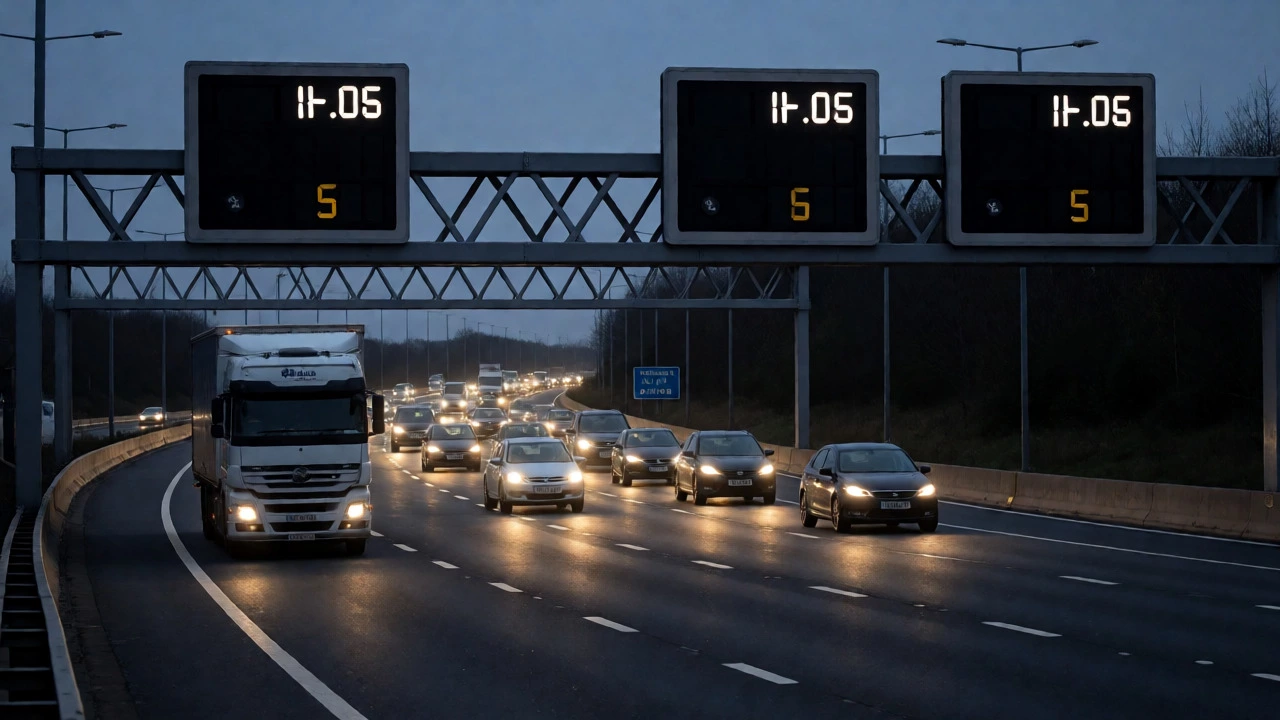
Things get trickier on Smart Motorways. These roads use overhead electronic signs to change speed limits and open up hard shoulders for traffic. During peak times, the hard shoulder becomes a live lane. Does this change the rules for lorries?
Generally, no. The core principle remains: HGVs should avoid the right-hand lane unless necessary. However, dynamic signage can alter expectations. If a red 'X' appears over a lane, it is closed. If variable speed limits drop to 50 mph, the speed differential between cars and trucks shrinks. In these conditions, the pressure to stay left might feel less urgent, but the legal requirement stands unless the sign explicitly directs otherwise or traffic density makes lane choice irrelevant.
Drivers must also be aware that Smart Motorways lack a traditional hard shoulder for breakdowns. If an HGV breaks down in the fast lane, it blocks the entire carriageway. This is why proactive maintenance and pre-journey checks are vital parts of HGV operations. A flat tire in lane one is an inconvenience; a flat tire in lane three is a major incident.
What Happens If You Break the Rules?
Police and enforcement agencies take lane discipline seriously. If an HGV driver is caught using the right-hand lane unnecessarily, they face penalties. Typically, this involves a £100 fine and three penalty points on their licence. For professional drivers, accumulating points can jeopardize their employment or insurance rates.
Beyond fines, there is the reputational cost. Logistics companies monitor fuel efficiency and driving behavior through telematics. Aggressive lane changing or unnecessary high-speed running burns more diesel. Companies like DHL or Tesco invest heavily in training because efficient driving saves money and reduces emissions. So, following lane rules isn't just about avoiding tickets; it's about operational efficiency.
If you are a car driver frustrated by a truck in the fast lane, patience is your best tool. Undertaking is risky. Wait for the truck to clear the slower traffic ahead. Often, they are dealing with a mechanical issue or a particularly slow van cluster that you can't see from behind the cab.
Practical Tips for HGV Drivers
If you are currently undergoing HGV training, here are some actionable strategies to master lane discipline:
- Scan Ahead: Don't just look at the car next to you. Look five or six vehicles ahead. If you see a line of slow traffic forming, start planning your exit from the fast lane early.
- Use Mirrors Constantly: Before moving left, ensure the gap is safe. Remember, cars approach faster than you think. Check your blind spot manually if necessary.
- Avoid "Boxing": Try not to linger alongside other large vehicles. Being parallel to another truck creates a wall of steel that hides hazards from both you and cars behind you.
- Respect Junctions: Approaching a slip road? Move left early. Trying to squeeze from lane three to lane one at the last minute causes chaos for exiting traffic.
These habits separate novice drivers from professionals. It’s not just about steering; it’s about predicting the flow of traffic and positioning your vehicle to minimize disruption.
Can an HGV use the middle lane permanently?
No, not permanently. While HGVs can use the middle lane to overtake slower vehicles in the left lane, they must return to the left lane once the overtaking maneuver is complete. Staying in the middle lane without a valid reason (like active overtaking or dense traffic where all lanes move at similar speeds) is considered a breach of the Highway Code.
What is the speed limit for a 7.5-tonne truck on the motorway?
The national speed limit for any goods vehicle over 3.5 tonnes maximum laden weight is 60 mph on motorways. This applies whether it is a rigid truck or an articulated lorry. Cars and motorcycles have a higher limit of 70 mph.
Is it illegal for a lorry to overtake on the right?
No, it is not illegal. Overtaking on the right (moving from the left lane to the middle or right lane) is standard procedure. What is illegal is staying in the right-hand lane after completing the overtake when the left lane is free and traffic is flowing normally.
Do Smart Motorway rules change for HGVs?
The fundamental lane discipline rules remain the same. However, because Smart Motorways can have variable speed limits and opened hard shoulders, drivers must pay close attention to overhead signs. If all lanes are active and moving slowly, the restriction on using the right-hand lane is relaxed.
Why do trucks sometimes block the fast lane for miles?
This usually happens when there is a continuous line of slower traffic in the left and middle lanes. If an HGV constantly moves back and forth, it wastes fuel and time. Sometimes, they are waiting for a break in traffic to safely merge left. Other times, it may be poor driving practice, which can be reported to the police.