

G Test Mistake Checker
How to use this tool
Select the mistakes you made during practice. This tool calculates whether your pattern would pass or fail the Ontario G test based on the official scoring criteria.
If you're preparing for your G test in Ontario, you're probably wondering: how many mistakes are allowed? The answer isn't as simple as a number you can memorize. Ontario doesn't publish a fixed limit like "you can make 5 mistakes and still pass." Instead, the test is scored based on the severity and type of errors you make. Your goal isn’t to avoid every single slip-up-it’s to avoid the kinds of mistakes that put yourself or others at risk.
What Gets You Failed on the G Test
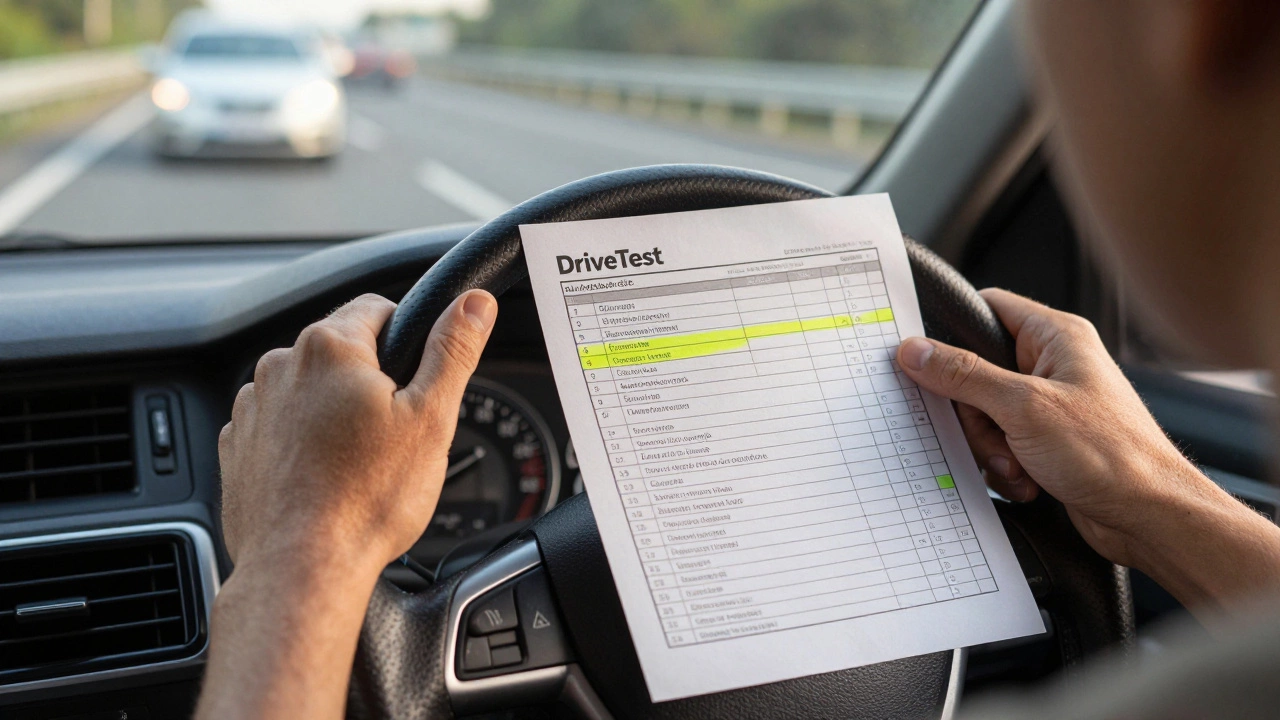
The Ontario G test is a road test administered by DriveTest centers. Examiners use a standardized checklist to evaluate your driving across multiple categories: vehicle control, traffic law compliance, observation, space management, and decision-making. Not every mistake counts the same.There are two main types of errors: minor and major. Minor mistakes-like a slightly late signal or a small hesitation at a stop sign-won’t automatically fail you. But if you make three or more of the same minor error, it becomes a pattern. And patterns raise red flags.
Major errors are the real deal-breakers. These include:
- Running a red light or stop sign
- Failing to yield the right-of-way when required
- Speeding or driving too slowly for conditions
- Improper lane changes without checking blind spots
- Colliding with a curb, cone, or object during a maneuver
- Not stopping completely at a stop sign or red light
- Driving with poor control that puts others in danger
If you make even one major error, you fail. No exceptions. One unsafe action is enough because the test isn’t about perfection-it’s about safety.
How the Scoring System Actually Works
The examiner doesn’t count mistakes like a math quiz. They watch for dangerous behaviors and judge whether you can handle real-world driving conditions. Think of it like this: you’re not being graded on how smoothly you parallel park. You’re being judged on whether you checked your mirrors, used your signals, and confirmed it was safe before moving.For example, if you parallel park and you clip the curb lightly but didn’t hit it hard enough to cause damage, and you corrected it safely, that’s usually a minor error. But if you hit the curb hard enough to knock the wheel off, or you blocked traffic while correcting, that’s a major error.
Another common confusion: signaling. You don’t need to signal 100 feet before every turn like in some older driving manuals. Ontario law requires you to signal early enough so other drivers can react. If you signal 10 feet before turning, that’s a minor error. If you forget to signal at all and turn across traffic, that’s a major error.
What You Can Get Away With
You can make small mistakes and still pass. Here are examples of what most examiners will let slide-once:- Forgetting to check your blind spot once during a lane change (but you corrected it quickly)
- Stopping a little too far back from the stop line
- Not using the hand-over-hand steering technique on a sharp turn
- Glancing at your speedometer too often
- Minor hesitation at a green light
These aren’t ideal, but they’re not dangerous. If you make one of these and then show you understand what went wrong-by correcting it immediately-you’re likely okay.
What you can’t get away with: repeating the same minor error. If you forget to check your blind spot on three different lane changes, the examiner will note it as a pattern. That’s a failure. It shows you’re not learning from your mistakes, and that’s a safety risk.
Common Myths About the G Test
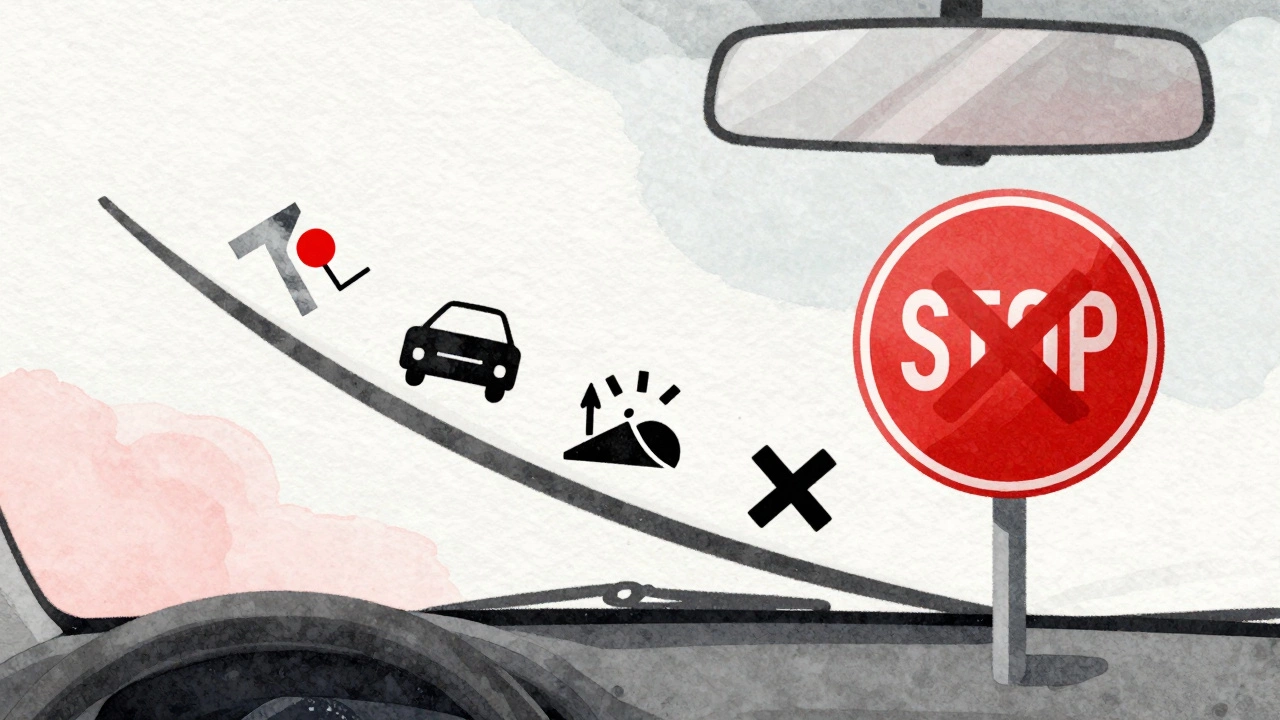
There’s a lot of misinformation out there. Let’s clear up a few:- Myth: You can make 5 mistakes and still pass. Reality: There’s no set number. One major mistake = fail. Three of the same minor mistake = fail.
- Myth: The examiner is out to fail you. Reality: Examiners want you to pass. They’re trained to give you a fair chance. If you’re driving safely and following the rules, they’ll mark you accordingly.
- Myth: If you’re nervous, they’ll be more lenient. Reality: Nervousness doesn’t excuse unsafe driving. If you’re shaking and making poor decisions, that’s still a failure.
Some people think the test is about memorizing a checklist. It’s not. It’s about developing habits that keep you and others safe. The examiner is looking for consistency-not perfection.
How to Prepare So You Don’t Overthink Mistakes
The best way to pass is not to count mistakes-it’s to build confidence through practice. Here’s how:- Practice in real traffic conditions. Don’t just drive in empty parking lots. Drive on highways, in rush hour, and at night.
- Record your practice drives. Watch them back. Notice where you hesitate, where you forget mirrors, where you rush.
- Get feedback from a licensed driver who’s been through the test. Ask them: "Did I miss anything unsafe?"
- Use the official DriveTest G test checklist. Study it. Know what they’re looking for.
- Don’t cram the night before. Sleep well. Eat something. Arrive early. Being calm matters more than you think.
Many people fail because they’re so focused on not making a mistake that they freeze up. Driving isn’t about being perfect. It’s about being aware, predictable, and in control.
What Happens If You Fail?
If you don’t pass, you’ll get a detailed report. It won’t say "you made 7 mistakes." It will list the specific safety issues: "Failed to check blind spot before lane change," or "Did not yield to pedestrian at crosswalk." You’ll have to wait at least 10 days before retaking the test. Use that time wisely. Don’t just book another appointment. Go back to practice with a focus on your weak spots. If you made the same mistake twice, fix it before you try again.There’s no limit to how many times you can take the G test. But each failure costs money and delays your license. Make each attempt count.
Final Tip: Think Like a Safe Driver, Not a Test Taker
The G test isn’t designed to trick you. It’s designed to make sure you’re ready to drive on Ontario roads without putting others at risk. The best way to pass is to drive the way you’d want everyone else to drive: calm, alert, and respectful of the rules.Don’t chase a magic number of allowed mistakes. Chase safe habits. Because once you have your G license, no one’s watching you. But the road still is.
Can you fail the G test for one small mistake?
Yes-if that mistake is classified as a major safety error. Examples include running a red light, failing to yield to a pedestrian, or hitting a curb during a parking maneuver. Minor mistakes, like a slightly late signal, won’t fail you unless they happen repeatedly.
How many minor mistakes can you make before failing?
There’s no official number, but making three or more of the same minor error-like forgetting to check your blind spot on multiple lane changes-will result in a fail. Examiners look for patterns, not isolated slips.
Do you need to signal 100 feet before turning?
No. Ontario law only requires you to signal early enough for other drivers to react. Signaling 3-5 seconds before turning is usually sufficient. Signaling too late is a minor error; not signaling at all is a major one.
What’s the most common reason people fail the G test?
The most common reason is failing to properly check blind spots before changing lanes or merging. Many drivers rely too much on mirrors and don’t turn their head. This is a major safety risk and almost always results in failure.
Can you take the G test without taking driving lessons?
Yes, you’re not legally required to take lessons. But over 80% of first-time test-takers who pass have had professional instruction. Self-taught drivers often miss key safety habits that examiners look for.
How long do you have to wait before retaking the G test if you fail?
You must wait at least 10 days before you can book another test. Use this time to practice your weak areas. Rushing back without fixing the mistakes that caused the failure usually leads to another failure.
Is the G test harder than the G2 test?
Yes, the G test is more challenging. It includes highway driving, merging, passing, and more complex intersections. You’re expected to drive independently without the same level of guidance as on the G2. The examiner expects full awareness of traffic flow and road conditions.
Do examiners give you a score or just pass/fail?
You’ll get a written report listing the specific safety errors you made, but no numerical score. It will tell you exactly what went wrong so you can improve. There’s no "72% pass"-it’s just pass or fail based on safety.